NYC Corporate Housing: A Guide to Finding the Perfect Place to Call Home - November 2026

The comfort of a second home. The convenience of a hotel. The reliability of Rove.
New York City is the top destination for corporate travelers in the United States, drawing business professionals from around the world for meetings, assignments, and multi-week projects. With about 65 million visitors in 2025, the city sees a steady stream of professionals whose stays stretch well beyond a long weekend. Once a trip runs past a few days, a standard hotel room stops being a practical or comfortable place to live and work.
Corporate housing refers to fully furnished, flexible-lease apartments designed for professionals on extended stays of 30 days or more. NYC companies have made it increasingly common to bring in contractors, interns, and short-term employees for weeks or months at a time, and the gap between a 4-day trip and a 4-month assignment is wide. A hotel works for a quick visit; it falls short when you need a kitchen, a proper workspace, and a real place to come home to at the end of the day.
Enter corporate housing: fully furnished rentals with flexible lease agreements for short-term residents of high speed cities. Corporate housing has become a fun, convenient part of New York’s cityscape, and it’s a great way for business travelers to marry the demands of their roles with a space for rest, relaxation, and adventure.
If you’re a professional with a long trip ahead of you, keep reading. This post will walk you through the types of corporate housing available, how to make your selection, and important things to consider. By the end, you should be ready to find your “home away from home” in one of the world’s busiest cities.
TLDR:
- NYC requires a 30-day minimum stay for short-term rentals in residential buildings, enacted in 2023.
- Corporate housing options include furnished apartments, short-term rentals, and extended-stay hotels, each with different space and service trade-offs.
- Start your search by listing location needs, budget limits, and upkeep capacity before contacting any provider.
- Furnished apartments skip moving costs, property taxes, and long-term lease commitments for stays of 30 days or more.
- Rove Travel lists NYC corporate housing searchable by location, price, and amenities.
Types of corporate housing in NYC
Short-Term Rentals
If you're trying to find corporate housing in New York City, start by looking into short-term rentals. You can browse Rove's NYC corporate housing listings to see available options.
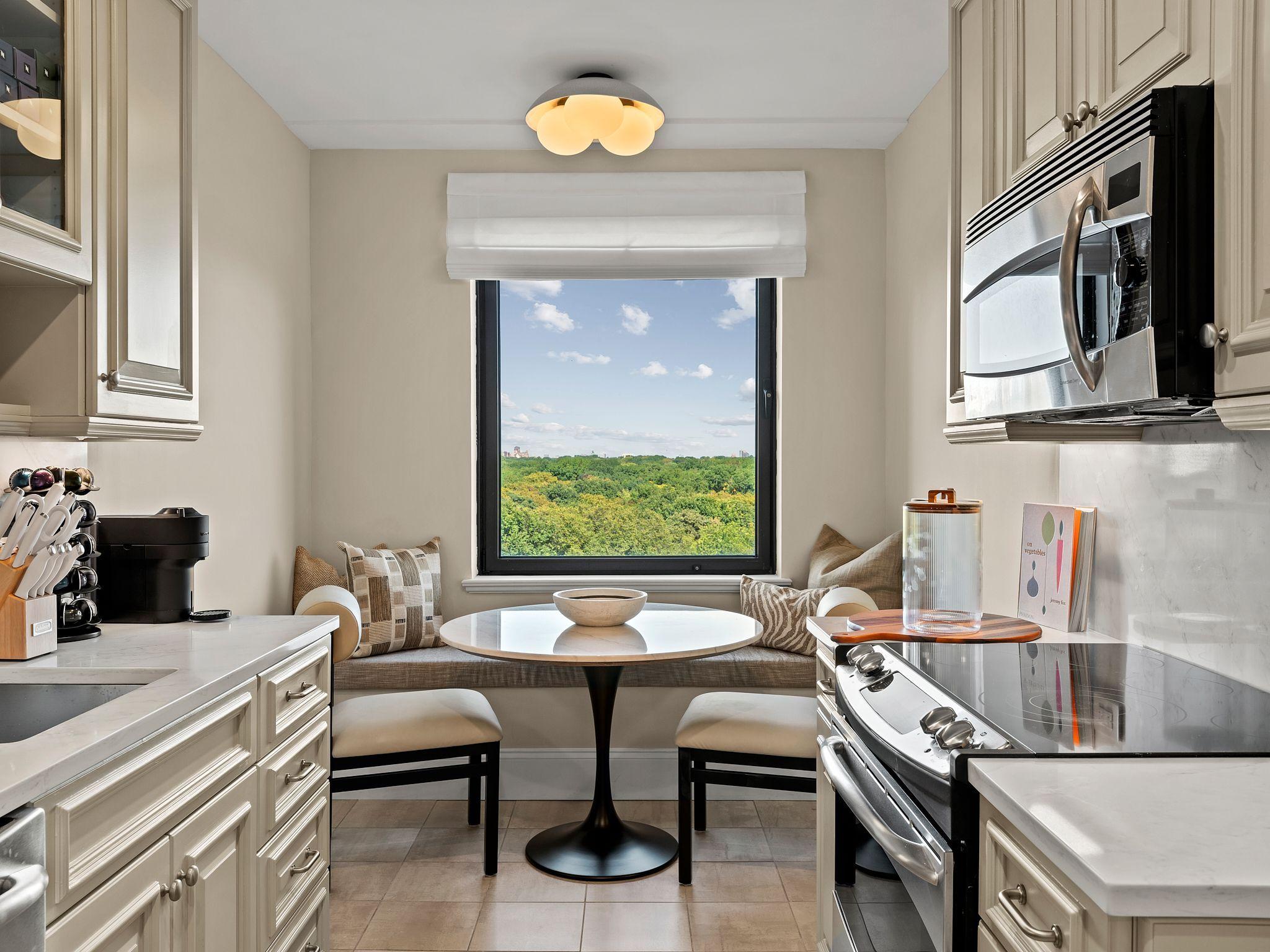
Short-term rentals are fully furnished apartments or condos designed with business professionals in mind, often with modern workstations, concierge access, and a washer and dryer. Furnished studios typically start at $2,500-$3,500/month, with one-bedrooms ranging from $3,500-$6,500/month depending on neighborhood. For more detail, see Rove Travel's guide to short-term furnished rentals in NYC.
Pros
- Full kitchen and a dedicated workspace
- Home-like comfort and more living space
- Flexible monthly terms
Cons
- Less hands-on service than a hotel
- You handle some upkeep, such as laundry and groceries
Extended-Stay Hotels
Another popular option for professionals on longer trips. More formal than short-term rentals, they still cover the necessities: wifi, linens, fitness center access, and proximity to public transportation. Extended-stay hotels generally run $150-$300/night ($4,500-$9,000/month), making them more expensive than furnished apartments for stays over 30 days.
Pros
- Daily or weekly housekeeping
- On-site amenities such as fitness centers
- No lease commitment
Cons
- Highest cost over a 30+ day stay
- Less living space and limited kitchen setups
Rent a Furnished Apartment
Fully furnished and move-in ready, these apartments often come with built-in security measures such as a doorman or card-swipe access, since most are in large multi-home buildings. Many are sublet by owners who have their own reasons to travel to and from the Big Apple. One-bedroom layouts are most common given high demand for city real estate, but two and three-bedroom apartments exist, too. Sublet furnished apartments can come in at $2,000-$4,000/month for a studio or one-bedroom, though pricing varies by borough. Teams or families who need more room than a one-bedroom can also look at luxury townhouse rentals in NYC.
Pros
- Lowest typical monthly cost among corporate housing choices
- More privacy in a residential building setting
Cons
- Amenities vary by owner
- Less standardized support than a managed property
- Sublet terms need extra verification before signing
| Housing Type | Typical Monthly Cost | Best For | Key Amenities | Flexibility |
|---|---|---|---|---|
| Short-Term Rental | $2,500-$6,500 | Professionals wanting home-like comfort | Full kitchen, W/D, workstation, concierge | High - monthly leases |
| Extended-Stay Hotel | $4,500-$9,000 | Shorter assignments or frequent travelers | Wifi, fitness center, housekeeping, linens | Medium - nightly or weekly rates |
| Furnished Apartment (Sublet) | $2,000-$4,500 | Budget-conscious stays with privacy | Varies by owner; typically full kitchen | Medium - fixed sublet period |

Picking the right area often comes down to your role and commute tolerance. Financial District and Wall Street suit finance professionals who want a premium, walkable stretch to the office, with a subway ride of roughly 15 to 20 minutes to Midtown when meetings pull you uptown. Midtown and Times Square sit at the center of business activity, priced mid to premium, and work well for consultants and executives juggling meetings across Manhattan.
Brooklyn neighborhoods like Williamsburg and Brooklyn Heights offer more room at a mid tier, with a commute of roughly 15 to 30 minutes to Lower Manhattan or Midtown, a solid fit for families and longer assignments. Jersey City and Hoboken, reachable by PATH in about 15 to 25 minutes, along with White Plains on Metro-North (about 35 to 50 minutes to Grand Central), offer budget to mid pricing for commuters and healthcare workers assigned to suburban hospitals.
Why go with corporate housing?
NYC corporate housing serves a wider range of residents than the name suggests. Depending on your situation, it can be the right fit whether you are a first-time corporate traveler or someone dealing with a life transition far from home. Common use cases include:
- Relocating employees transferred to a NYC office. A professional moving for a new role typically needs 60 to 90 days of furnished housing while house-hunting, giving them a stable base without committing to a lease before they know the neighborhood.
- Business professionals on multi-week project assignments who need a functional home base near their office.
- Summer and semester interns placed by employers. A summer cohort on a fixed 10 to 12 week program needs furnished housing near the employer's office for that exact window, with a lease that starts and ends alongside the program dates.
- Traveling medical professionals and healthcare contractors on hospital rotations or locum assignments. A nurse on a 13-week travel assignment needs a home near a specific hospital, with a lease term that lines up with the contract rather than a standard monthly commitment.
- Academics and researchers on visiting fellowships at NYC universities or research institutions.
- Families in temporary displacement due to home renovation or insurance claims.
Several of the advantages associated with corporate apartments are common across these situations, too. Short-term rentals spare you the costs of renting a moving van, retrofitting a new home, and paying property taxes. You are a guest in a temporary space. That means you pay for the service of staying on-site, not for the bells and whistles attached to homeownership.

Corporate housing can also be tailored to your location and its needs. First off, it's everywhere. You can find corporate apartments across NYC neighborhoods for luxury monthly stays including Brooklyn, Midtown, Times Square, Manhattan, Upper East Side furnished apartments, and beyond. Are you going to be making trips to Wall Street? Do you need access to Jersey City, or a bus with a direct connection to Chelsea? There's probably a furnished apartment somewhere that can make that a reality.
With location and cost savings comes a third benefit, convenience. Instead of clamoring for a corner of real estate, you get to find a cost effective, work-ready home close to everything you need for corporate success. In practice, you can move in the day your flight lands, with wifi, a full kitchen, linens, and a dedicated workstation already in place, so you can join a call that evening without shopping for a desk or setting up utilities. Since the basics are already in place, a short NYC packing list covers most of what you need to bring. There’s no price you can put on not having to stress over details, and corporate temporary housing makes low-stress living very possible.
At the end of the day, corporate housing should feel personal. It’s a temporary space fitted with all the trappings of long-term comfort. Look for a space that will help you feel productive, safe, supported, and excited to come “home” at the end of the day.
Business travelers looking for the ideal accommodation solution will find value in Rove's 'Furnished Corporate Housing: An Ideal Solution for Business Travelers' blog, detailing the comforts and conveniences of such arrangements.
Is there a catch?
While short-term rentals might be the perfect solution for many business professionals, there are definitely disadvantages to consider. However, most of the blame for those disadvantages falls to the city, not the houses in it.
New York City is a well-known hub for industry, tourism, commerce and artistry. That means it is often quite crowded. There’s truly not a single borough or neighborhood exempt from that reality. If you’re moving to New York for a short-term corporate stay, remind yourself that having a comfortable temporary housing situation does not mean a quiet or uncrowded situation. Space and privacy are both rare commodities in the Big Apple.
Some neighborhoods are definitely quieter, and some apartments more spacious. However, it’s never going to be perfectly quiet or far from other people. Choose your short-term housing with wisdom, and you’ll likely find a situation that is very good, even if perfect is impossible.
Some short-term rental properties will have lease limitations. This is only a disadvantage if you don't do your homework. Make sure you understand the space's limitations, including its amenities. If there are terms that govern the length of stay, do your best to understand them before signing an agreement. You don't want to be surprised down the road.
Lastly, many corporate housing solutions do require personal upkeep. Since fully-furnished apartments are often privately owned, they might not include things like room service or laundry access. Make sure you are well aware of your responsibilities as a tenant and that you are realistic about what you can manage. If you're working 80 hours a week, you probably don't have time to sit around at the nearest laundromat. Be real with yourself, and make sure you weigh the responsibilities of your temporary space against your bandwidth. Knowing your limits will help you make wise housing decisions.
How do I start my search?

- Define your location requirements. Think about commute proximity, borough preference, and transit access. Will you be traveling between Manhattan and New Jersey daily? Do you need a direct subway line to a specific neighborhood? Pinning down your location needs first narrows the field quickly.
- Identify your must-have amenities. Ask yourself which features you cannot do without: a pet-friendly building, a dedicated workstation, a fully equipped kitchen, or in-unit laundry. Separating true must-haves from nice-to-haves keeps your search focused and prevents you from overpaying for features you won't use.
- Set your budget and clarify what your company covers. New York City carries a high cost of living, and furnished rentals are no exception. Get clear on your housing allowance before you start comparing listings, so you know exactly how much comes out of pocket and what your ceiling is. Timing also plays a role in availability and pricing. Fall renters book about 60 days out on average, so for an October start, begin searching in early August, as covered in this guide to NYC's September and October rental season.
- Research the property and provider. Read guest reviews and confirm the listing complies with the NYC 30-day minimum under Local Law 18, including a valid host registration number. If you're considering a sublet, ask for a copy of the sublease, confirm the building and landlord permit subletting and that the subletter is authorized to re-rent, and get a written agreement signed by all required parties covering duration, monthly rate, and responsibilities. Watch for people advertising units they don't control or asking for wire transfers before an in-person or video viewing, and verify identity and ownership before sending any payment.
- Review and negotiate the lease. Before you sign, understand the term limits, any upkeep responsibilities such as trash or snow removal, and the conditions for ending the agreement early. Ask about what happens if your corporate assignment is extended or cut short, and get the answers in writing.
As you search, keep a few red flags worth in mind: any listing advertising whole-apartment stays shorter than 30 days is almost certainly non-compliant with NYC Local Law 18, so skip it; a listing with no verifiable registration number is a serious warning sign, since NYC Local Law 18 requires hosts to display one; and pricing that looks unusually low for Manhattan or prime Brooklyn neighborhoods often points to an unregistered or fraudulent listing instead of a genuine deal. If anything about a listing gives you pause, contact the provider directly to confirm compliance before booking. To recap, match the housing type to your stay length, confirm the listing meets the 30-day minimum, and verify the provider's registration before you book. Ready to find your fit? browse Rove Travel's NYC homes to start comparing options.
What if I don’t know how to talk to the provider?
With a little legwork, it’s easy to find a corporate housing solution that fits your specific needs. However, not every business professional has the time (or the desire) to do that legwork independently. Finding a house that feels like a good fit can be an arduous task. If that sounds like you, it’s okay to seek professional help.
Consider reaching out to a realtor, broker, or a short-term housing service, or comparing extended stay rentals for professionals, even if you think you won't need the help. It’s amazing what an expert will do on your behalf!
| Provider Type | How It Works | Support Level | Best For |
|---|---|---|---|
| Direct-booking marketplace (e.g., Rove Travel) | Book vetted, furnished homes for 30+ nights directly from the provider | High: 24/7 concierge and transparent fees | Professionals who want a turnkey, compliant stay |
| Realtor or broker | An agent sources listings, handles outreach, and reviews contracts | High during the search, lower after move-in | Longer assignments or complex lease needs |
| Extended-stay hotel | Book a suite at nightly or weekly rates with hotel services | High: front desk and housekeeping | Stays under 30 days or frequent short trips |
| Peer-to-peer listing sites | Book from individual hosts through a third-party site | Varies by host | Travelers comfortable vetting hosts themselves |
| Private sublet | Rent directly from a tenant or owner for a fixed period | Low: depends on the subletter | Budget-conscious stays with extra verification |
Working with a real estate professional, especially one who understands New York City, will put someone with business acumen in your corner. It will give you a resource who can talk you through the pros and cons of each property with specificity. That person should be able to help you and your corporation interpret contracts, get in touch with property owners, and even talk you through any local nuances you might need to understand before taking your business trip.
Rove Travel is dedicated to helping traveling professionals find short-term housing solutions that fit their personal needs. Before you book, it's worth reviewing the NYC 30-night rental rule for guests so you know exactly what to expect. Rove also keeps an up-to-date list of NYC properties on its website. Check out Rove's listings today to search by location, price, and amenities.
Your corporate housing solution is one click away
From the Upper West Side to Williamsburg, New York City is full of great short-term housing options. There's a wide assortment of fully serviced apartments, condos, and other options waiting to be found.
Your next business trip doesn’t have to include the stress of moving, and it doesn't mean you have to resign yourself to four months in a sterile hotel. Give yourself the freedom to look closer! With the right eye, a little patience, and a clear sense of what you need, you can find a corporate housing solution that will make your stay in New York City both fun and successful.
Rove Travel connects business professionals with vetted NYC short-term housing. Check out Rove today to find your home away from home.
Frequently asked questions about NYC corporate housing
What is corporate housing in New York City?
Corporate housing in New York City refers to fully furnished short-term rentals designed for business professionals, interns, contractors, and other travelers on extended stays. These residences come move-in ready with amenities like high-speed wifi, a dedicated workstation, linens, and kitchen access, giving you everything needed to live and work comfortably without signing a long-term lease.
What is the minimum stay for a short-term rental in NYC?
The 30-day minimum covered in this guide applies to most furnished apartments and corporate housing options across the five boroughs. If you need housing for fewer than 30 days, an extended-stay hotel may be a better fit.
How is corporate housing different from a hotel?
Corporate housing offers more space, privacy, and home-like comfort than a standard hotel room, and a look at hotel vs. furnished rental costs shows why. A furnished apartment typically includes a full kitchen, separate living and sleeping areas, and in-unit laundry, making it far better suited to stays of a month or longer. Extended-stay hotels occupy a middle ground, offering some home conveniences in a more formal setting.
What amenities should I expect from NYC corporate housing?
Most corporate housing options in NYC include high-speed wifi, a fully equipped kitchen, a washer and dryer, building security, and proximity to public transit. Higher-end furnished apartments may also offer concierge access, fitness facilities, and modernized workstations. Amenities vary by property, so review each listing carefully before committing.
How do I find corporate housing that fits my budget in NYC?
Start by clarifying what your company will cover and what you are responsible for out of pocket. From there, browse luxury monthly apartments in NYC by neighborhood and price range, then filter by the amenities that matter most to your stay. Working with a short-term housing service like Rove Travel can help you compare options across price points and find a well-matched residence faster than searching independently.
Is corporate housing a good option for non-business travelers?
Yes. While corporate housing is built with business travelers in mind, its flexible lease terms and fully furnished setup make it a strong fit for a wide range of situations including families in temporary housing, people between homes, and professionals relocating to the city. Those who return to the city often may also want to compare corporate housing with owning a pied-à-terre in NYC. The all-inclusive nature of these residences removes much of the friction that comes with a traditional move.
Can I book NYC corporate housing directly instead of through Airbnb?
Yes. Rove Travel lists vetted, fully furnished NYC homes for stays of 30 nights or more that you can book directly on RoveTravel.com, with pricing guaranteed 5% less than Airbnb for the same home and an additional 3-10% savings on direct stays. Booking direct also includes 24/7 concierge support and a transparent fee structure.