A Guide to Living & Renting in Williamsburg, Brooklyn (October 2026)
The comfort of a second home. The convenience of a hotel. The reliability of Rove.
If you're trying to get a real read on the Williamsburg neighborhood before you move, visit, or commit to a lease, most sources give you the surface version. What's actually useful is knowing how the sub-neighborhoods differ, what the two main ZIP codes mean for your daily life, how far you really are from Manhattan, and what rents look like heading into 2026. That's what this guide covers.
TLDR:
- Williamsburg spans three distinct sub-neighborhoods: North (Bedford Avenue retail core), South (Satmar Hasidic enclave), and East (lower-rise, cheaper rents).
- The L train at Bedford Avenue reaches Union Square in roughly 14 minutes, making Manhattan commutes faster than many neighborhoods within the borough.
- Studios start at $2,500/month and one-bedrooms at $3,500/month as of 2026, with waterfront buildings running higher.
- Rove offers luxury monthly rentals in Williamsburg with a 30-night minimum, in line with Local Law 18.
A Brief History of Williamsburg, Brooklyn
Williamsburg's story runs in layers. The Dutch settled the area in the 1600s, and by the 1800s, the waterfront had grown into a working industrial corridor of factories, breweries, and warehouses.
The Williamsburg Bridge opened in 1903 and immediately shifted the population. Jewish immigrants crowded off the Lower East Side crossed into Brooklyn so fast the bridge earned the nickname "the Jews' highway." By mid-century, many of those families had suburbanized, leaving as the neighborhood declined through the 1960s and 70s.
Two things filled that vacuum. Holocaust survivors, many of them Satmar Hasidim, built a religious community in South Williamsburg. Separately, artists priced out of Manhattan began arriving in the 1980s, drawn by cheap warehouse space. By the 1990s, the bohemian reputation was set.
The 2005 rezoning converted roughly 184 blocks of manufacturing-zoned land to residential and mixed-use development along the waterfront. New construction accelerated. Rents followed. What had been an unlikely coexistence of artists, immigrants, and longtime working-class residents became, over the next two decades, something wealthier and considerably more complex.
Williamsburg Neighborhood Map and Boundaries
Williamsburg sits in the northwest corner of Brooklyn, bounded by the East River to the west, Greenpoint to the north, Bushwick and Ridgewood to the east, and the Brooklyn-Queens Expressway roughly to the south. Its two primary ZIP codes are 11211, covering most of North and Central Williamsburg, and 11249, which takes in the waterfront corridor closer to the bridge.
The neighborhood's informal sub-districts feel genuinely different from one another:
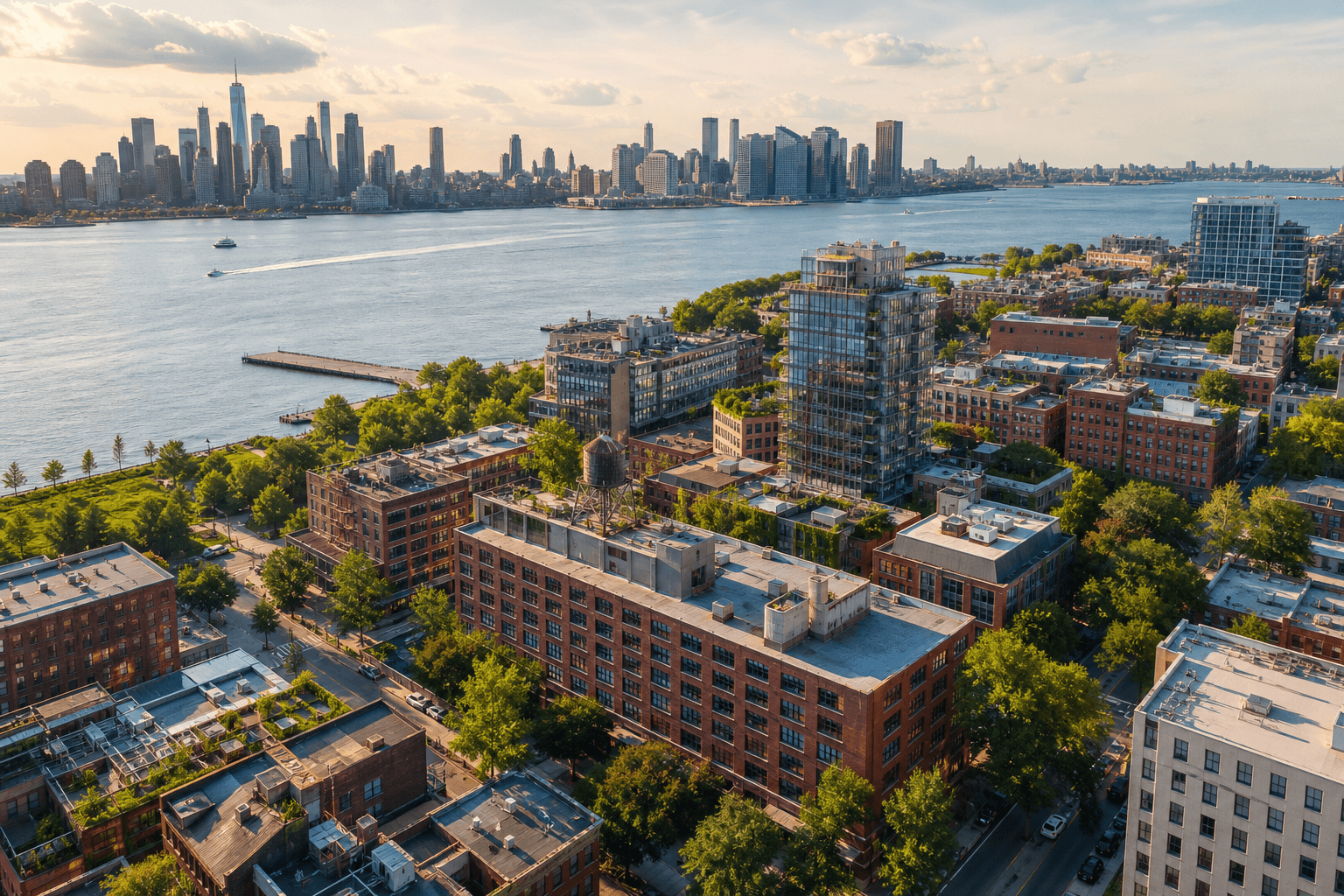
- North Williamsburg, anchored by Bedford Avenue, is the most commercially dense stretch: galleries, bars, coffee shops, and boutiques packed into a compact grid.
- South Williamsburg transitions abruptly south of Division Avenue into the Satmar Hasidic enclave, where Lee Avenue serves as the main commercial spine and the streetscape reflects a largely self-contained religious community.
- East Williamsburg bleeds toward Bushwick along the Morgan Avenue corridor, lower-rise and more industrial in character, with a younger creative population that moved in as rents in the core rose.
No hard administrative line separates these zones when looking at Williamsburg vacation rentals. The distinction between North and South Williamsburg in particular is cultural and demographic, not formally drawn, which is why a standard map can mislead.
Each sub-neighborhood pulls in a different direction, and the differences matter when you're deciding where to stay or rent.
| North Williamsburg | South Williamsburg | East Williamsburg | |
|---|---|---|---|
| Anchor | Bedford Avenue | Lee Avenue | Morgan Avenue corridor |
| Character | Commercially dense; galleries, bars, coffee shops, boutiques | Satmar Hasidic enclave; self-contained religious community | Lower-rise, industrial, quieter; converted warehouses and artist studios |
| Transit | L train at Bedford Ave → Union Square (~14 min) | J, M, Z at Marcy Ave → Financial District | L train at Morgan Ave (fewer options, longer commute) |
| Rent level | Highest in Williamsburg | Below North; gap has narrowed | Lower than North; draws renters seeking space over nightlife |
| Trade-off | Noise and foot traffic | Reduced commercial activity on Shabbat; different daily rhythm | Fewer restaurants and amenities nearby |
Williamsburg Demographics and Population
The combined Greenpoint/Williamsburg community district had a population of approximately 218,831 as of 2024 ACS data (that figure covers both neighborhoods together, not Williamsburg alone), ranking it 5th largest among NYC's 59 community districts. It holds the 12th highest median income and the 10th most expensive rents citywide. From 2010 to 2025, the district added 27,675 new housing units, most of them market rate.
The median age sits in the low 30s, though that figure masks sharp internal contrasts. North Williamsburg skews younger and wealthier among monthly rentals in Williamsburg renters, while South Williamsburg's Hasidic community carries a higher proportion of families with children and an economic profile shaped by religious community structures, largely outside the broader gentrification cycle.
The Hasidic Jewish Community in Williamsburg
South Williamsburg's Hasidic community is one of the largest Haredi Jewish concentrations worldwide, anchored by the Satmar dynasty that took root here in the postwar decades. Most founding families were Holocaust survivors who rebuilt a deeply observant community in Williamsburg as an act of collective continuity.
As the Times of Israel notes, a short walk from the Lower East Side over the Williamsburg Bridge puts you inside one of the most concentrated Hasidic communities in New York. Lee Avenue is the commercial spine, lined with kosher grocers, Judaica shops, and bakeries. The community has held its footprint through gentrification via religious cohesion, political organization, and ongoing housing acquisition.
Landmarks and Cultural Institutions
Domino Park anchors the waterfront at Kent Avenue and South 1st Street, built on the former Domino Sugar refinery site. The views of the Manhattan skyline from here rank among the best in Brooklyn, drawing casual visitors and locals year-round.
The Williamsburg Bridge connects the neighborhood directly to the Lower East Side, serving cyclists and pedestrians as a genuine commuter and leisure route.
Bedford Avenue runs north-south through North Williamsburg as the neighborhood's main commercial artery. Nearly everything a first-time visitor wants to find sits within a few blocks of it.
Brooklyn Brewery, on North 11th Street, opened in 1996 when the surrounding blocks were still industrial. It remains a working production facility with a taproom open to the public most days.
The Brooklyn Art Library on Bedford Avenue houses the Sketchbook Project, a public collection of artist sketchbooks submitted from around the world. Free to browse and unlike anything else in the neighborhood.
Smorgasburg runs Saturdays in East River State Park from spring through fall, drawing around 100 vendors. Brooklyn Flea, its sister market, runs Sundays nearby with vintage goods and crafts.
Street murals concentrated along Bedford, Berry, and the blocks around the old Pfizer building function as an unofficial outdoor gallery, updated constantly as older pieces get painted over and new ones appear.
Dining, Bars, and Nightlife
Williamsburg's dining and bar scene holds its own against most of Manhattan at the same price point. Peter Luger Steakhouse on Broadway has been the neighborhood's most famous table since 1887, cash-only and still worth the wait. Lilia on Union Avenue draws citywide attention for its handmade pasta. Llama Inn brings Peruvian-inflected cooking with a rooftop terrace that fills fast on weekends.
Bar Blondeau at the Wythe Hotel offers unobstructed Manhattan skyline views and a wine-focused list. The William Vale's rooftop runs a broader cocktail menu with a more hotel-crowd feel. Both require reservations on warm evenings.
Brooklyn Bowl on Wythe Avenue combines a live music venue, bowling lanes, and a full kitchen under one roof. For craft cocktails in a quieter setting, the blocks around Bedford Avenue and Metropolitan hold several bars that compare well to anything in the West Village.
Smorgasburg on Saturdays at East River State Park covers the casual end, with a rotating vendor lineup that spans cuisines no single restaurant could replicate.
Shopping in Williamsburg
Bedford Avenue and the cross streets around North 7th and North 11th form the retail core. Independent boutiques lean toward clothing, ceramics, and design objects, many of them locally produced. Catbird on Bedford Avenue is the most widely known, a small jewelry shop with a cultish following worth browsing slowly. Mast Brothers Chocolate, a few blocks north, started as a bean-to-bar factory and still sells direct.
Artists and Fleas, held indoors on weekends at the Wythe Hotel, runs vintage clothing, handmade goods, and art prints. Brooklyn Flea on Sundays covers a broader secondhand range.
Lee Avenue in South Williamsburg operates on a different logic. The storefronts serve the Hasidic community: kosher grocers, religious bookshops, Judaica suppliers, children's clothing stores. The experience there reflects community need over retail curation, and the two corridors rarely overlap in clientele or purpose.
Parks and Outdoor Spaces
Domino Park leads the list for good reason. Built on the former Domino Sugar refinery site along Kent Avenue, it offers direct East River access, lawn space, preserved industrial relics, and a Manhattan skyline view that draws visitors from across the borough. Weekends fill fast in warm weather.
McCarren Park, straddling the border with Greenpoint, is the neighborhood's largest traditional green space. It holds a historic outdoor pool open to the public in summer, plus tennis courts, a running track, and enough open lawn to absorb crowds comfortably.
East River State Park sits between North 6th and North 8th Streets, serving as the weekend home of Smorgasburg and Brooklyn Flea from spring through fall. Outside market hours it functions as a quieter waterfront lawn with public access to the waterfront edge.
Bushwick Inlet Park, north along the waterfront, added soccer fields and open green space on land that was previously an active fuel depot, completing a stretch of continuous public waterfront access made possible by the 2005 rezoning.
The Brooklyn Waterfront Greenway connects these parks by bike along a largely protected path, making it possible to ride from Domino Park to Greenpoint or south toward Brooklyn Bridge Park without heavy traffic, linking several Brooklyn stays with outdoor space along the way.
Living in Williamsburg: What Renters and Residents Should Know
Williamsburg's housing stock reflects its industrial past more than most Brooklyn neighborhoods. Converted warehouses and former factory buildings make up a meaningful share of the inventory, particularly in North Williamsburg and along the waterfront, where loft-style units with high ceilings and oversized windows remain common. Newer luxury high-rises along Kent Avenue and the waterfront corridor have added elevator buildings with doormen, gyms, and roof decks. Classic brownstones and prewar walk-ups fill the residential blocks further east.
Rents as of 2026 start around $2,500/month for studios and $3,500/month for one-bedrooms, with waterfront buildings and newer construction running considerably higher. South Williamsburg and the blocks east of the BQE offer some relief on price, though the gap has narrowed over the past decade as part of the broader Brooklyn cost of living picture.
Each sub-neighborhood carries real trade-offs for daily life.
- North Williamsburg near Bedford Avenue offers the most walkable access to restaurants, transit, and nightlife, at the cost of noise and foot traffic.
- South Williamsburg is quieter and more residential, but operates on a different cultural rhythm shaped by the Hasidic community, including reduced commercial activity on Shabbat.
- The waterfront corridor has the newest construction and direct park access, but grocery options and everyday errands require more walking or a quick bike ride.
Staying in Williamsburg: Hotels and Short-Term Options
Williamsburg has a compact but solid hotel lineup. The Wythe Hotel, inside a converted 1901 cooperage on Wythe Avenue, remains the neighborhood's most recognizable property: exposed brick, timber beams, a rooftop bar with Manhattan views, and a restaurant that holds its own against the surrounding competition. The William Vale on Wythe Avenue is newer and more overtly luxurious, with an outdoor pool, a rooftop, and larger rooms than most Manhattan options at comparable rates. The McCarren Hotel sits at the edge of McCarren Park, trading proximity to the park for fewer amenities than the Vale or Wythe.
Staying in Williamsburg instead of Manhattan involves real trade-offs. You gain a neighborhood feel, faster access to Brooklyn's best dining, and nightly rates that typically run lower than comparable Manhattan hotels, a gap that widens for longer stays. You lose walking distance to Midtown, and the L train adds a step for visitors whose plans center on the Upper East Side or Times Square, unlike staying in Brooklyn Heights. For anyone focused below 14th Street or in lower Manhattan, the commute barely registers, which also makes nearby Brooklyn summer rentals a convenient option.
For stays of 30 nights or longer, the hotel model stops making sense financially or practically. Furnished monthly rentals offer full kitchens, in-unit laundry, and genuine living space at rates that compress considerably against nightly hotel pricing at scale.
Williamsburg Through Rove
Rove curates luxury monthly rentals across Brooklyn, with vetted residences in Williamsburg and neighboring areas including Greenpoint, where Greenpoint property management companies also operate. The inventory runs toward design-forward apartments, converted loft spaces with exposed structure and oversized windows, and waterfront-adjacent residences within reach of Domino Park and the East River greenway.
Every Rove residence is vetted for design quality and functional livability before it's listed: chef-grade appliances, a dedicated workspace, in-unit laundry, and premium linens come standard. For stays of 30 nights or longer, that means a full kitchen from night one, no hardware store run required. Rove operates two tiers: RoveCore, a free self-service model with access to Rove's booking and compliance infrastructure, and Rove+, a full-service management option at 15% of revenue, all-in, covering guest vetting, cleaning coordination, and owner reporting with no separate markups layered on top.
All Rove stays in NYC require a 30-night minimum, in line with Local Law 18. For anyone spending a month or more in Williamsburg, a Rove residence delivers a full kitchen, in-unit laundry, and a dedicated workspace from day one. Browse the Brooklyn collection at RoveTravel.com to see current availability.
Final Thoughts on Moving to or Staying in Williamsburg, Brooklyn
Williamsburg is layered in a way that a first visit doesn't fully reveal. The Hasidic community in the south, the Bedford Avenue corridor in the north, and the waterfront in between each carry their own rhythm, and your experience will track closely with where you put down. If you're spending a month or more in the neighborhood, a furnished monthly rental gives you the full kitchen and everyday space that makes a longer stay actually feel like living there. Rove curates monthly rentals across Brooklyn, with options in and around Williamsburg worth browsing before you book.
FAQ
What's the best way to find a furnished luxury apartment in Williamsburg, Brooklyn for 30 days or more?
Start with platforms that specialize in 30+ night stays and vet properties before listing. Rove curates luxury monthly rentals across Williamsburg and Greenpoint, with design-forward apartments, converted loft spaces, and waterfront-adjacent residences available to browse directly at RoveTravel.com. NYC's 30-night minimum for furnished rentals where the host is not present is a legal requirement under Local Law 18, not a platform preference, so confirm any listing you consider is structured for compliance before booking. Waterfront buildings in ZIP code 11249 and Bedford Avenue-area apartments in ZIP code 11211 represent the two main clusters of inventory, and they carry meaningfully different trade-offs on noise, transit access, and price.
Is North Williamsburg or South Williamsburg a better place to stay or rent in Brooklyn?
North Williamsburg, anchored by Bedford Avenue, gives you the densest walkable access to restaurants, transit, and nightlife, with the L train to Union Square running about 14 minutes, but foot traffic and noise are real costs. South Williamsburg is quieter and more residential, though its daily rhythm follows the Satmar Hasidic community's calendar, meaning reduced commercial activity on Shabbat and a streetscape that reflects community need over retail curation. For most renters who value transit and walkability in the Williamsburg neighborhood, North Williamsburg near Bedford Avenue is the stronger practical choice; South Williamsburg suits those who want lower density and don't mind planning around that weekly calendar.
How do I get from Williamsburg, Brooklyn to Manhattan, and how long does it take?
The L train at Bedford Avenue is the fastest and most practical option for most destinations, running to Union Square in roughly 14 minutes and to 8th Avenue in about 20. For anyone working in the Financial District, the J, M, or Z trains at Marcy Avenue often beat the L on travel time via the Manhattan Bridge. The Williamsburg Bridge also carries cyclists and pedestrians to the Lower East Side in under 15 minutes on protected lanes, faster than the subway for that specific crossing on a good weather day.
Which luxury rental platforms let guests book directly and save money compared to Airbnb in Williamsburg?
Rove offers direct booking through RoveTravel.com at rates that run 5% below Airbnb pricing, with no hidden guest fees layered on top. For stays of 30 nights or longer (the minimum required under NYC's Local Law 18 for furnished rentals where the host is not present), booking direct through Rove also means access to fully vetted residences with chef-grade kitchens, dedicated workspaces, and in-unit laundry that nightly hotel alternatives in the Williamsburg area cannot match at comparable monthly cost.
What are the ZIP codes for Williamsburg, Brooklyn, and does it matter which one a rental is in?
Williamsburg uses two ZIP codes: 11211 covers North and Central Williamsburg, including Bedford Avenue, McCarren Park, and most residential blocks east of the waterfront; 11249 covers the southern waterfront corridor along Kent Avenue and the blocks closest to the Williamsburg Bridge. The distinction matters practically, as ZIP code affects delivery windows, insurance quotes, and proximity to transit. A building in 11249 likely sits closer to Domino Park and the newer waterfront high-rises, while 11211 places you closer to the Bedford Avenue commercial strip and the L train's busiest stop.