A Beginner's Guide to Apartment Composting - September 2026
The comfort of a second home. The convenience of a hotel. The reliability of Rove.
Join the modern trend of sustainable living practices when you start an apartment composting system. It’s easy, inexpensive, and impactful, and you’ll reap the benefits of a thriving apartment garden.
Are you looking for inspiration and tips on indoor compost systems? You’ll find all the information you need in this detailed guide.
Key Takeaways
- Apartment composting is simple, space-conscious, low-cost, and available year-round.
- The three main methods are vermicomposting (worms), Bokashi (fermentation), and electric/automatic composters.
- Stick to fruit and vegetable scraps, coffee grounds, eggshells, and dry yard waste, avoid meat, dairy, pet waste, and oily foods.
- Mature compost is dark, crumbly, and earthy-smelling; ready to use in indoor plants, balcony gardens, or as a soil booster.
- NYC residents can drop off food scraps through the NYC Department of Sanitation or connect with GROUNDCYCLE for community composting support.
What is Composting?
Composting is a natural process that breaks down organic materials into nutrient-rich soil. It mimics nature’s recycling system. To start, gather suitable organic materials and divide them into carbon-rich (browns) and nitrogen-rich (greens). Next, layer these materials in a compost bin. Maintain an adequate amount of moisture in a ventilated space. Microorganisms will decompose the materials, generating heat and accelerating the process.
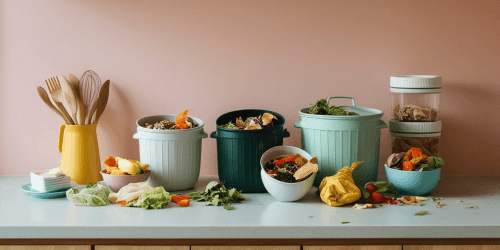
You’ll reap the composting benefits. These include waste reduction, soil enrichment, carbon sequestration, improved soil health, and water conservation. Composting helps with erosion control, bioenergy production, and the circular economy, promoting community engagement. Best of all, you’ll save money by using waste materials to improve soil quality.
As modern living spaces overtake natural vegetation, apartment dwellers have joined the march toward sustainable living. Apartment composting is one step in this direction. If you're settling into a new NYC apartment, our guide to living in NYC for a month covers what to expect from furnished apartment living in the city. All you need is an indoor composting system.
According to the US EPA, food alone makes up 24.1% of municipal solid waste sent to landfills, and when yard trimmings and other organics are included, that figure rises to over 51%. Composting diverts that waste from landfills, saves money on fertilizers, and is available year-round in an apartment setting.
Apartment composting creates community-building opportunities and healthier, more environmentally friendly living spaces. Here’s your detailed guide and composting tips on how to compost in an apartment.
Getting Started
To get started, choose the right composting method, buy an indoor compost bin, and set up the compost system.
Step 1: Selecting the right composting method
There are several composting options to choose from, including:
- Vermicomposting: Use red worms like red wigglers to decompose organic waste.
- Bokashi composting: Use microorganisms to ferment organic waste materials
- Automatic composting: Use an electric composter. Apartment dwellers can choose an indoor hot composting system, balcony or patio compostors, indoor compost tumblers, or countertop compostors.
Any of these systems can fit into a small apartment. Choose the composting option that best suits your limited space and start making your compost today. Why buy traditional compost when you could make your own eco-friendly compost?
Step 2: Choosing your compost bins
Choices include an indoor odor-proof countertop bin, a worm bin for vermicomposting, a Bokashi bucket, an indoor compost tumbler, or an electric composter. You could even customize your compost pail with repurposed materials.
Step 3: Setting up your composting area
Start by finding a suitable composting location before preparing your compost bin. Line the bottom of this bin by placing the bedding materials. Maintain adequate moisture and aeration, control the odors, and harvest the finished compost.
Promote environmental awareness by encouraging others to start their own composting systems. Contact GROUNDCYCLE in NYC to find help making free compost and learn more about sustainable organic waste management. Note that as of April 1, 2025, NYC composting is now mandatory for all residential buildings. Residents who mix organic waste with regular trash are subject to fines.
NYC Composting in 2026: What Apartment Dwellers Should Know
A NYC IBO composting report from April 2026 found that organic waste makes up roughly 36% of the city's residential waste stream, yet only 2.4% was actually diverted through organics collection in 2025. That figure represents a 68% increase over 2024, but it is still very low overall. Weekly tonnage nearly tripled when enforcement began in April 2025, then fell 43% after enforcement was paused later that year.
The Mamdani administration resumed some level of fines in 2026, though enforcement remains at just 3% of the April 2025 peak. Fines are still technically in effect, so apartment renters should continue to separate food scraps from regular trash to stay on the right side of city rules.
Home composting, whether via Bokashi, vermicomposting, or an electric composter, is a reliable way for NYC apartment dwellers to stay compliant and divert waste without depending on curbside pickup schedules. Any of these methods can fit into a small apartment and keep organic material out of the general trash bin entirely.
What is Compost?
Now that you know how to compost in an apartment, you’ll need to know what you can and can't compost.
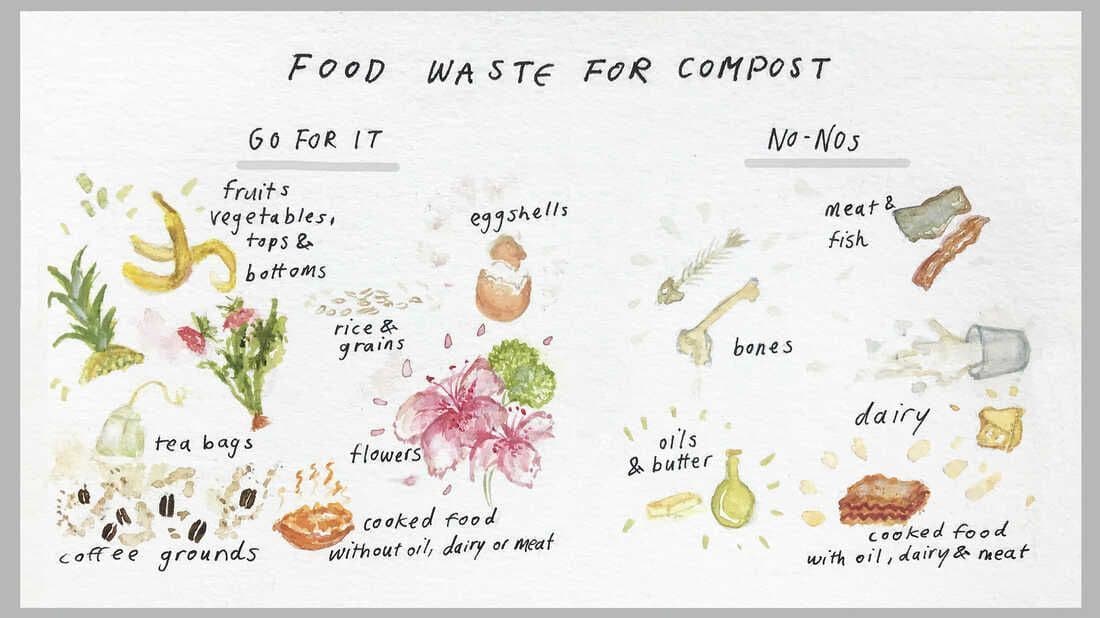
Start with kitchen scraps, like fruit and vegetable scraps, coffee grounds, filters, egg shells, tea bags, tea leaves, nut shells, herb trimmings, stale or moldy foods, vegetable cooking water, fruit juices, or vegetable juices. All these materials can be chopped or shredded into small pieces before adding them to the compost piles.
Yard waste can also go into the compost bin, as it is an excellent source of organic materials. Include leaves, grass clippings, garden debris, weeds, twigs, branches, straw, hay, hedge trimmings, fallen fruits, pine needles, sawdust, and wood shavings. The secret here is to focus on carbon-rich browns and nitrogen-rich greens.
Do not place products like meat, dairy, oily foods, pet waste, pesticide-treated plants, ash, and inorganic materials into your apartment composting. All these items are either hard to compost or rich in pathogens that could contaminate the composting process.
| ✅ Can Compost | ❌ Can't Compost |
|---|---|
| Fruit and vegetable scraps | Meat and fish |
| Coffee grounds and filters | Dairy products |
| Eggshells | Oily or greasy foods |
| Tea bags and tea leaves | Pet waste |
| Nut shells | Treated or painted wood |
| Stale or moldy foods (plant-based) | Pesticide-treated plants |
| Dry leaves and grass clippings | Coal or charcoal ash |
| Twigs, straw, and sawdust | Inorganic materials (plastic, glass, metal) |
| Herb trimmings and garden debris | Diseased or pest-infested plants |
| Fallen fruits and pine needles | Treated or painted wood |
For more details, visit the New York City Department of Sanitation's website.
Maintaining Your Indoor Compost
Understanding how to compost in an apartment does not end here. You must maintain the compost.
Turn the compost to aerate the pile and allow oxygen to reach all parts. Use a compost-turning tool or pitchfork to move the materials from the edges to the center. Focus the moisture in the compost to make sure it is neither too dry nor too wet. Turn the mixture every fortnight.
Your indoor compost needs the right environment for microbial activity and decomposition. Water the mix regularly to maintain that balance. There are several ways to keep your compost cover moist. These include adding absorbent materials, covering the compost, spraying it with compost tea, and adding kitchen scraps.
Control compost odors by balancing the carbon-to-nitrogen ratio, keeping proper compost pile aeration, keeping the moisture level in check, and covering the compost with breathable materials.
Expert tips:
- Avoid unpleasant compost odors and add compost activators while maintaining the alternate layers of green and brown materials.
- Sarah from GROUNDCYCLE recommends balancing compost pH levels by adding crushed eggshells to the compost.
Harvesting Your Compost
Key signs that your compost is ready include its texture. Mature compost is crumbly and has a dark brown or black color. It should have an earthy and pleasant smell. Mature compost is cooler. A healthy ecosystem will have beetles, mites, and springtails, and materials will be properly decomposed.
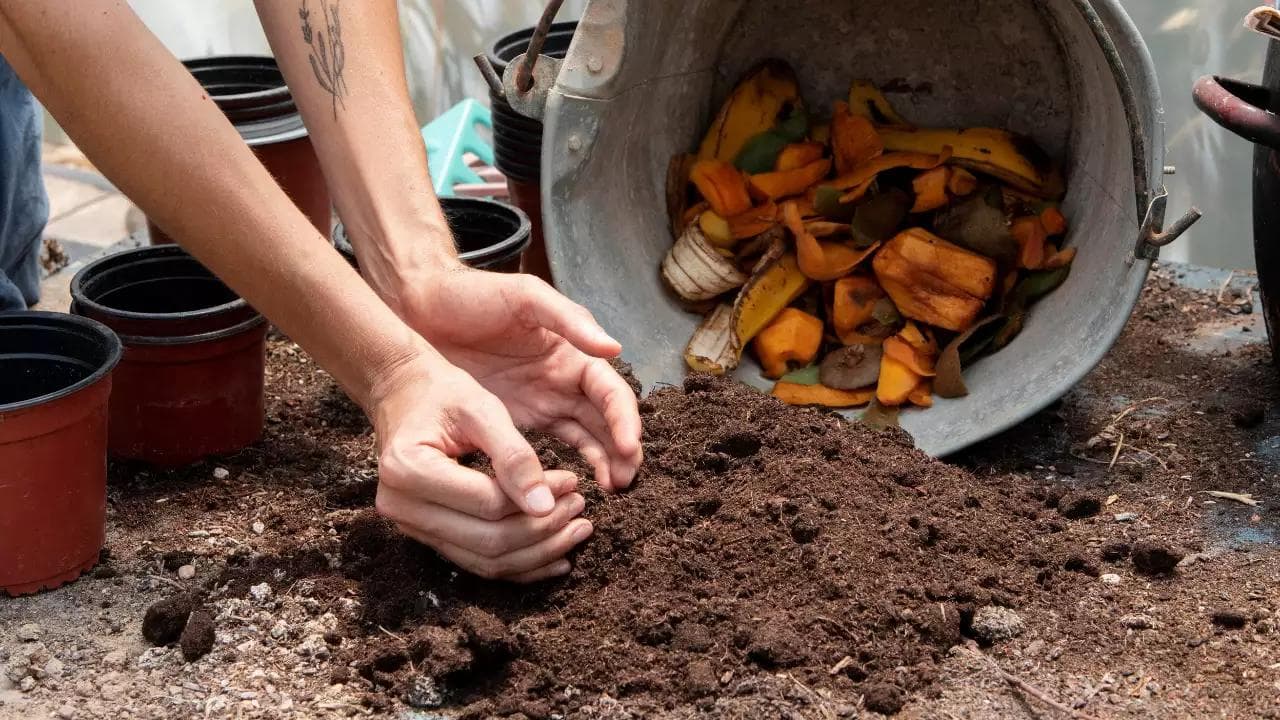
Once you see these signs, you can use the compost in your apartment or garden. It’s great for indoor plant care, balcony gardening, or patio gardening. In the garden, use the compost for soil amendments and mulching. Brew compost tea by adding compost to water or mixing compost with a seed-starting mix.
Start the entire composting process in your apartment once the cycle is completed. Repeat the cycle from Step 1 to keep a continuous supply of finished compost. Make composting an ongoing process to unlock the benefits of recycling.
For compost drop-off, get help fast from the NYC Department of Sanitation’s food scrap drop-off program or contact GROUNDCYCLE.
Troubleshooting Common Issues
You also need a basic understanding of the common troubleshooting issues when learning how to compost in an apartment. Here are some frequently asked questions with composting tips:
How can I deal with mold or pests in compost for apartment owners?
Adjust the moisture levels, increase the aeration, cover the exposed scraps, maintain the proper carbon-to-nitrogen ratio, and use pest control measures. Remove the moldy materials, optimize the temperature, and use a Bokashi bin or worm composting to control molds or pests. You'll be rewarded with free compost.
What should I do if the moisture levels in my apartment compost become too wet or too dry?
If the compost is too wet, add dry materials, increase the aeration, adjust the food scraps, cover the compost properly, and maintain the proper moisture levels. If the compost is too dry, add moisture by sprinkling water, adding moisture-retentive materials, covering the compost, and adjusting the moisture levels when needed.
What should I do if my compost does not break down as expected?
Your compost needs a quick check of carbon-to-nitrogen levels, improving the compost aeration, monitoring the moisture levels, shredding the materials properly, and adding the microorganisms. Further, focus on maintaining a proper temperature and be patient, as composting is a natural process.
Here is a success story:
Maria started an apartment composting system and now has in-house, high-quality compost. She has reduced her home waste by around 50%, and can now grow some of her own vegetables in rich, fertile soil.
Conclusion
We hope we’ve shed some light on how to compost in an apartment. The process is simple. All you need to get started is to gather the right items, focus on maintenance, and harvest your compost on time.
Ready to start? Pick your method above, order your bin, and drop your first batch of scraps this week. Share the habit with a neighbor and grow your impact from there.
Stay in the heart of New York City with Rove Travel
The best way to experience NYC is to live like a New Yorker. Rove Travel offers a curated collection of luxury furnished homes across Manhattan and Brooklyn, putting you steps from the corner stores, neighborhoods, and local culture that make this city unlike anywhere else. Browse available homes and find your perfect base for the city. If you're relocating for work, our corporate housing NYC guide covers everything you need to know about furnished stays for business travelers.
Find hidden gems and local favorites with our guides to non-touristy things to do in NYC and Brooklyn. Instead of hitting the usual crowded spots, check out charming neighborhoods, cultural hotspots, and unique dining spots for a true taste of the city. Uncover the best-kept secrets and experience the unique charm of New York City and Brooklyn just like a local.
FAQ
How long does it take for apartment compost to be ready?
The timeline depends on your composting method. Bokashi systems can ferment food scraps in as little as two weeks, while vermicomposting typically takes one to three months. Electric composters are the fastest option, often producing finished compost in just 24 to 48 hours.
What is the best composting method for a small apartment?
For very limited space, a countertop Bokashi bucket or a compact worm bin works well since both can fit under a kitchen sink or in a cabinet. If odor control is a top priority and you have a bit more budget, an electric composter is a low-maintenance choice that produces finished compost quickly with minimal smell.
Can you compost in an apartment without it smelling bad?
Yes. Odors are usually caused by an imbalance in carbon-to-nitrogen ratio or excess moisture. Keeping a good balance of browns (dry leaves, cardboard) and greens (food scraps), covering fresh additions, and turning the mix regularly will keep smells under control. Bokashi and electric composters are particularly well-suited for odor-sensitive spaces.
What can you do with finished compost from your apartment?
Finished compost can be mixed into potting soil for indoor plants, used to refresh balcony or patio container gardens, or brewed into compost tea as a liquid fertilizer. If you produce more than your plants need, many NYC residents can drop it off through the NYC Department of Sanitation food scrap drop-off program.
Is apartment composting worth it?
Yes. A small indoor composting system can divert 30 to 50 percent of your household food waste from the landfill, improve soil for your plants, and save money on potting mix and fertilizers over time. For NYC residents, it also helps avoid fines under the city's mandatory composting rules that took effect in April 2025.
Is NYC composting enforcement still active in 2026?
Yes. NYC's mandatory composting rules, which took effect April 1, 2025, remain in force. Residents who mix organic waste with regular trash are subject to fines. You can stay compliant by composting at home or using the NYC Department of Sanitation's food scrap drop-off program.
What are the fines for not composting in NYC?
Fines vary by building size. For buildings with one to eight units, the first offense is $25, rising to $50 for a second and $100 for each subsequent offense. For buildings with nine or more units, fines start at $100, go to $200 for a second offense, and $300 for each subsequent offense. Separate fines apply for setting out waste at the wrong time or in the wrong container: $50 for a first offense, $100 for a second, and $200 for each one after that. Fines are issued per violation within a 12-month period, so repeated non-compliance adds up quickly.
Are electric composters worth it for apartment living in 2026?
Electric composters have improved considerably and are a strong option for apartment dwellers who want speed and minimal odor. Models like the Reencle Prime ($499) and Lomi 3 ($649) can process food scraps in as little as 2 to 24 hours and fit on a countertop. The trade-off is cost. Electric composters are more expensive upfront than Bokashi buckets or worm bins, and they grind and dry scraps rather than producing biologically complete compost, so the output may need to cure before use in soil. For renters who want convenience and low maintenance, they are a worthwhile investment.
What are the fines for not composting in NYC?
Fines vary by building size. For buildings with one to eight units, the first offense is $25, rising to $50 for a second and $100 for each subsequent offense. For buildings with nine or more units, fines start at $100, go to $200 for a second offense, and $300 for each subsequent offense. Separate fines apply for setting out waste at the wrong time or in the wrong container: $50 for a first offense, $100 for a second, and $200 for each one after that. Fines are issued per violation within a 12-month period, so repeated non-compliance adds up quickly.