Exploring the Unique Characteristics of NYC Apartments (October 2026)
The comfort of a second home. The convenience of a hotel. The reliability of Rove.
Choosing an NYC apartment means weighing location, size, amenities, and cost, and each borough prices those trade-offs differently. In this article, you'll learn how apartments differ across Manhattan, Brooklyn, Queens, the Bronx, and Staten Island, and what rents look like in 2026. Rove lists furnished apartments for stays of 30 nights or more, so you can browse properties and see how you'd live in the city.
TLDR:
- NYC apartments span all five boroughs, from Manhattan doorman buildings to outer-borough walk-ups, each with distinct rent floors.
- Median Manhattan rent hit $4,900 in September 2026; Brooklyn came in at $4,000 and Northwest Queens at $3,742.
- A 2026 pied-a-terre tax adds 4.00% annually on non-primary condos valued $1M to $3M, changing the math on buying a second home.
- Outer-borough apartments and roommate shares remain the most direct paths to cutting rent below Manhattan levels.
- Rove lists furnished NYC apartments for stays of 30 nights or more, skipping the surcharge, furniture purchase, and long lease commitment.
NY apartments consist of the residential spaces found across New York City's five boroughs: Manhattan, Brooklyn, Queens, the Bronx, and Staten Island. These residences across the map cater to the diverse needs and preferences of city residents by offering a wide range of sizes and architectural styles.
New York City, often known as the "Big Apple," draws people from diverse backgrounds with its vibrant atmosphere and lively city life. Its famous skyline, multiculturalism, and abundant opportunities contribute to the constant demand for apartments in NYC.
Living in a New York City apartment provides a one-of-a-kind experience that cannot be found anywhere else. The vibrant energy of Times Square and the tranquil beauty of Central Park offer constant captivation just beyond your doorstep.
Definition of NYC apartments
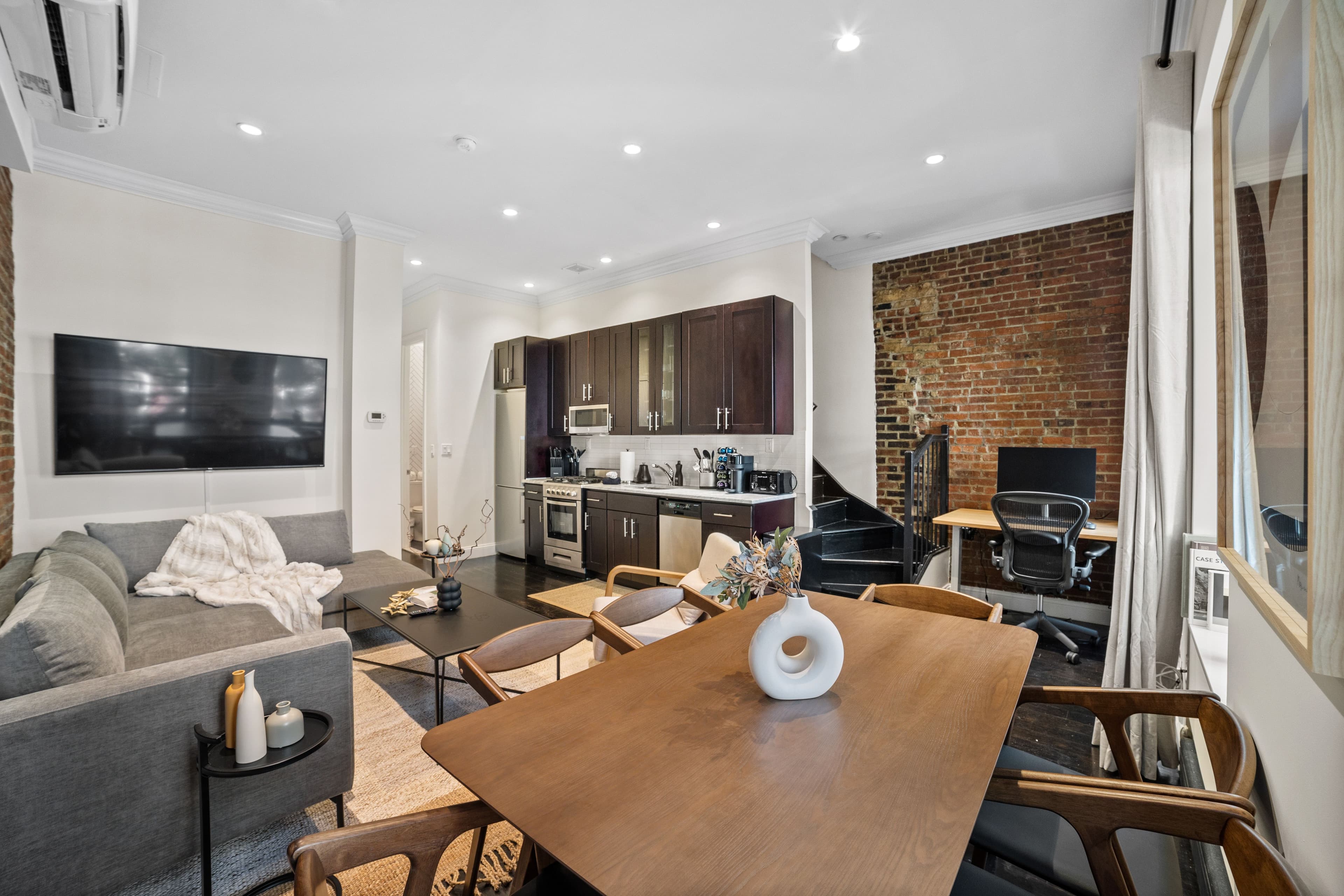
New York City apartments offer a wide range of choices. From cozy studios to expansive multi-bedroom units, these dwellings can be found in towering skyscrapers. Each one showcases distinctive architectural designs, reflecting the vibrant history and ever-changing urban character that defines the city.
In each borough of New York City, a unique ambiance shapes the character of the apartments. Manhattan boasts luxurious doorman penthouses that offer awe-inspiring views of the city skyline. Brooklyn combines trendy lofts with historic brownstones. Queens takes pride in its diverse range of affordable housing options. The Bronx flourishes with a lively community and budget-friendly apartments, while Staten Island provides a tranquil suburban atmosphere accompanied by picturesque waterfront vistas.
Overview of the unique characteristics of NYC apartments
New York City apartments offer a variety of advantages. They are conveniently located in prime areas, although the living space may be limited. On top of that, these apartments come equipped with modern amenities and provide a wide range of prices to suit different budgets.
One reason why NYC apartments are highly desirable is their prime locations. Whether individuals prefer the lively streets of Manhattan, teeming with top-notch restaurants, theaters, and shopping opportunities, or opt for a more laid-back neighborhood in Brooklyn or Queens, either way they will always be within easy reach of the city's vibrant energy.
In prime locations, space is often limited. This holds particularly true for apartments in NYC, known for their clever utilization of every available inch. As a result, residents feel compelled to take on a minimalist lifestyle and make the most out of their small living spaces by adding ingenious storage solutions and versatile furniture options.
Despite the limited space in NYC apartments, residents enjoy a heightened quality of life thanks to modern amenities. These luxurious features include state-of-the-art fitness centers, inviting rooftop gardens, convenient concierge services, and in-unit laundry facilities. With such offerings, these apartments provide an undeniably extravagant living experience.
When considering pricing, NYC apartments cater to a wide range of budgets. There are luxurious high-end apartments with substantial price tags. However, more affordable options are also available, especially in the outer boroughs. This allows individuals from different income brackets to find a place they can call home within the lively city that never sleeps.
Living in apartments in NYC provides a unique and exciting experience. These dwellings offer exceptional locations, distinct architectural designs, and limited yet modern spaces with diverse price ranges. They cater to the varied preferences and needs of New York City residents. Whether you are a young professional seeking a trendy studio in Brooklyn or a family searching for a spacious apartment in Manhattan, there is an NYC apartment waiting to welcome you. With diverse locations, Rove Travel offers an array of different properties to choose from. Check them out before they get booked up!
Location
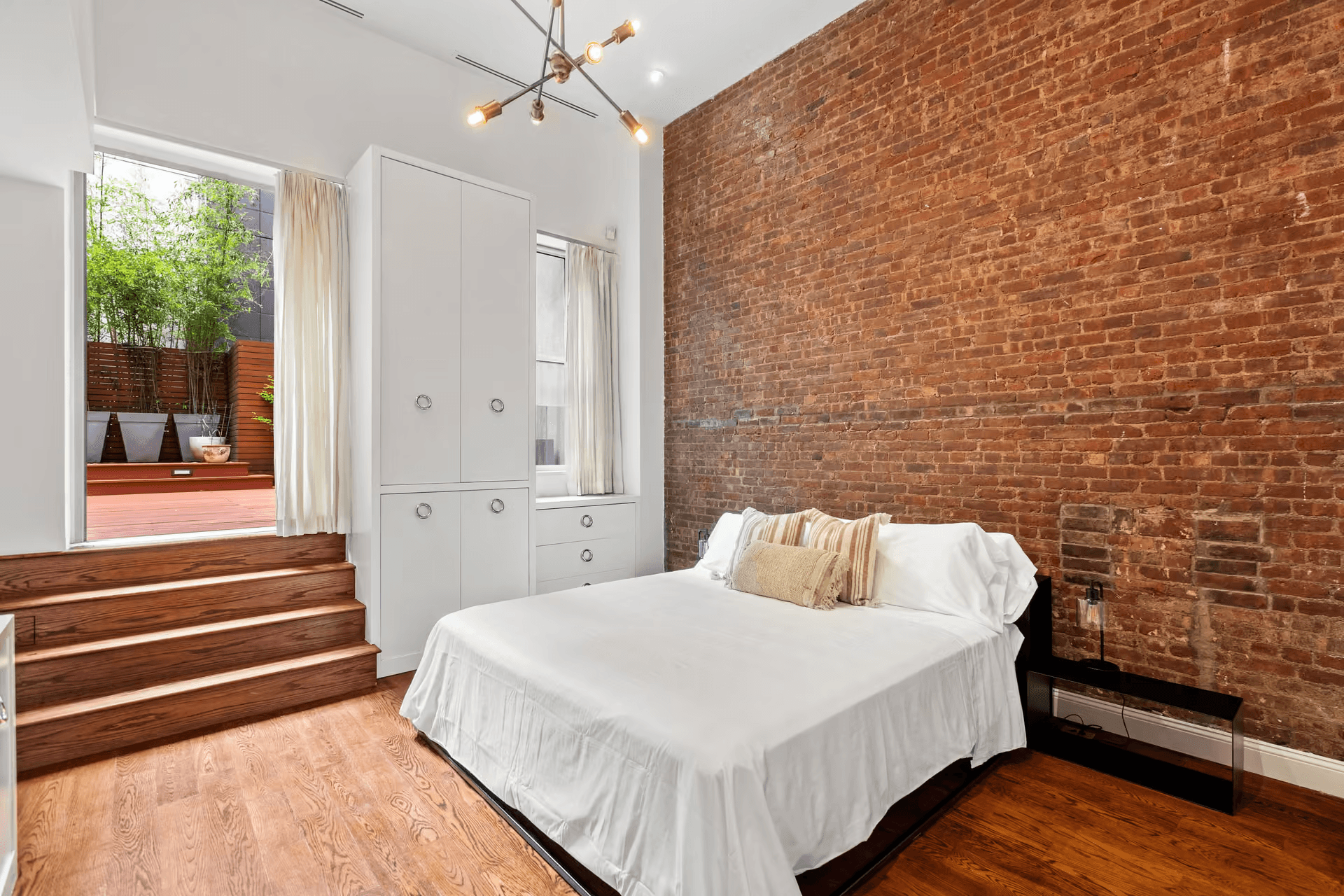
Living in a New York City apartment has its unique advantages and disadvantages, with the key factor to consider being the location. Is Murray Hill or Greenwich Village the ideal spot to live? What about Lower East Side or Chelsea? With so many options, from Midtown to downtown, it’s hard to tell where to start.
When it comes to location, New York City offers numerous options that cater to different preferences and lifestyles. Manhattan's vibrant streets and Brooklyn's artistic neighborhoods possess their own unique charm and character. It’s worth knowing the difference between Times Square, Williamsburg, and East Village before making your decision!
Exploring the other boroughs of New York City can also lead to rewarding and exciting adventures away from the usual tourist spots. Our non-touristy things to do in NYC reveals an array of unique places and immersive experiences that allow you to dig into the local culture and uncover hidden gems at the heart of New York.
Advantages of urban living
Living in an NYC apartment offers numerous advantages. Primarily, it provides the convenience of residing in the heart of a vibrant metropolis. Within easy reach are exceptional dining establishments, cultural landmarks, green spaces, and entertainment hubs. This makes it an ideal choice for individuals who crave an exhilarating urban lifestyle.
When one steps out of the apartment, they will find themselves just a short walk away from famous landmarks such as Times Square, Central Park, and the Empire State Building. The city turns into an extensive playground, offering infinite opportunities for exploration and discovery.
What's more, living in a lively metropolis such as New York means being fully immersed in a vibrant and diverse community. The fusion of various cultures and backgrounds closely intertwines, forming a rich blend of experiences. This opens up opportunities to engage with individuals from all walks of life, ultimately broadening one's horizons.
Disadvantages of urban living
Urban living, while offering numerous benefits, also presents certain drawbacks. The challenges faced by residents include high population density, noise pollution, and limited availability of green spaces.
In the lively metropolis of New York, it's no surprise that the city becomes densely populated with countless individuals cohabiting. Rush hour traffic, crowded subways, and long queues at famous attractions blend smoothly into the daily lives of urban dwellers. Getting around this concrete jungle demands patience and adaptability as key skills.
Noise pollution in urban areas has its drawbacks. It consists of various elements - the constant hum of traffic, distant blaring sirens, and lively chatter on the streets. This combination creates an overwhelming cacophony that can be hard to escape. However, amidst this chaotic auditory environment, many residents of New York City find solace in welcoming the vibrant energy it offers. They see these noise disturbances as a minor trade-off for the excitement and countless opportunities that city life provides.
On top of that, although New York City boasts remarkable parks and green spaces, their availability pales in comparison to the vast concrete jungle that envelops them. Uncovering a tranquil and secluded spot for relaxation and connection with nature may require some exploration and imagination.
When contemplating the decision to take on urban living in an NYC apartment, one must carefully weigh its advantages and disadvantages. It's important to weigh these aspects against the conveniences and opportunities that city life offers. In determining whether this location harmonizes seamlessly with one's lifestyle, personal priorities and preferences hold major sway.
Size
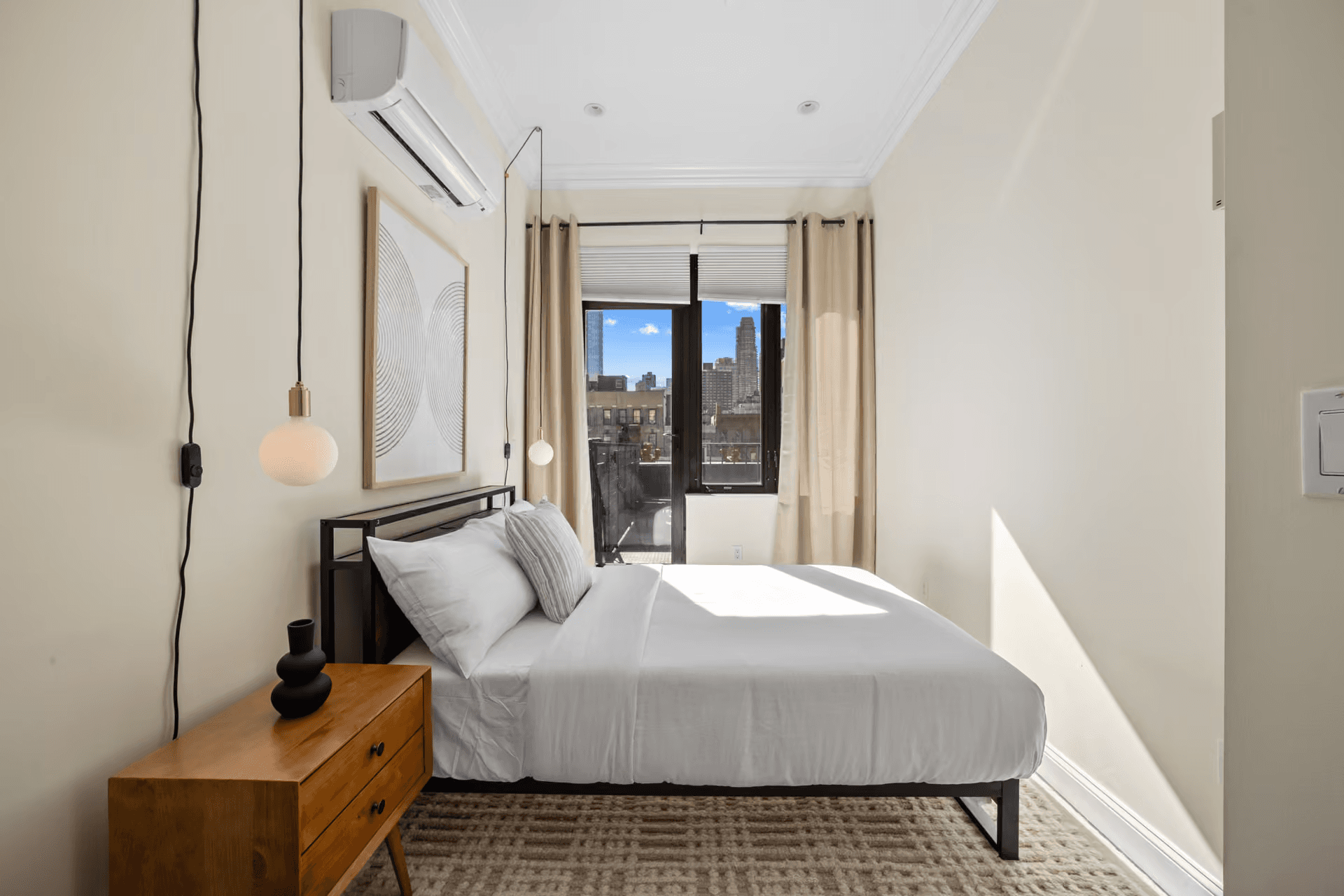
Space in the Big Apple is a valuable and limited resource, with NYC apartments often being characterized by their small and compact size.
Living in New York City presents a rapid adaptation to the unique challenges posed by limited space. The scarcity of land and high housing demand have resulted in smaller living spaces compared to suburban dwellings. It is not unusual to encounter apartments in the city that are only a fraction of the size of a typical suburban home. Closets might be smaller, or washer and dryer hookups are not always commonplace. The square foot measurement of the place may not allow for it, or the building could not fit it for some other reason.
On the contrary, New Yorkers do not compromise on comfort or style. They wholeheartedly embrace the art of small-space living and ingeniously find solutions to optimize their limited space. In fact, they’ll make their pet friendly one-bedroom in Harlem with a wonky floor plan and an average rent their entire personality without being paid for it. A short-term lease isn’t a deterrent for the real estate story they’ll make of their renter situation, and it’s common for New Yorkers to even move when they find a space more suitable in the future.
Smaller living spaces
In NYC, apartments often have smaller living spaces compared to their suburban counterparts due to high demand and limited land availability. This unique lifestyle calls for clever solutions for optimizing the available space.
Living in a smaller apartment in NYC presents both advantages and challenges. On one hand, downsizing becomes necessary, requiring individuals to carefully curate their belongings. However, the coziness and intimacy of the space allow each corner to reflect one's personal touch.
New Yorkers, known for their limited living spaces, have mastered the art of resourcefulness and creativity. They possess an innate ability to uncover storage solutions that optimize even the tiniest corners. Whether it's using under-bed storage bins or installing floating shelves on walls, they carefully consider and maximize every available inch.
Maximizing space
Residents of New York City apartments show impressive skill in optimizing their living spaces. They use clever storage solutions and invest in versatile furniture, allowing them to create comfortable environments even within the smallest apartments.
New Yorkers have honed their skills in maximizing space by cleverly using multi-functional furniture. They welcome intelligent designs, like a coffee table that also serves as a storage ottoman or a sofa that smoothly turns into a bed. Even their dining tables conveniently fold away when not in use. These examples show how clever furniture solutions cater to their desire for versatility in compact living spaces.
Another popular technique involves making use of vertical space. New Yorkers, renowned for their expertise in storage solutions, use wall-mounted shelves, hanging organizers, and even pegboard systems to efficiently store kitchen utensils. By adopting a vertical approach, they can optimize floor space while creating an open and spacious atmosphere.
New Yorkers are known for their impressive organizational skills. Their ability to excel in this art form is driven by the necessity of managing limited space. They put a premium on maintaining order and tidiness by using storage bins, boxes, and intelligent organization systems. Every item finds its designated spot, ensuring easy retrieval and a harmonious atmosphere within their homes.
Living in a small NYC apartment necessitates adjustments. However, it also provides an opportunity to embrace a minimalist lifestyle and prioritize what truly matters. New Yorkers, known for their creativity and ingenuity, have ingeniously transformed these compact living spaces into warm and fashionable homes that reflect their unique personalities.
Amenities
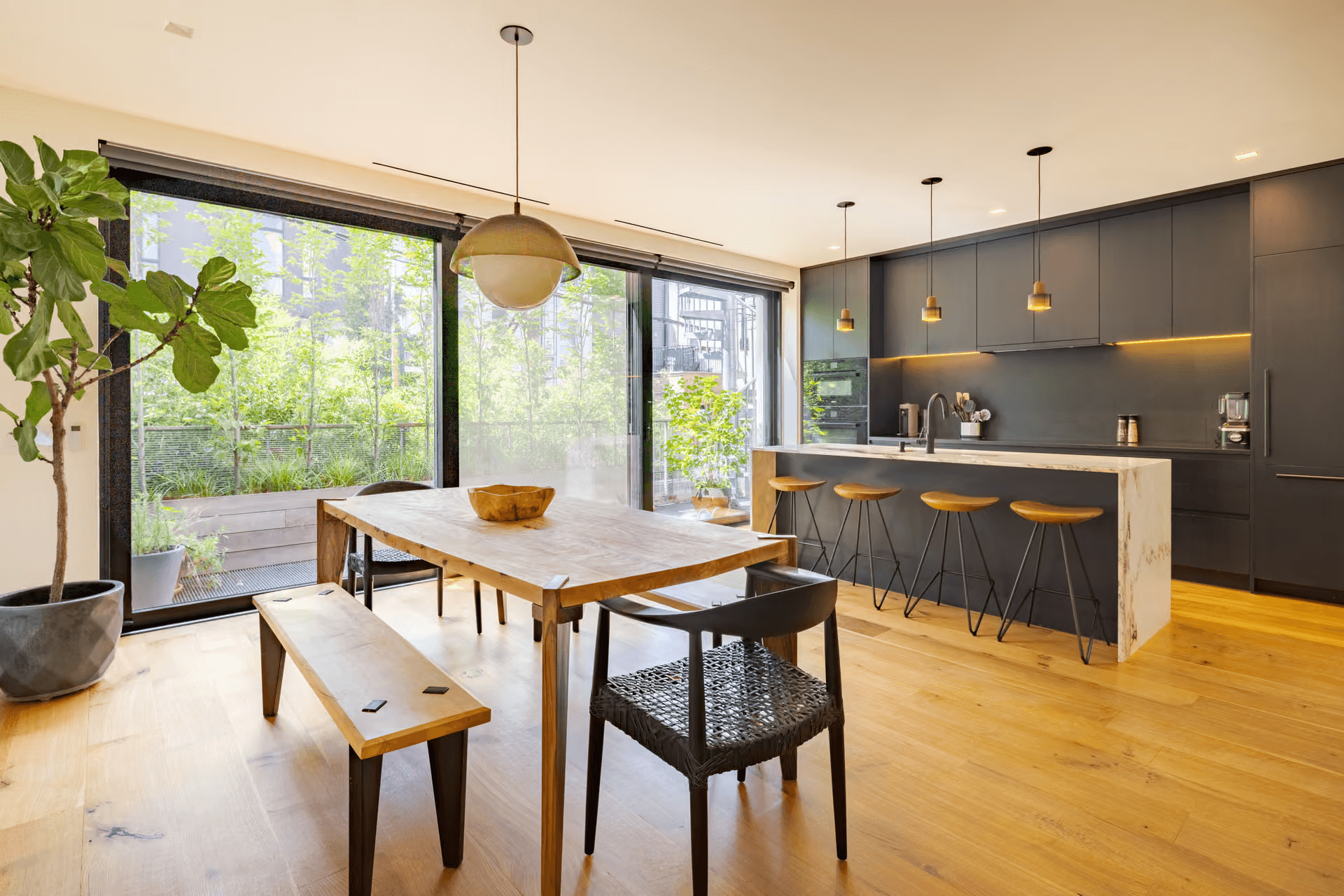
NYC apartments offer amenities at two levels: buildings add gyms, rooftop terraces, concierge services, and communal spaces, while individual units add in-unit laundry, dishwashers, and dedicated workspaces. These facilities give residents a diverse selection of options to enhance their living experience.
Building amenities
Many of the high-rise buildings in New York City offer a range of amenities to their residents. These include gyms, concierge services, rooftop terraces, and communal spaces. These features enhance convenience and add luxuriousness, perfectly complementing the urban lifestyle. A roundup of the best luxury apartments in New York shows which buildings carry the fullest amenity packages.
Apartment amenities
Unit amenities decide how a month-long stay feels by week two. Furnished Rove apartments come with chef-grade kitchens (full-size refrigerator, dishwasher, and a gas or induction range), a Nespresso coffee maker, premium linens, and in-unit washer and dryer in most properties. Each home also has a dedicated workspace with a monitor and keyboard. At $8,000 per month and above, Rove treats 1 Gbps fiber internet, individual room climate control, keyless entry, and motorized blackout shades as baseline, not upgrades. Many older walk-ups skip in-unit laundry, so confirm it before you sign.
Cost
NYC rents hit new highs in 2026. In September, the median Manhattan rent was $4,900 and the median Brooklyn rent was $4,000, according to Brick Underground's September 2026 rental report. Northwest Queens, which covers Long Island City and Astoria, came in at $3,742. Manhattan luxury units reached a median of $16,591. Pick the borough first, then the building.
| Area | September 2026 Median Rent |
|---|---|
| Manhattan | $4,900 |
| Brooklyn | $4,000 |
| Northwest Queens (LIC, Astoria) | $3,742 |
| Manhattan luxury units | $16,591 |
Factors that affect cost
Location, size, amenities, and neighborhood desirability all play a role in determining the price of an NYC apartment. Apartments located in prime areas like Manhattan generally come with a higher price tag compared to those found in the outer boroughs. On top of that, newer buildings that offer state-of-the-art amenities often command a higher asking price. Furnished monthly stays price differently, and this breakdown of luxury furnished apartment costs in NYC shows what the monthly rate covers.
Strategies for finding an affordable NYC apartment
Individuals with a limited budget have several options for finding affordable apartments in the Big Apple. One approach involves looking at neighborhoods in the outer boroughs, where rental prices tend to be lower than in Manhattan. Another possibility is considering older buildings, which often offer cost-effective housing solutions. Roommate shares can also cut expenses. For those in need of flexible terms or a no-fuss move-in, finding a short-term furnished rental in NYC removes the furniture purchase, the utility setup, and the long lease commitment. Because rents are climbing, do your research early and work with real estate professionals who specialize in affordable housing. If you want to live luxuriously in one of the world’s best cities, you can browse New York apartments on Rove or reach out to the Rove concierge team, who can help you find your next furnished monthly rental.
What changed for NYC apartments in 2026
Two changes this year affect what a New York apartment costs you, whether you rent or own.
Rents cooled slightly after the summer peak. The average Manhattan asking rent fell 1.40% in September to $5,291 but is still up 1.30% from a year earlier, according to MNS's Manhattan rental market report. That report covers listings below 125th Street priced under $10,000, so its average sits above the medians cited in the Cost section.
Second-home owners also face a new bill. For fiscal years beginning July 1, 2026, the city applies a surcharge to high-value residences that are not a primary residence, known as the pied-à-terre tax. One- to three-family homes worth $5 million or more pay 0.80% to 1.30% a year, and condo and co-op units start at 4.00% for values between $1 million and $3 million, per Day Pitney's summary of the law. The city's non-primary residence surcharge page confirms it generally does not apply to a primary residence, and renters do not pay it. On September 29, 2026, a Richmond County court ruled the city's owner notices arbitrary and capricious and ordered a redo. The city has appealed, and the surcharge stays in effect while the appeal is pending, per Day Pitney's court ruling update.
If you need a New York base for 30 to 90 nights at a stretch, that bill changes the math on buying. A furnished monthly rental in New York skips the surcharge, the capital tied up in the unit, and the maintenance. The guide to monthly furnished apartments in NYC covers how those stays are priced and booked.
FAQ
What are typical rent ranges for NYC apartments in 2026?
Median rents vary sharply by borough: Manhattan hit $4,900, Brooklyn $4,000, and northwest Queens $3,742 in September 2026, per Brick Underground's rental market report. Manhattan luxury units reached a median of $16,591. The borough you choose sets your price floor before building type, amenities, or furnishing status come into play.
How does the NYC pied-à-terre tax affect second-home owners in 2026?
The surcharge applies to non-primary residences above defined value thresholds. Condo and co-op units with a Department of Finance assessed value of $1 million or more face rates starting at 4%, while one-to-three-family homes worth $5 million or more pay 0.80% to 1.30% annually. Primary residents and renters are exempt. If you need a New York base for 30 to 90 nights a year, a furnished monthly rental avoids the surcharge, the capital tied up in a purchased unit, and ongoing maintenance costs.
What's the fastest way to find a furnished NYC apartment without a long lease commitment?
Short-term furnished rentals priced at 30 nights or more remove the furniture purchase, utility setup, and long lease commitment in one step. Rove lists furnished apartments for stays of 30 nights or more across NYC neighborhoods. You can browse available properties directly at RoveTravel.com or reach out to the concierge team for guidance on timing and fit.
Do small NYC apartments actually work for remote professionals, or is the square footage too limiting?
Square footage is a real limit, but most buildings at the $8,000-per-month threshold and above include 1 Gbps fiber internet, individual room climate control, keyless entry, and dedicated workspaces as baseline features, not as upgrades. The practical question is whether the building's amenity stack compensates for the unit's footprint, and in most cases at that price point, it does.
Should I rent a furnished NYC apartment in Manhattan or look at Brooklyn or Queens to save money?
Brooklyn and Queens consistently offer lower rents for comparable square footage. Brooklyn's September 2026 median of $4,000 versus Manhattan's $4,900 reflects that gap at the median level, with the spread widening at larger unit sizes. If proximity to a specific employer or neighborhood is flexible, the outer boroughs give you more space per dollar and shorter commutes than the subway map suggests.
Conclusion
NYC apartments provide a distinct blend of convenient locations, diverse sizes, appealing amenities, and various price ranges. Residing in these exceptional living spaces offers residents unparalleled access to the city's vibrant energy and abundant opportunities.