Financial District NYC: What to Know (Oct 2026)
The comfort of a second home. The convenience of a hotel. The reliability of Rove.
Planning a stay in Lower Manhattan and not sure what to expect? The Financial District tends to get undersold in most travel guides and oversold in real estate listings. The reality sits somewhere in the middle: great transit, genuine history, a handful of restaurants worth going out of your way for, and a pace that suits some people perfectly.
TLDR:
- Studio rents start at $4,163 and one-bedrooms run $5,250-$5,500, up roughly 11.9% year-over-year, per RentHop data.
- FiDi works well for tourists and business travelers; evenings go quiet after 6pm, so nightlife seekers are better served by SoHo or the West Village.
- The street grid predates Manhattan's numbered system, so use Broadway as your north-south spine and go east or west from there.
- Rove offers furnished Manhattan residences on 30-plus night terms with no broker fees, chef-grade kitchens, and dedicated workspaces, as an alternative to hotel rooms or broker-mediated rentals.
FiDi at a Glance: Location and Boundaries
The Financial District, or FiDi, sits at the southern tip of Manhattan, bordered by Chambers Street to the north, the East River to the east, Battery Park and New York Harbor to the south, and West Street along the Hudson to the west. The whole neighborhood is home to about 36,000 people and covers barely half a square mile.
A Short History of the Financial District
FiDi's streets follow no logical grid because they were never planned as one. Beaver, Pearl, and Nassau trace routes from the 1600s when the Dutch settled the southern tip of Manhattan as New Amsterdam. The island was famously purchased from the Lenape for 60 guilders, roughly $24, and what grew from that transaction became the commercial engine of a continent.
Wall Street takes its name literally: a wooden defensive wall the Dutch built across the island's width in 1653. The wall came down, but the street stayed, and by the 1792 Buttonwood Agreement, signed under a nearby tree, it had formalized what would become the New York Stock Exchange.
September 11, 2001 left a permanent mark on the neighborhood's physical and psychological geography. The rebuilding that followed drew new residents, hotels, and restaurants into what had been almost exclusively a daytime business district. As StreetEasy notes, FiDi is now increasingly residential, with people drawn by transit access, renovated apartments, and waterfront views.
What to See and Do in FiDi
The 9/11 Memorial's twin reflecting pools occupy the exact footprints of the original towers. The quiet there is startling given what surrounds it, and the adjacent museum is one of the most thoughtfully designed spaces in the city. Budget at least two hours.
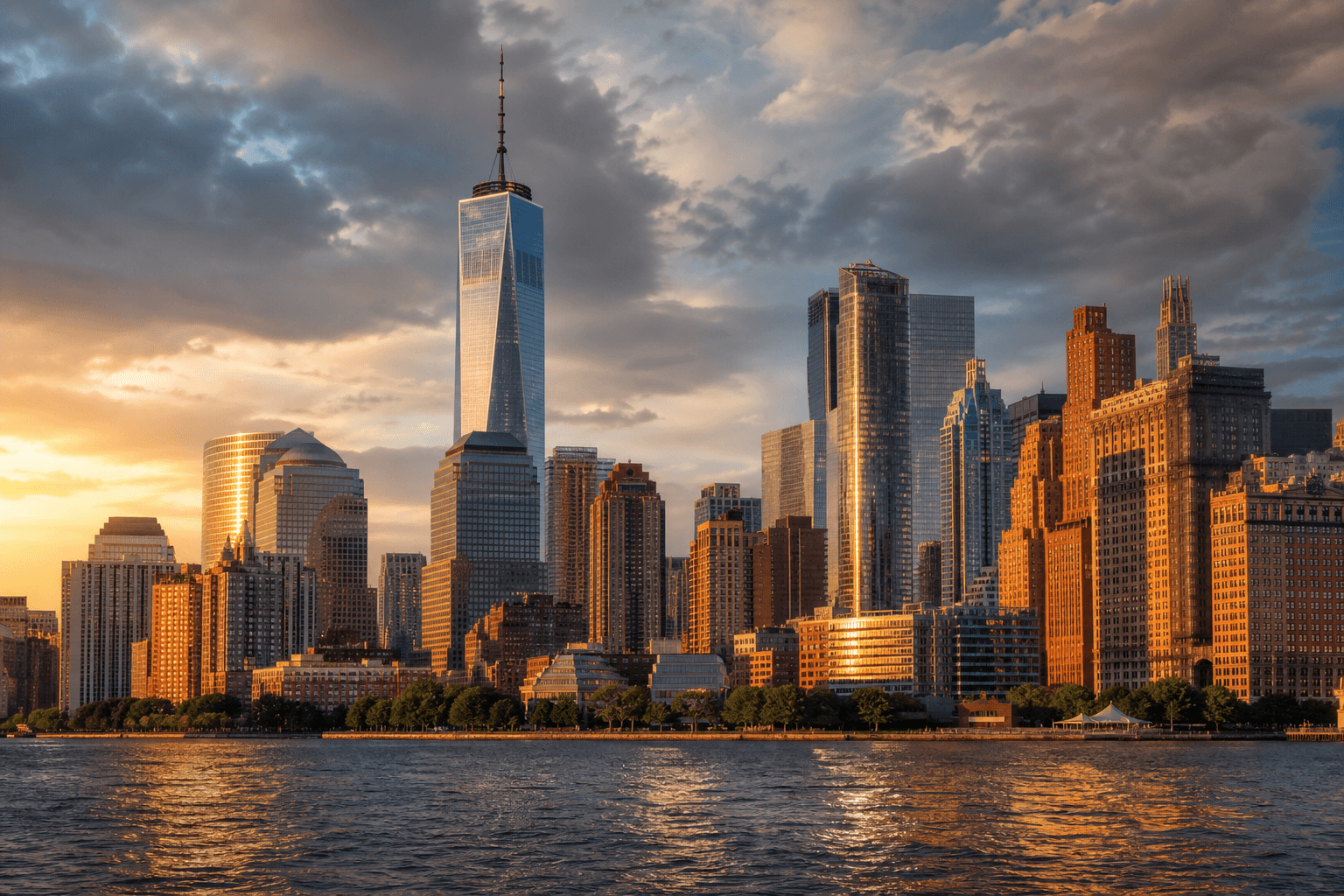
One World Observatory, on floors 100 to 102 of One World Trade, gives you a 360-degree view of the entire metropolitan area. Worth it on a clear day.
The Charging Bull on Broadway draws crowds, but the Fearless Girl across the street is the photo most people actually want. Federal Hall on Wall Street, where George Washington took the first presidential oath, is free and usually quiet. Trinity Church at Broadway and Wall Street is one of the oldest Gothic Revival structures in the country and still holds services.
Fraunces Tavern on Pearl Street is a working restaurant inside a building that dates to 1719, where Washington said farewell to his officers in 1783. The New York Stock Exchange facade on Broad Street is worth seeing in person, even though public tours are closed.
Battery Park, at the southern tip of Manhattan, offers harbor views and ferry terminals for the Statue of Liberty and Ellis Island, and travelers booking Manhattan vacation rentals nearby can walk to the water in minutes. The Oculus, Santiago Calatrava's ribbed transit hub at the World Trade Center complex, is worth walking through even if you're not catching a train.
Dining in the Financial District: From Quick Lunch to Sit-Down Dinner
FiDi's dining scene has changed considerably. A neighborhood once written off as a lunch-only corridor has developed real evening staying power, with options ranging from historic taverns to waterfront seafood.
For sit-down dinner, Delmonico's on Beaver Street is the obvious anchor, one of the oldest restaurants in America, serving classic steakhouse fare in a room that still feels like it belongs to the 19th century. Fraunces Tavern on Pearl Street pulls double duty as a historic landmark and a functioning pub with a solid menu and weekend hours. Stone Street, a cobblestoned alley lined with bars and restaurants, is the neighborhood's main outdoor dining strip and its closest thing to a social hub after work.
The South Street Seaport and Pier 17 area has become a genuine waterfront dining destination, with East River and Brooklyn Bridge views. For weekday lunch, the Oculus and Brookfield Place food halls cover quick meals efficiently, and most spots between Fulton Street and Wall Street are built around the midday rush.
Hotels in the Financial District: Budget, Mid-Range, and Luxury
FiDi has a real range of hotels, from functional mid-range options to genuine destination properties, alongside Manhattan luxury rentals for travelers who prefer an apartment setup.
| Hotel | Tier | Location | Features | Best For |
|---|---|---|---|---|
| Club Quarters | Budget / Mid-Range | Lower Manhattan | Well-located, functional | Business travelers, value stays |
| Four Points by Sheraton | Budget / Mid-Range | Lower Manhattan | Reliable chain, good transit access | Value travelers |
| Courtyard by Marriott New York Downtown | Budget / Mid-Range | Lower Manhattan | Marriott Bonvoy points | Loyalty program members |
| Hotel Indigo NYC Financial District | Mid-to-Upper | Trinity Place & Rector St | 4.6 rating across 750 reviews; design-forward interiors | Design-conscious travelers |
| FIDI Hotel | Mid-to-Upper | Stone Street | 131 rooms; Mondrian-inspired glass facade | Boutique experience seekers |
| The Wall Street Hotel | Luxury | Wall Street | #3 hotel in NYC (Travel+Leisure 2026); landmarked building | Luxury travelers, extended business stays |
Budget and Mid-Range
Club Quarters, Four Points by Sheraton, and the Courtyard by Marriott New York Downtown are reliable mid-range choices. These are well-located for visitors heading to the 9/11 Memorial or a lower Manhattan business meeting without paying for atmosphere. The Courtyard is the pick for Marriott Bonvoy members collecting points.
Mid-to-Upper
Hotel Indigo NYC Financial District, at the corner of Trinity Place and Rector Street, blends the neighborhood's historic character with design-forward interiors and holds a 4.6 rating across 750 reviews. The FIDI Hotel on Stone Street is a 131-room boutique property with a Mondrian-inspired glass facade, positioned at the center of the neighborhood's social corridor, while those wanting more living space might look at Manhattan aparthotels instead.
Luxury
The Wall Street Hotel is the neighborhood's flagship property, voted the number 3 hotel in New York City in Travel+Leisure's 2026 World's Best Awards. It sits inside a landmarked building, with rooms designed around livability over aesthetics. Concierge services, in-room dining, and a gym come standard.
Is the Financial District a Good Place to Stay?
For tourists, the concentration of landmarks is hard to beat. The 9/11 Memorial, Statue of Liberty ferry, Brooklyn Bridge, and One World Observatory are all walkable. Evenings run quiet, which some visitors find peaceful and others find limiting.
That quiet is the main trade-off. After 6pm on weekdays and most weekends, foot traffic drops sharply and dining options thin out. If nightlife matters, SoHo or the West Village will serve you better.
For business travelers with meetings in Lower Manhattan, FiDi is the obvious choice, and temporary housing in Manhattan can bridge the gap between hotel stays and a permanent lease. Extended-stay guests and remote workers tend to favor FiDi for exactly those reasons: waterfront access, transit coverage, and quiet evenings after a demanding workweek. The low weekend noise that feels like a trade-off for tourists becomes a genuine asset when you're here for 30 nights, not three.
Renting an Apartment in the Financial District: What to Expect
FiDi's residential building stock is almost entirely high-rise, most of it converted from commercial towers that went office-to-residential after 2001. You get doormen, gym access, and in many cases harbor or skyline views. Studios and one-bedrooms dominate, though two- and three-bedroom units exist in the larger conversions.
Rents have climbed, which is part of why some renters consider sublet apartments in Manhattan as an alternative. According to RentHop data, studio asking rents average around $4,163, within a range of roughly $3,942 to $4,196. One-bedroom medians run $5,250 to $5,500, up roughly 11.9% year-over-year from a prior median near $4,915, per the same source.
For that price, you get more square footage than comparable rents buy in Midtown or SoHo, plus transit access that's hard to match anywhere in the borough. The trade-off is neighborhood energy: FiDi goes quiet evenings and weekends, which suits finance professionals and remote workers more than renters who want a lively street scene outside their door.
Getting Around: Transit, Walking, and Ferries
FiDi has more subway lines than most neighborhoods have streets. Several lines stop here, and the PATH train at World Trade Center adds a direct link to New Jersey. Getting anywhere in the city from FiDi rarely requires more than one transfer.
The Staten Island Ferry departs from Whitehall Terminal around the clock, free of charge, with harbor and Statue of Liberty views that rival any paid boat tour. Pier 11 on the East River handles NYC Ferry routes to Brooklyn, Queens, and beyond, with Wall Street service running frequently during commute hours.
Most major sites sit within a 10 to 15 minute walk of each other. Broadway runs north-south, Fulton Street connects the Fulton Center transit hub to the Seaport, and Water Street traces the East River side. First-time visitors often find Beaver, Pearl, and Stone Street disorienting, so keeping Broadway in sight helps. Citi Bike docks are available throughout the neighborhood, though cobblestone blocks around Stone Street and the Seaport make cycling less practical than it sounds.
The FiDi Street Grid: A Neighborhood Map in Words
FiDi's irregular layout confuses first-time visitors because it predates the 1811 Commissioners' Plan that imposed Manhattan's numbered grid above Houston Street. These streets weren't designed; they accumulated.
A few anchors make orientation manageable:
- Broadway runs north-south the full length of the neighborhood, from Battery Park up through the city, and serves as the spine everything else references.
- Wall Street runs east-west from the East River to Trinity Church, with the NYSE and Federal Hall at its core.
- Broad Street, once a Dutch canal, intersects Wall Street at the heart of the old colonial settlement, where Delmonico's sits today.
- Fulton Street connects the Fulton Center subway hub on Broadway to the Seaport on the east side.
- Vesey Street borders the World Trade Center site to the north and is the primary reference point for the Oculus and PATH access.
The blocks between these streets, particularly around Pearl, Stone, and Beaver, twist and dead-end without warning. Keeping Broadway visible and moving east or west from it is the most reliable way to stay located.
Major Employers and Companies in the Financial District
FiDi's employer base is rooted in finance. The New York Stock Exchange on Broad Street, the Federal Reserve Bank of New York on Liberty Street, Goldman Sachs, JPMorgan Chase, and American Express all maintain major presences here, making it the densest concentration of financial industry employers in the country.
The mix has broadened over the past decade. The World Trade Center complex drew in Condé Nast, major law firms, consulting practices, and tech-adjacent companies seeking prestige location and transit access. Media, legal, and professional services now account for a meaningful share of the daytime workforce alongside traditional finance tenants.
The blocks between Wall Street and Fulton Street put most major Lower Manhattan employers within walking distance, a real advantage for guests using corporate housing in Manhattan or apartment renters whose work keeps them downtown.
Staying in FiDi for a Month or More: Luxury Furnished Rentals with Rove
Hotels cap out at one room. Broker-mediated furnished rentals in Lower Manhattan take weeks to secure, often require first month, last month, and a security deposit upfront, and offer no concierge support once you sign, instead of the flexibility of short term rentals in Manhattan. For executives on assignment near Wall Street or consultants working the Goldman-to-JPMorgan corridor, Rove's monthly rentals are the practical alternative.
Rove's Manhattan portfolio includes fully furnished, move-in-ready residences available on 30-plus night terms, with chef-grade kitchens, dedicated workspaces with monitors and keyboards, premium linens, and in-unit laundry. No broker fees, no multi-week application timelines, and instant booking on top properties. The portfolio runs at 85-plus percent occupancy with a 4.8-star average guest rating, based on internal booking data. Direct bookings through Rove's site are typically priced below Airbnb listings, with additional savings on select direct bookings.
A 24/7 concierge team handles everything from maintenance to pre-arrival setup. That support structure matters more by week three than it does on day one, a theme covered in more depth in the New York luxury rentals guide. Browse Rove's Manhattan collection to see what's available.
Final Thoughts on Staying and Living in the Financial District
For tourists, the landmark density and subway access make FiDi a strong base, especially if your itinerary skews toward Lower Manhattan. For renters and extended-stay guests, the calculus comes down to whether quiet evenings and transit access outweigh the thinner dining and nightlife scene. If you are in the neighborhood for work and need a month or more of furnished housing, Rove has Manhattan residences with full kitchens, dedicated workspaces, and 24/7 concierge support available on 30-plus night terms.
FAQ
Is the Financial District in NYC a good place to stay for visitors?
Yes, FiDi works well for visitors focused on lower Manhattan landmarks: the 9/11 Memorial, Statue of Liberty ferry, Brooklyn Bridge, and One World Observatory are all walkable from each other. The trade-off is that foot traffic drops sharply after 6pm on weekdays and most weekends, so if nightlife or a lively street scene matters, SoHo or the West Village will serve you better.
What are the best hotels in the Financial District NYC, from budget to luxury?
For budget and mid-range stays, Club Quarters, Four Points by Sheraton, and the Courtyard by Marriott New York Downtown are well-located and reliable. Hotel Indigo NYC Financial District holds a 4.6 rating across 750 reviews and sits at the corner of Trinity Place and Rector Street. The Wall Street Hotel is the neighborhood's flagship luxury property, set inside a landmarked building with rooms designed around livability, in-room dining, and full concierge support, suited to luxury travelers and extended business stays.
What should I expect to pay for a Financial District NYC apartment, and how does it compare to other Manhattan neighborhoods?
Asking rents in FiDi range from around $4,163 for studios to $8,950 for four-bedroom units, with one-bedroom medians running $5,250 to $5,500, up roughly 11.9% year-over-year per RentHop data. For that price you typically get more square footage than comparable rents buy in Midtown or SoHo, plus transit access from 11 subway lines. The trade-off is a quiet evening and weekend street scene that suits finance professionals and remote workers more than renters who want neighborhood energy outside their door.
What's the best alternative to a hotel for a month-long stay near Wall Street in NYC?
A fully furnished rental through a managed platform like Rove gives you more space, a chef-grade kitchen, dedicated workspace, and in-unit laundry at a lower effective nightly cost than a hotel room over 30-plus nights. Rove's Manhattan collection runs at 85-plus percent occupancy with a 4.8-star average guest rating, direct bookings are typically priced below comparable Airbnb listings, and 24/7 concierge support is included, a detail that matters more by week three than on day one.
How do I find my way through Financial District NYC streets without getting lost?
FiDi's irregular layout predates Manhattan's numbered grid, so the standard uptown-downtown sense of direction breaks down fast. Keep Broadway in sight as your north-south spine, use Wall Street as your east-west reference point, and treat Fulton Street as the connector between the transit hub and the Seaport. The blocks around Pearl, Stone, and Beaver twist and dead-end without warning. If you lose your bearings, find Broadway and head east or west from there.