Attract High-End Renters: Luxury Property Guide - August 2026

Renter households earning $75,000 or more grew by 1.7 million between 2021 and 2024, and luxury vacation rental bookings rose 119% year over year. Supply at the premium end hasn't kept up, which means the owners who get their positioning right are capturing most of that demand. The ones who don't are competing on price by default, and that's not a game luxury rentals win.
TLDR:
- High-end renters search on trust and quality, not price. Identify your target guest profile before spending on upgrades or photography.
- Professional listing photos average 24% more bookings; your cover image is the single most consequential decision in your listing.
- Pricing too low signals something is wrong. Luxury-tier average daily rates grew 5.23% year over year while budget-tier rates declined.
- Over 93% of property managers encountered rental application fraud in the past year, making a multi-layer screening stack a financial necessity.
- Rove Travel manages luxury properties across NYC, The Hamptons, Aspen, South Florida, and Southern California, with two tiers: RoveCore (free) and Rove+ (15% all-in management fee).
Know Who You Are Trying to Attract
Renter households earning $75,000 or more grew by 1.7 million since 2021, and luxury bookings rose 119% year over year. That gap is where your property either captures serious income or gets overlooked.
High-end renters in 2026 fall into a few distinct profiles:
- Executives and remote professionals on extended assignments who need a functional home base, a need that top vacation rental management companies are increasingly positioned to serve
- Families relocating or between leases who want space, privacy, and a real kitchen
- Affluent travelers booking 30 or more nights who compare your listing against five-star hotels
What they share: they are not searching on price. They are searching on trust, quality, and whether the property can support how they live. Know which profile you are competing for before spending on photography or upgrades.
Set the Physical Standard Your Property Must Meet
High-end renters are not grading your property on a curve. At $5,000 a month, they have already seen dozens of listings. At $10,000, they have stayed in five-star hotels and know exactly what they are giving up by choosing a rental. The baseline they apply is rigid, and properties that fall short are skipped without a second look.
The floor for any property competing at the luxury tier includes:
- Chef-grade appliances with full cookware, knives, and tableware for four or more, so guests should be able to cook a real meal on night one without a trip to the store.
- Premium linens, quality towels, and toiletries that match a hotel standard
- A dedicated workspace with a monitor, keyboard, and fast internet
- Keyless entry and in-unit laundry
- Outdoor space where the market supports it: a private terrace, pool access, or garden
Above $8,000 Per Month, the Bar Moves
For properties priced above $8,000 per month, that floor rises. Guests at this tier expect 1 Gbps fiber, individual room climate control, and motorized blackout shades as baseline features, not upgrades. Cross $10,000 per month and wellness access enters the equation: a 24-hour fitness option, spa or recovery amenity, or rooftop pool. Without at least three of these, the property competes on price by default, which is not where luxury rentals win.
The practical test: could a guest arrive on night one, cook a real meal, hold a video call, and sleep without hearing the kitchen from the bedroom? If the answer requires a hardware store run or a workaround, the property is not ready to compete at this tier.
Invest in Professional Photography and Visual Presentation
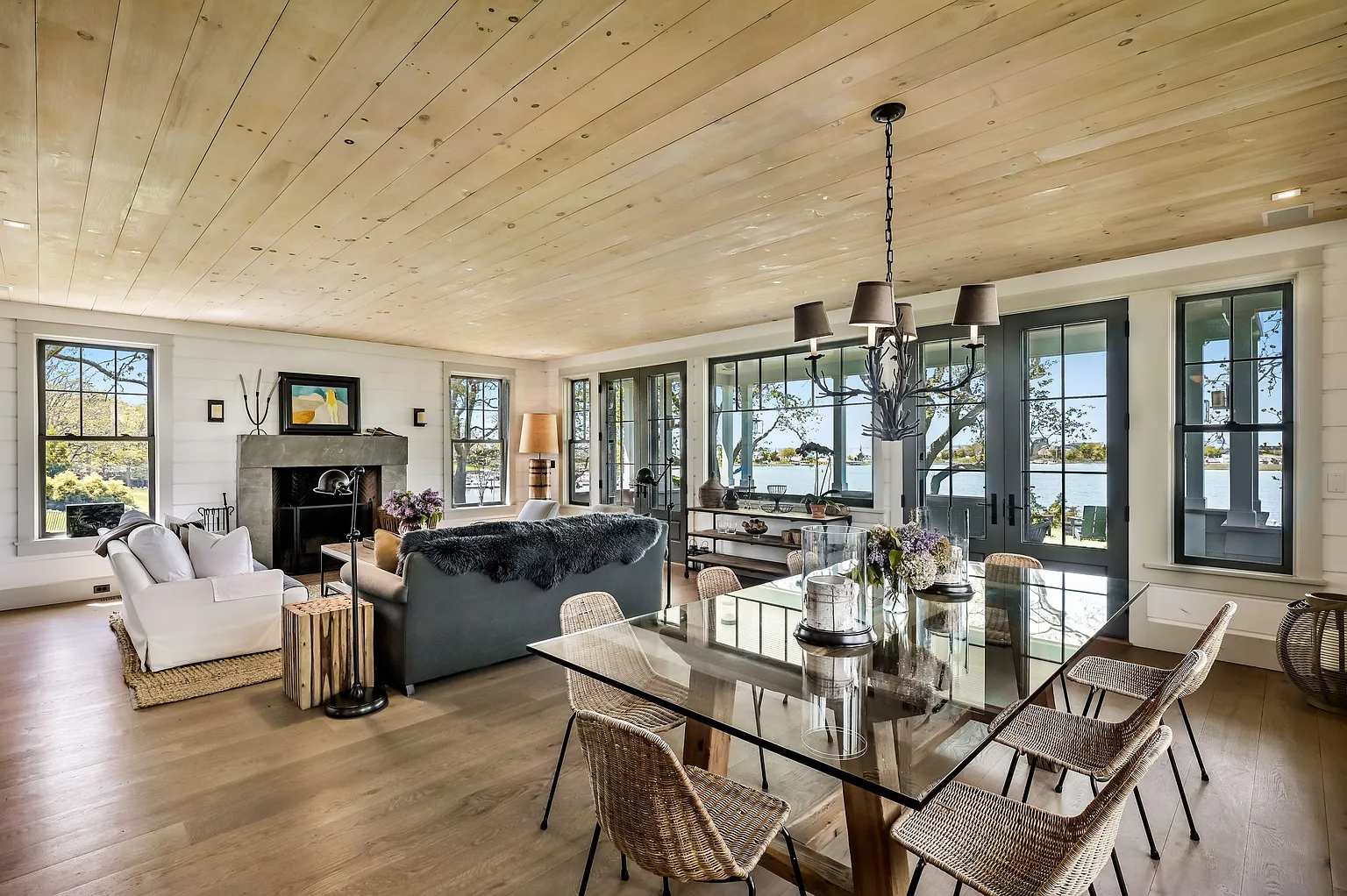
Listings with professionally taken photographs average 24% more bookings than listings without. For a luxury rental, the gap is wider, because high-end renters filter on photography before they read a single word of copy.
A few things that matter on shoot day:
- Hire a photographer who specializes in interiors or vacation rentals. Owners weighing who handles this work will find finding a luxury property management company useful at this stage.
- Stage every room as a guest would use it: fresh linens, styled counters, folded towels, no clutter or visible cords.
- Shoot with natural light at golden hour and add a 3D virtual tour so out-of-town guests can book with confidence.
The cover image is the single most consequential decision in your listing. It should show the room that makes the strongest first impression, not necessarily the largest one. A beautifully lit living space or a terrace with a view will outperform a bedroom shot at this tier. High-end renters are deciding in seconds whether a property warrants a closer look, and a weak cover image ends that consideration before it starts.
Build a Recognizable Brand Identity for Your Rental
Luxury rentals compete as commodities. They have a location, a bedroom count, and a list of amenities. High-end renters scroll past them in seconds because nothing distinguishes one from another. A property with a clear identity gives a prospective guest something to connect with before they ever ask about availability.
That identity starts with how you name and describe the property. A name that reflects the home's actual character, whether its architecture, setting, or design influence, signals intention. In competitive markets like Manhattan, reviewing elite luxury rentals in NYC reveals how the strongest listings handle this. "The Greenpoint Loft" is forgettable. A name tied to a specific detail, a view, a material, or a neighborhood relationship gives the listing a personality worth remembering. From there, the listing description should carry that same voice: specific, unhurried, written for someone deciding how they want to spend the next 30 or 60 nights of their life.
The listing copy should help a guest picture Tuesday morning. What does the light do in the kitchen at 7am? What is the walk to coffee? Concrete, sensory detail signals the property was designed for how people actually live. Consistency beyond the listing matters too: pre-arrival communication, the welcome guide, and in-property materials should all reflect the same standard. A property that photographs at one level and communicates at another loses the trust it worked to build.
Choose the Right Channels to Reach High-End Renters
Listing on every available channel sounds like a low-risk move. More exposure, more bookings. For a budget vacation rental, that logic holds. For a luxury property, it can actively work against you.
Mass-market OTAs reach millions of travelers, but most of those travelers are filtering by price. Airbnb and VRBO remain useful distribution channels at the luxury tier, but they surface your property alongside listings that charge a tenth of your rate. The guest who books your $12,000 property through Airbnb may be a great fit. The guest who finds it while searching $150 a night and accidentally clicks up is not.
Where Affluent Renters Actually Book
Luxury-specific channels reach guests who have already self-selected into a higher bracket. Marriott partnership vacation rental management companies like Marriott Homes & Villas draw from a base of 140 million Bonvoy members, surfacing properties to travelers with confirmed spend history in the premium hospitality category. Plum Guide accepts fewer than 3% of properties it reviews and markets that rejection rate as the product itself. When a guest books through a curated channel, the channel's own vetting standard transfers credibility to your listing before they read a word of your description.
Direct booking platforms for luxury rentals matter for a different reason. A guest who books through your own site, or through a channel with a standing relationship to the guest, arrives with prior trust intact. That trust reduces the friction that produces cancellations, disputes, and thin reviews. It also means the guest arrived because they wanted this specific property, not because an algorithm surfaced it.
A well-maintained Instagram presence documents the property across seasons and reaches affluent travelers in discovery mode, giving prospective guests a record of what the property actually looks and feels like over time.
Price Your Luxury Rental to Attract the Right Guest
Pricing a luxury rental too low is not a bargain; it is a red flag. High-end renters who encounter a rate that feels inconsistent with the property's positioning often assume something is wrong: the photos are misleading, the location is worse than it appears, or the listing is misclassified. The rate itself communicates quality tier before a guest reads a single amenity.
The market data reinforces this. Luxury-tier average daily rates grew 5.23% year over year while budget-tier rates declined 0.33% (StayFi vacation rental data). That gap exists because affluent renters are not price-sensitive in the way budget travelers are. They are value-sensitive, and value at this tier means the property delivering on what the rate implies.
How to Build a Rate That Works
Static seasonal pricing leaves money on the table at both ends. Owners looking at flexible property management models will find demand-based pricing tools like Beyond Pricing adjust rates in real time based on local events, competing inventory, and booking velocity. It's also worth factoring in the Airbnb 15.5% host fee change when modeling net returns at the luxury tier. A property in a beach market priced flat through July misses the spike when a nearby festival books the area solid. A property priced flat through February misses the floor it should hold when nearby supply dries up.
A few pricing principles worth applying:
- Price against comparable luxury listings, not the broader market. Your benchmark is what similar properties command, not the neighborhood average.
- Apply length-of-stay discounts selectively. A 10% discount for 30-plus night stays makes sense when it fills a gap that would otherwise sit vacant. A blanket discount applied to all bookings trains guests to wait for it.
- Resist occupancy pressure. A luxury property running at 65% occupancy and a strong average daily rate will often outperform one running at 90% occupancy at a discounted rate, because the revenue math and the guest quality both skew higher.
Screen Guests the Way a Luxury Property Deserves
Thorough guest screening does two things at once: it protects the property, and it signals to the right guest that this is a professionally managed home worth booking. High-end renters who encounter a rigorous process do not balk at it. They take it as confirmation that the property is legitimate and that the other guests who have stayed there were held to the same standard.
A screening stack worth running includes government-issued ID verification, third-party fraud and watchlist checks, income verification for stays of 30 or more nights, a signed rental agreement, and a cash security deposit or credit card hold before keys change hands. Each layer serves a different function. The ID check confirms identity. The fraud screen catches synthetic profiles and stolen credentials. Income verification for extended stays confirms the guest can actually afford the commitment they are making.
According to data from Thesis Driven, over 93% of property managers encountered rental application fraud in the past year, a 40% year-over-year increase. A single unqualified placement can mean tens of thousands of dollars in unpaid rent or damage. A screening process that catches one bad actor pays for itself many times over.
Deliver a High-Touch Experience That Generates Reviews and Repeat Bookings
The property gets a guest through the door. What happens after check-in determines whether they leave a five-star review, rebook, and tell three colleagues about the place.
Pre-arrival communication sets the tone before a guest unpacks. A confirmation that includes check-in instructions, parking details, wifi credentials, and a curated neighborhood guide signals that someone anticipated their arrival. Guests who feel prepared before they walk in arrive relaxed. Guests who arrive confused arrive skeptical, and skepticism is hard to reverse.
The Touches That Earn the Review
A few specifics that separate a well-equipped rental from a memorable one:
- Pre-stock the kitchen with coffee, basics, and anything guests requested in advance. Arriving to a stocked fridge after a long travel day is the kind of detail guests mention by name in reviews.
- Provide a welcome guide written for someone who has never been to the neighborhood, covering coffee shops, grocery stores, restaurants, and anything within walking distance worth knowing.
- Respond to in-stay issues within an hour. A slow response to a broken appliance or a wifi problem does more damage to a review than the problem itself.
Post-stay follow-up converts satisfied guests into reviewers. A brief, personal message after checkout inviting a review and thanking the guest by name is all it takes. At this tier, one referral from the right guest can be worth more than a month of paid distribution.
Use Social Proof and Guest Reviews to Build Trust at Scale
High-end renters research more thoroughly than any other booking segment. Before committing to $8,000 a month, they read every review, check multiple channels, and look for patterns. A property with 40 consistent reviews across Airbnb, Google, and direct booking channels closes the trust gap faster than any amount of listing copy.
A few mechanics worth tracking:
- Respond to every review, positive or negative, in the same professional tone the property projects. A thoughtful response to a critical review often does more for prospective guests than the five-star reviews surrounding it.
- Repurpose strong reviews in email outreach, direct booking pages, and social content. A guest who describes Tuesday morning coffee on the terrace is writing better marketing copy than you will.
- Lifestyle-driven social content with travel photographers or design-focused creators reaches affluent audiences in discovery mode, connecting to how NYC luxury property management lifts investment homes beyond basic rent collection.
How Rove Travel Attracts High-End Renters for Property Owners
Every strategy covered in this post: vetting, photography, pricing, distribution, screening, and guest experience is what we execute on every property we manage at Rove Travel. We operate as a full-service luxury property management platform across NYC, The Hamptons, Aspen, South Florida, and Southern California, and each property in our portfolio clears a design and quality review before it goes live. Professional photography and 3D virtual tours are standard. Demand-based pricing through Beyond Pricing adjusts rates in real time based on local demand, competing inventory, and booking velocity.
On distribution, we list across Airbnb, VRBO, Booking.com, and RoveTravel.com. Rove+ owners also get access to the Marriott Homes & Villas network and its 140 million Bonvoy members, a channel that reaches guests with confirmed premium hospitality spend history.
Our guest screening runs four layers: government-issued ID verification, third-party fraud and watchlist checks, income and credit verification for stays of 30 or more nights, and a signed rental agreement before keys change hands. Direct bookings through RoveTravel.com carry damage protection coverage up to $5M, subject to eligibility.
The results reflect the model. Owners across our portfolio have earned up to 30 to 60% more than traditional long-term leases (Rove Travel data). Our NYC portfolio holds an 85%+ occupancy rate, and our 4.8-star average guest rating holds across markets.
We offer two ways to work with us. RoveCore is free property management software with no host-side fees on OTA bookings, and it is built for owners who want to self-manage with institutional-grade tools and full distribution. Rove+ full-service property management is our full-service management tier at a 15% management fee, well below the 20 to 30% industry standard for short-term vacation rental management, covering everything from guest communication to inspections to cleaning coordination.
| RoveCore | Rove+ | |
|---|---|---|
| Management fee | Free (no host-side fees on OTA bookings) | 15% all-in (vs. 20-30% industry standard) |
| Who it's for | Owners who want to self-manage with institutional-grade tools | Owners who want full-service, hands-off management |
| Distribution | Airbnb, VRBO, Booking.com, RoveTravel.com | Airbnb, VRBO, Booking.com, RoveTravel.com + Marriott Homes & Villas (140M Bonvoy members) |
| Guest screening | Institutional-grade tools provided | 4-layer screening: ID verification, fraud & watchlist checks, income verification (30+ night stays), signed rental agreement |
| Damage protection | N/A | $5M on direct bookings through RoveTravel.com, subject to eligibility |
| Ops coverage | Owner-managed with software support | Guest communication, inspections, cleaning coordination |
If you own a luxury property and want to put these strategies to work without managing them yourself, review Rove+ or get started with RoveCore.
Final Thoughts on Luxury Rental Marketing and Attracting High-End Renters
None of this is complicated in theory; it is just unforgiving in practice. High-end renters have seen enough listings to know when a property is positioned accurately and when it is not, and they move on fast when something feels off. The properties that win at this tier are the ones where the rate, the photography, the amenities, and the guest experience all point in the same direction. If you own a luxury property and want to put a system like this behind it, Rove Travel is built for exactly that.
FAQ
What amenities do high-end renters actually expect at the $8,000 to $10,000+ per month tier?
At $8,000 per month, the floor includes 1 Gbps fiber, individual room climate control, keyless entry, and motorized blackout shades. These are baseline expectations, not upgrades. Cross $10,000 per month and guests expect at least three wellness amenities: a 24-hour fitness option, spa or recovery access, or rooftop pool. Properties that fall short of these thresholds compete on price by default, which is not where luxury rentals win.
How do I price a luxury rental without undervaluing it or sitting vacant?
Price against comparable luxury listings, not the broader market, and use demand-based tools like Beyond Pricing to adjust rates in real time around local events, competing inventory, and booking velocity. Apply length-of-stay discounts selectively. A 10% discount for 30-plus night stays makes sense to fill a vacancy gap, but a blanket discount trains guests to wait for it. A property at 65% occupancy with a strong average daily rate will often outperform one running at 90% on a discounted rate.
Should I list my luxury rental on Airbnb and VRBO, or focus on luxury-specific channels like Marriott Homes and Villas to attract high-end renters?
Both have a role, but they serve different functions. Airbnb and VRBO provide broad distribution and remain useful at the luxury tier, though your listing surfaces alongside properties charging a fraction of your rate. Luxury-specific channels like Marriott Homes and Villas reach guests who have already built a track record of premium hospitality spend, and platforms like Plum Guide transfer their own vetting credibility to your listing before a guest reads a word of your copy. The strongest distribution strategy covers both.
What does a guest screening stack look like for a luxury rental competing at $10,000 or more per month?
A complete screening stack for a high-end rental runs four layers: government-issued ID verification, third-party fraud and watchlist checks, income verification for stays of 30 or more nights, and a signed rental agreement with a cash security deposit or credit card hold before keys change hands. Each layer catches a different failure mode. The ID check confirms identity, the fraud screen catches synthetic profiles, and income verification confirms the guest can meet the financial commitment. Over 93% of property managers encountered rental application fraud in the past year, a 40% year-over-year increase, according to data from Thesis Driven, making a rigorous process both a protection measure and a credibility signal to qualified guests.
How does Rove Travel attract high-end renters for properties it manages?
Rove Travel manages luxury properties across NYC, The Hamptons, Aspen, South Florida, and Southern California, and every home clears a design and quality review before going live. Professional photography, 3D virtual tours, and demand-based pricing through Beyond Pricing are standard across the portfolio. Distribution runs across Airbnb, VRBO, Booking.com, and RoveTravel.com, with Rove+ owners also accessing the Marriott Homes and Villas network and its 140 million Bonvoy members. Guest screening runs four layers, and direct bookings through RoveTravel.com carry damage protection coverage up to $5M. Owners can choose RoveCore, free property management software with no host-side fees on OTA bookings, or Rove+, full-service management at a 15% fee that sits below the 20-30% standard for short-term vacation rental management.