Investing in Fully-Furnished Luxury Rentals in NYC: A Smart Choice for Investors | August 2026
In September 2023, NYC's Local Law 18 took effect, restricting short-term rentals under 30 days. The law was mostly meant to fix a problem. NYC officials were trying to bring order to a chaotic part of the city's housing market. But it also forced the Big Apple to rethink its housing strategies.
Since then, fully furnished short-term luxury rentals in NYC have stepped in to fill the gap. This new, convenient housing option is quickly becoming a popular choice in many neighborhoods, and it is a great choice for those who miss the city’s more traditional short-term rental options.
If you are an investor, now is a good time to buy a short-term furnished rental in NYC. Here's a quick overview of the market, along with a few ways to customize your experience.
TLDR:
- NYC luxury furnished rentals require a 30-day minimum lease and rent for $10,000 to $40,000 per month.
- Nearly 60% of NYC residents rent, keeping demand high and pricing in investors' favor year-round.
- Property types range from brownstones to condos; pied-a-terre ownership lets you rent part of the year and keep the rest.
- Upfront furnishing and design costs are real, and NYC housing laws can change fast and hit your income.
- Rove Travel works with investors to tailor luxury rental properties to specific NYC neighborhoods.
What’s an upscale, fully furnished rental?
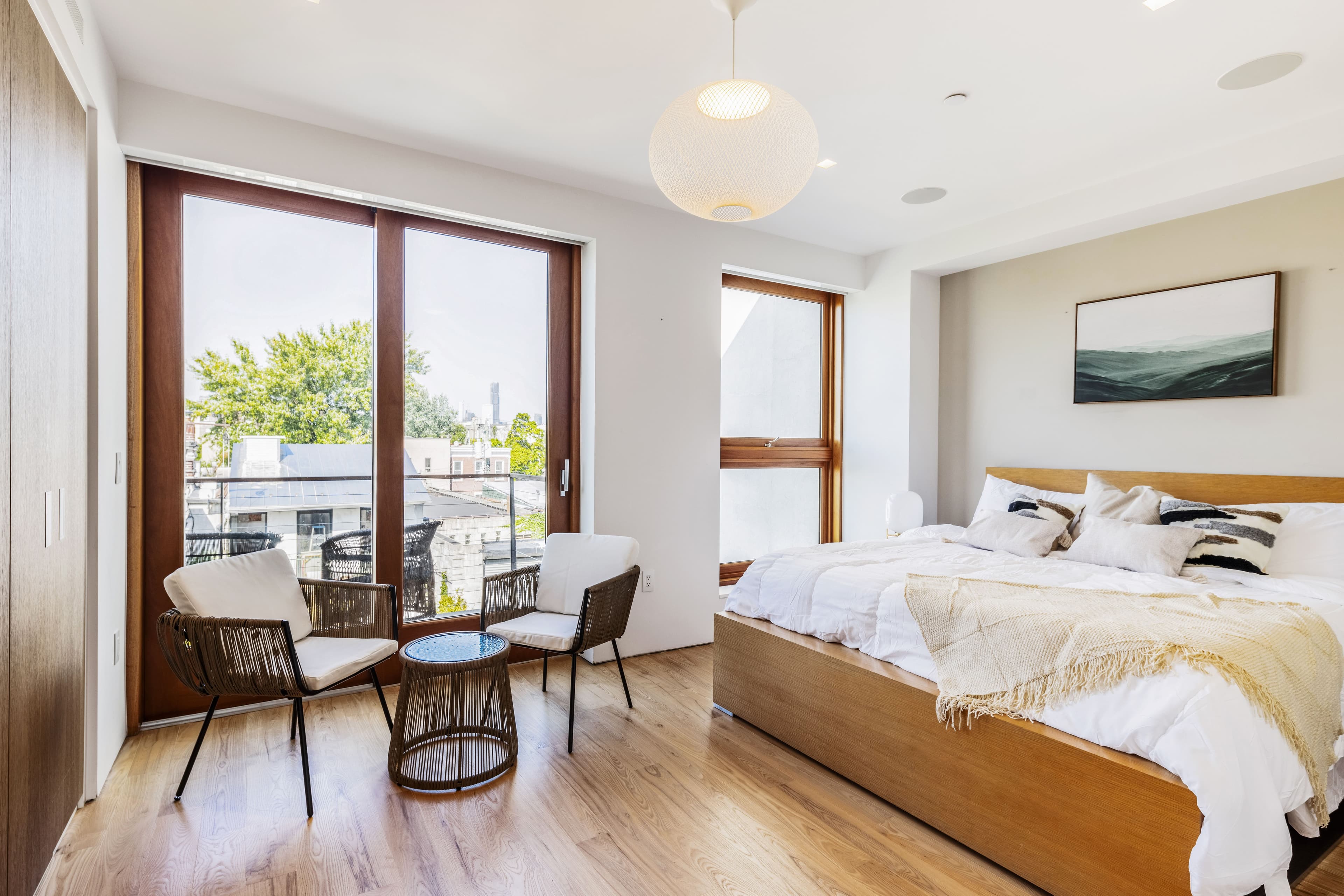
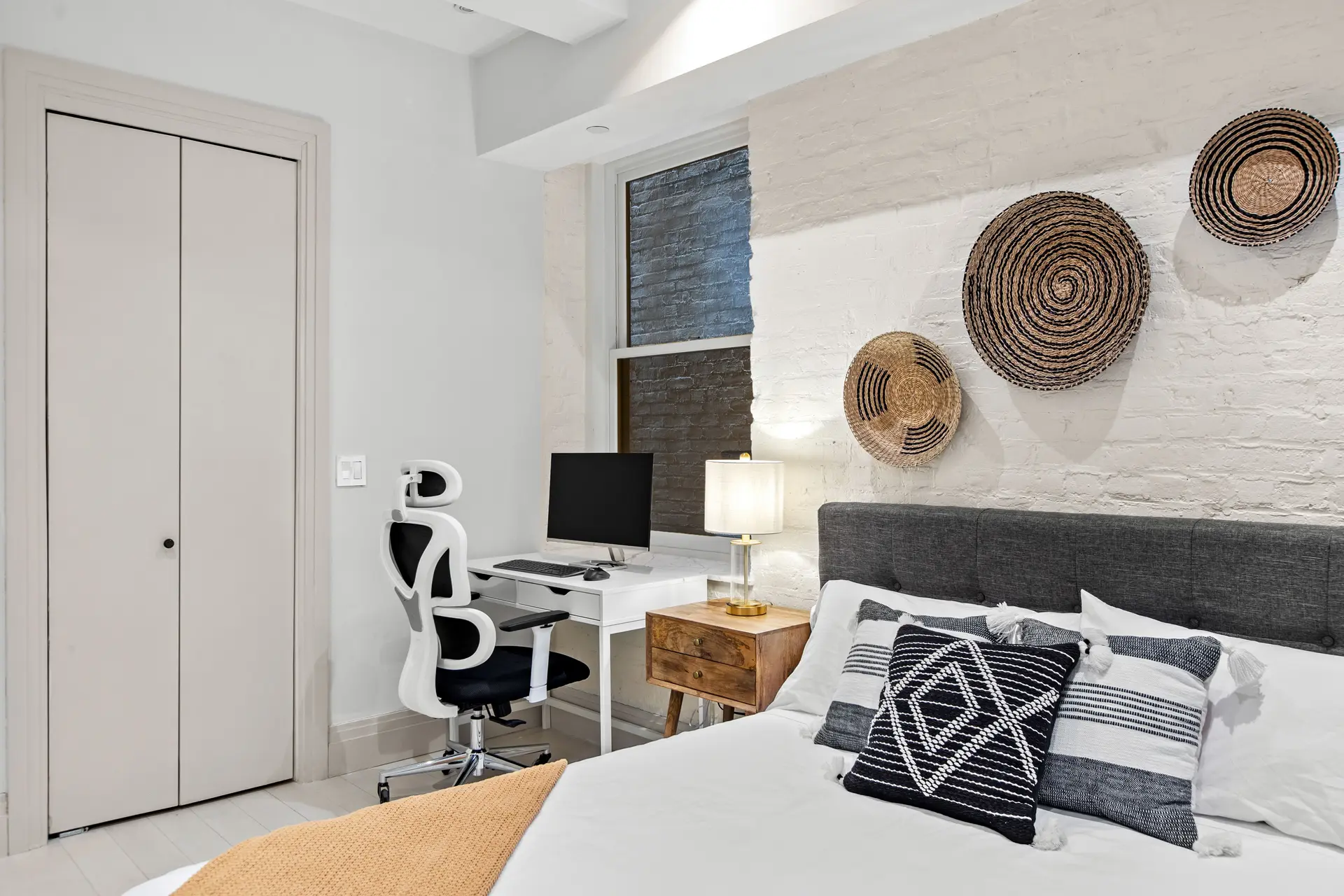
By definition, an upscale furnished apartment is a living space that provides every amenity that the tenant needs to live comfortably for a short period of time. Rove Travel’s properties, for example, are beautifully designed homes that provide modern comforts (most are even pet-friendly) as well as remote-work features, such as modern workstations with monitors and keyboards. Because of city laws, luxury furnished apartments must be rented for a minimum of 30 days.
Why live in a luxury, fully-furnished apartment?
Although the ban on short-term rentals helped accelerate their growth, NYC luxury apartments have already been a great option for years. The city happens to be made up of businesses and lifestyles that rely on things like convenience, flexibility, and personalization: three things that the luxury apartment model does well by nature.
Upscale, fully-furnished rental apartments make work, life, and leisure convenient for "nomad workers." The 2020 pandemic made many businesses think outside the box, and today a record number of employees are working from home.
For many professionals, it does not make sense to move every single “comfort of home” across the country for a three-month contract. However, three months is a long time to feel like you’re living in a hotel. Upscale short-term luxury homes bridge that gap. They let short-term renters experience the comforts of home without having to move their own homes.
Fully-furnished short term rentals are also custom-made. While most NYC apartment complexes are built to service hundreds of tenants, the luxury apartment model is more unique. An investor might manage a small handful of properties instead of dozens. Because of this, there is often a more personal tenant-to-owner relationship in luxury rentals.
Upscale furnished apartments are better than a basic furnished unit because they are more likely to meet a variety of renters’ needs. New York City is a hotbed for industry, but it is also a popular tourist destination. A luxury apartment is versatile: it can pamper a work-minded tenant, and it can create special memories for a leisure-minded tenant.
All in all, luxury rentals are a great investment, and since NYC is so rich in industry, history and entertainment, there is truly no bad place to create one. Rove properties can be found in Manhattan and Brooklyn, Upper East Side, Midtown West, Chelsea, Flatiron, Gramercy, Tribeca, Wall Street, Union Square, Soho, West Village, East Village, Greenwich Village, and Williamsburg.
FINDING THE RIGHT FIT FOR YOU
What kind of property should I invest in?
There are several different types of properties available to renters in New York City. If you would like to invest in a fully-furnished luxury apartment, you will have no trouble finding a property type that fits your ideal.
| Property Type | Structure | Privacy Level | Best For |
|---|---|---|---|
| Single-family (Brownstone / Townhome) | Freestanding, 1-4 bedrooms, row-home style | High - private building | Families, vacation renters seeking privacy |
| Multi-family (e.g. Duplex) | Shared wall, multiple units in one building | Medium - personal space, less crowded | Owners wanting dual income while offering tenant privacy |
| Condominium / Apartment Building | High-rise, many units, smaller living spaces | Lower - shared building with many tenants | Work nomads, short-term contractors, tourists |
| Co-op (Cooperative Housing) | Nonprofit corporation, jointly owned by inhabitants | Varies by building | Long-term residents with ownership stake |
One of the best options to many renters is a single-family property. Brownstones, or townhomes, are freestanding residential buildings, often with one to four bedrooms, arranged in a row-home style along a residential street. Although they are not always easy to find in NYC, they are popular with renters because they offer the tenant privacy and independence. They also make great vacation rentals in NYC, especially if the person on vacation is hosting a family or seeking a little privacy.
Multi-family homes (buildings divided to host multiple families) are a great secondary option for those seeking privacy. Typically, the tenants share a wall with another tenant, but there is still personal space and a less crowded building. Duplexes are a great example of this housing type because they allow the owner to double his income while still giving his tenants the gift of privacy.
After multi-family homes come condominiums, or apartment buildings. These are what most people think of when they picture a New York City Apartment. They are high-rise buildings filled with many units, each rented by a different tenant. Because condos serve so many people, the living spaces are often smaller than single or muti-family homes. The condo lifestyle is great for “work nomads,” contractors on short-term projects, or tourists. They also open a world of possibilities for the investor..
Finally, New York City is home to co-ops (or cooperative housing). A co-op is technically a nonprofit corporation (a building that is jointly owned by multiple inhabitants).
As you seek to invest in a fully-furnished luxury property in NYC, there is also great potential in the “pied a terre” market. Pied a terre is a French term meaning “a foot on the ground.” It often refers to a person who owns property in New York City, but has a permanent home in another city, or even another state. In many cases, pied a terre properties end up being used as vacation homes a few times a year. They can also be rented out to others in the owner’s absence.
Pied a terre living is a great way for an investor to remain connected to their property while maximizing revenue on it. They can share it with renters for a portion of the year, but still retain the property for their own business or leisure.
What should my fully-furnished luxury apartment have in it?
A fully-furnished luxury rental includes many of the staples of any modern home: things like couches, tables, lamps, dining space, and a bedframe. However, it typically pays attention to aesthetic and quality when choosing these items. An upscale short-term rental should also think ahead, anticipating the “finer” needs of its tenant. What would a pet need to feel at home? Is there access to a swimming pool? If it’s a two-bedroom or three-bedroom apartment, is there space for a children’s playroom? What office supplies would a work-from-home tenant find useful? Are there ways to make life more convenient for a commuter? (For example, Rove tenants have access to a 24/7 concierge team, workstations with ergonomic chairs and standing desks, and high-speed internet.)
Do not underestimate the importance of luxury amenities. These details are small, and they often take a little more time and effort to add to a living space, but the payoff is great. It benefits the tenant and the homeowner alike.
What does a typical rental agreement look like?
Under NYC's Local Law 18, which took effect in September 2023, short-term rentals in NYC must be signed for a minimum of 30 days. Depending on the location, a NYC apartment can be rented for anywhere from $3,300-$7,500 per month.
However, the numbers increase when the property is a fully furnished luxury rental. In fact, the average cost to rent a high-end luxury apartment in NYC can be anywhere from $10,000 to $40,000 per month. Factors that increase rent include the number of bedrooms, the location, and amenities.
In New York City, location can be a big deal. Living in Harlem is very different than living right along the Hudson River. Queens, Brooklyn, and the Upper East Side all have their own draws and drawbacks. A short-term worker who needs to live near Broadway will often work a very different job than a short-term worker in the Financial District. Knowing the different parts of NYC (and knowing their strengths) can help a savvy investor customize their apartment.
Amenities are a very big part of the upscale, fully-furnished rental world. In a city as busy and connected as NYC, having access to the right “bonus features” in a living space can truly make or break the experience. It is not easy to keep a pet, commute, get to a fitness center, or even park your car in a city like New York. Something as simple as a washer and dryer in the house can be a game changer.
In a city as densely populated as New York, it’s also important to consider safety and security. Does the apartment have a doorman? Is there an AED on-site? How close is the nearest hospital?
Luxury apartments for rent should do their best to provide services that cater to a more personal, convenient lifestyle. Rove Travel works directly with investors to make their rental properties unique and well-tailored to the neighborhoods in which they are located.

HOW FULLY-FURNISHED LUXURY RENTALS IMPACT INVESTORS
While a fully-furnished luxury apartment has an immediate impact on a tenant, it also affects the life of an investor. Some of those effects are very much in the investor’s favor, and others might take a little work to overcome. Here’s a rundown of both.
The Perks
In 2019, there were reportedly about 16,000 NYC luxury units with the potential to qualify as luxury living spaces. That number is fairly small, given the fact that the Big Apple has over three million total housing units. However, nearly two-thirds of all occupied houses in NYC are rental properties, meaning New York City has always been a place where apartments are highly in demand, but difficult to find.
For investors, that fact is a great sign on two fronts. First, it means that there will always be someone interested in renting a unit, especially one with luxury appeal. Second, high demand means that that rent will almost always be competitive in the investor’s favor. In other words, short-term luxury rentals in NYC have a high return on investment.
They also allow investors to be flexible with their booking habits without losing sizable income. If an investor wanted to take a pied a terre approach (renting a property out for a few months, but reserving it for himself at a certain point in the year) he can reasonably do so.
All in all, short-term luxury apartment rentals offer investors a flexible, custom-designed source of income in a city that will always demand that particular service. It’s a great business model. It is rewarding financially, and often a rewarding personal experience, too.
The Challenges
Every investment comes with its own risks and cons, and investing in a luxury apartment is no exception. There are challenges that investors should approach with caution, especially if their eyes are set on managing a rental in New York City.
First, since the model caters directly to a short-term luxury rental market, it often requires a serious financial investment up front. Again, the returns on that investment are quite high, but still, a potential investor should prepare himself for that reality. Also, since the cost of designing, furnishing, and fixing the initial property is often high, maintenance can be costly down the road.
Second, NYC investors might face stricter rules than investors in other cities. Since New York is such a busy, in-demand city, housing will always be at the forefront of the city officials’ awareness. As a result, laws might be stricter, and change faster, than they might in a less densely populated area. It also means that changes have a higher chance of impacting an investor financially. Local Law 18 taking effect in September 2023 is a great example of this. The city made the new law to protect renters and owners from chaos, but it caught many less-than-30-day rental properties by surprise.
Last of all, competition and market saturation are possibilities that a future New York City investor should consider. Short-term luxury apartments for rent are not too common at the moment, but they are becoming more and more sought-after in the Big Apple. As a result, there is a good chance that more investors will choose to put luxury rentals on the market, which could impact both the average cost of rent and the rate of demand.
How To Be A Smart Investor
One of the best ways to enter the 30+ day luxury apartment rental in NYC wisely is to set yourself up with a strong management strategy. If you are new to the investment world, finding a full-service luxury platform like Rove Travel is a great first move.
A savvy property management company will walk you through the best places to find properties for renovation, the specs that go into designing a luxury apartment, what your property is worth, and how to price your rental over time. Typically, a management company will also have a good pulse on current marketing techniques, so they are well-equipped to advertise your property in an appealing, results-driven way.
Working with a property management company can also help investors down the road when maintenance comes into play. Maintaining a property in one of the world’s biggest cities can be daunting on your own. With the right help, that aspect of the investment process can become a simpler, less taxing part of the journey. Find key tips for choosing a luxury property manager to guarantee a smooth day-to-day journey and maximized rental income.
UPSCALE, FULLY-FURNISHED RENTALS IN NYC ARE THE FUTURE
As NYC adapts to new rental laws, luxury rentals will grow in importance for tenants and for the investors who own and maintain each property alike. Yes, it is new territory for some. Yes, fully furnished luxury apartments have an element of risk, like any other business venture. However, the current housing market, the city’s lifelong trends, and government guidelines all make short-term luxury rentals an exciting investment - one worth every second of the ownership process.
Start your investment journey today. Browse Rove Travel's NYC property management services and learn how to list your property today
FAQ
What types of NYC properties work best as fully-furnished luxury rentals for investors?
Condominiums and co-ops tend to offer the lowest barrier to entry and the broadest tenant appeal. Work nomads, short-term contractors, and relocating professionals all fit the condo profile well. Single-family brownstones and townhomes command higher rents and attract families or guests seeking privacy, but they are harder to source in NYC. If you want income flexibility without giving up personal use, a pied-à-terre structure lets you rent for a portion of the year and block dates for yourself.
How much can a fully-furnished luxury rental in NYC realistically earn per month?
Depending on the number of bedrooms, location, and amenities, fully-furnished luxury apartments in NYC typically rent for $10,000 to $40,000 per month, well above the $3,300 to $7,500 range for standard unfurnished units. Factors that push rates higher include proximity to major business districts, in-unit washer/dryer, concierge access, dedicated workspace, and pet-friendly features. That premium reflects what tenants are paying to avoid the cost and friction of moving their own household for a 30- to 90-night stay.
Should I self-manage my NYC luxury rental or use a property management company like Rove Travel?
If you are new to the market or want a hands-off operation, working with a full-service property manager handles the details that compound quickly in NYC: tenant vetting, responsive pricing, maintenance coordination, regulatory compliance, and building relationships with superintendents. Rove Travel offers two tiers. RoveCore is free host software with no host-side OTA fees, and Rove+ is full-service management at 15%, which sits below the 20 to 30% industry standard for short-term vacation rental management, so you can match the level of involvement to how much you want to delegate.
What amenities does a fully-furnished luxury NYC rental need to compete at the $10,000+ per month tier?
At that price point, tenants expect the basics to be completely solved: chef-grade kitchen with quality cookware, premium linens, dedicated workspace with high-speed Wi-Fi, and in-unit laundry. What separates a $10,000 unit from a $20,000 unit is the layer above that: 24-hour concierge, ergonomic workstations, fitness access, pet accommodations, and neighborhood-specific conveniences like parking or storage. Missing even one of these in a building where a competitor offers it gives a prospective tenant a reason to look elsewhere.
What are the biggest risks of investing in fully-furnished luxury rentals in NYC, and how do investors manage them?
The three main risks are upfront capital intensity, regulatory change, and market saturation as the segment grows. NYC's 30-night minimum under Local Law 18 already structures the market. Staying compliant is non-negotiable, and the rules have tightened since 2023. Managing saturation risk comes down to quality and location: a well-furnished apartment in a high-demand neighborhood with verified professional tenants holds occupancy better than a generic unit competing on price alone.