Corporate Housing NYC Guide for September 2026
The comfort of a second home. The convenience of a hotel. The reliability of Rove.
When you need to relocate for work, you need more than a place to sleep. You need a real desk, a fast internet connection, a kitchen that can handle dinner for two after a 10-hour day, and a building you'd actually want to come home to. NYC has no shortage of furnished apartments marketed as corporate housing, but the gap between a unit that looks good in photos and one that functions as a serious home base for four to twelve weeks is wide. This guide covers what separates the two, what it actually costs, and how to lock in the right place before someone else does.
TLDR:
- NYC's Local Law 18 requires a 30-night minimum lease for any private furnished apartment without a host on-site.
- A four-person team in Midtown for 10 weeks pays roughly $112,000 in extended-stay hotels vs. $70,000 in a corporate apartment.
- Stays under 180 days carry a 14.75% occupancy tax; on a $5,000/month unit over four months, that adds over $2,950.
- Start your search 3 to 4 weeks out; quality furnished units in Manhattan and Brooklyn move fast.
- Rove Travel offers vetted furnished rentals across Manhattan and Brooklyn within the 30-plus-night regulatory framework.
What Is Corporate Housing in NYC?
Corporate housing is a furnished, move-in-ready apartment rented for an extended period, typically 30 days or longer. It sits between a hotel stay and a traditional lease: more space and privacy than a hotel room, fewer strings than a 12-month commitment.
The core offer is consistent across providers. You get a fully equipped apartment with utilities and Wi-Fi included, and flexible terms that match how long you actually need to be in the city. No buying furniture, no waiting for internet installation, no negotiating a year-long lease you don't need.
People booking corporate housing in NYC tend to fall into a few clear groups: executives on project assignments, employees relocating for a new role, professionals in extended training programs, and individuals between homes due to a renovation or lease gap. What they share is a need for something that functions as a real home for weeks or months at a time.
How Do NYC's Regulations Shape the Corporate Housing Market?
NYC's Local Law 18, enforced since September 2023, effectively banned entire-apartment rentals under 30 days in most residential buildings. Hosts offering short stays must be physically present, can host no more than two guests, and cannot lock off any portion of the unit. For corporate housing, that model does not work.
The result is a market built around 30-night minimums. A private furnished apartment with full access and no host on-site requires at least a 30-day lease. Hotels operate under a separate framework and remain exempt from this rule, but if you want apartment-scale space, the 30-night floor applies.
Booking a non-compliant listing carries real risk: last-minute cancellations, no legal recourse if the host disappears, and potential removal if the building reports the stay. Compliance determines whether your housing actually exists when you arrive.
Corporate Housing vs. Hotels vs. Extended-Stay Apartments
The cost difference between extended-stay hotels and corporate apartments in Manhattan is real and measurable.
| Extended-Stay Hotel | Corporate Apartment | |
|---|---|---|
| Nightly cost (Manhattan) | $250 to $400 | $150 to $250 |
| Kitchen | Kitchenette | Full kitchen with cookware |
| Living space | Combined or small separate | Separate bedroom and living room |
| In-unit laundry | Rare | Standard in most units |
| Workspace | Desk in room | Dedicated workspace |
| Lease flexibility | Book by night | 30-day minimum |
| Pet-friendly | Rarely | Often available |
Cost estimates sourced from Property Finders Group cost comparison.
At $400/night, an extended-stay hotel room runs about $28,000 over ten weeks. A comparable corporate apartment at $250/night comes to roughly $17,500 for the same period, a $10,500 difference per person. For a four-person team, that gap reaches $42,000 before accounting for meals, laundry fees, and hotel occupancy taxes. Luxury furnished rentals beat hotels on both cost and space for stays of a month or more.
Furnished monthly rentals sit at the premium end of the corporate apartment category. They carry the same space and cost advantage over hotels, but with higher-quality finishes, fully stocked kitchens, and dedicated workspaces. Traditional corporate housing skews functional but generic; furnished monthly rentals vary widely, with the best matching or exceeding hotel-grade design. Browse Manhattan corporate housing for curated options across the borough.
How Much Corporate Housing in NYC Costs
Manhattan's median rent hit a record $5,295, with available listings down 16% year-over-year. Furnished units with utilities, Wi-Fi, and services built in run well above those baselines.
Per RentHop data for September 2026, unfurnished 1-bedrooms average $4,705 and 2-bedrooms $6,195 citywide. Furnished corporate apartments add a premium for full furnishings, utilities, and service coverage: expect $5,500 to $7,500 per month for a furnished 1-bedroom in Manhattan, and $8,000 or more for a 2-bedroom in a prime neighborhood.
One cost that catches many renters off guard: NYC's Hotel Room Occupancy Tax, which adds roughly 14.75% plus a daily room fee. On a $5,000/month apartment over four months, that tax adds over $2,950. A lease of 180 days or more exempts the stay entirely, which is why a 6-month lease often costs less overall than four months at the same monthly rate.
Key cost drivers to budget around:
- Neighborhood: Tribeca and the West Village run higher than Midtown or the Upper West Side
- Unit size: studios start around $4,000/month furnished; 3-bedrooms in prime areas can exceed $15,000
- Lease length: longer terms typically lower the monthly rate and eliminate the occupancy tax
- Amenity level: doorman buildings, private outdoor space, and premium finishes carry a clear premium

The Best NYC Neighborhoods for Corporate Housing
Neighborhood choice in NYC is often a commute decision first and a lifestyle decision second. The table below maps the most-searched areas to what they actually offer for corporate stays.
| Neighborhood | Best for | Price range (1BR furnished) | Notes |
|---|---|---|---|
| Midtown | Office proximity, big-building amenities | $5,500 to $8,000 | Closest to most corporate HQs |
| Financial District | Wall Street, easy transit | $5,000 to $7,500 | Quieter nights, strong weekday infrastructure |
| Upper East Side | Longer stays, residential feel | $5,000 to $7,000 | Museum Mile, Central Park access |
| Upper West Side | Families, longer assignments | $5,000 to $7,000 | Good schools, grocery access, park proximity |
| West Village / Tribeca | Premium residential character | $6,500 to $12,000+ | Highest demand, lowest vacancy; see luxury monthly apartment rentals NYC for current options |
| Williamsburg | Creative industry, lower price point | $4,500 to $6,500 | 15-20 min to Midtown via L train |
| Brooklyn Heights | Quiet, family-friendly | $4,500 to $6,000 | Manhattan Bridge views, short commute |
Price ranges are estimates based on current furnished monthly rental inventory and will vary by unit size, floor, and amenity level.
Midtown suits assignments tied to a specific office. The Financial District works for finance professionals who want short commutes without nightlife. The Upper East and Upper West sides are the most practical for stays beyond 60 days, especially with family. Brooklyn cuts costs without sacrificing commute time for anyone working near lower Manhattan or outer-borough tech offices.
Types of Corporate Housing Available in NYC
Not every "corporate housing" option in NYC works the same way. The label covers four meaningfully different product types.
Traditional corporate housing operators (National Corporate Housing, Synergy, Weichert, ABA) place clients in pre-leased furnished apartments and handle centralized billing directly with employers. Lease terms are flexible, reporting is set up for corporate relocation departments, and inventory tends toward functional over designed. These work well when your employer's HR team is coordinating the booking.
Furnished monthly rental providers like Rove, Blueground, and Urban Furnished operate managed-inventory models. You browse and book directly, and apartments range from generic to fully curated. Quality and service levels differ across providers; some offer 24/7 concierge support, others a basic app. All require 30-night minimums under NYC's regulations.
Serviced apartment buildings are purpose-built or converted properties with hotel-style amenities: front desks, housekeeping, and fitness centers. They typically charge more per square foot than a standard furnished apartment but offer institutional consistency.
Extended-stay hotel residences (Marriott Extended Stay, Hilton Garden Inn, similar brands) bundle nightly rates with daily housekeeping and front-desk service. Rates in Manhattan run $250 to $400 per night, and the absence of a full kitchen adds meal costs on top.
The right format depends on who's paying, how long you're staying, and how much service you need. A six-week project assignment paid through corporate relocation often fits a national operator. A solo executive booking independently for three months usually gets more value through a luxury furnished monthly apartment in Manhattan.
What to Look For in an NYC Corporate Housing Unit
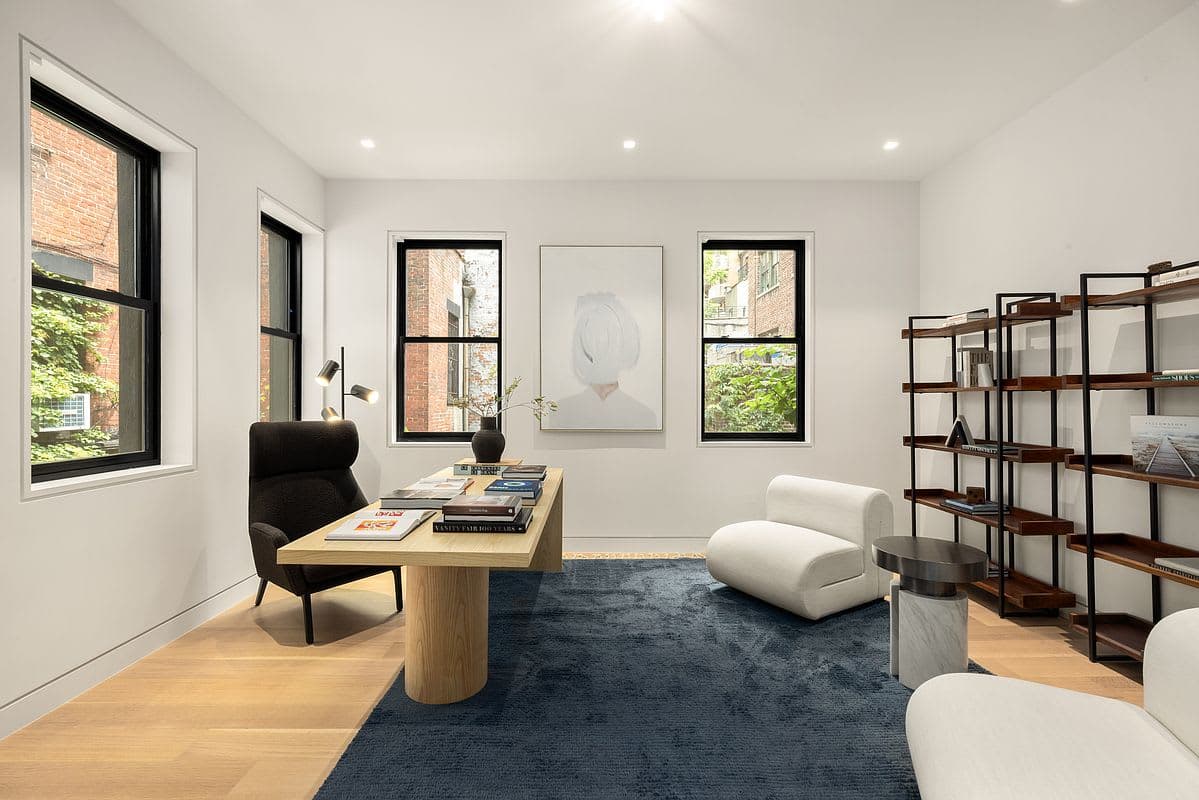
Before signing anything, verify what "furnished" actually means for that specific unit. The word covers a wide range in NYC, from a bed frame and a couch to a fully stocked home ready for day one.
- Full kitchen: gas or induction range, full-size refrigerator, dishwasher, quality cookware, knives, and enough tableware to cook a real meal without a hardware store run
- In-unit laundry: building laundry is a meaningful downgrade on a 60-day stay
- Dedicated workspace: a desk, monitor, and keyboard, not a kitchen counter with good light
- High-speed internet: confirm actual speeds, not the vague "Wi-Fi included"
- Linens and toiletries: premium providers include these; others leave you sourcing your own on arrival
- Pet policy: confirm upfront, including fees and deposit amounts
- Building security: doorman or key-fob access matters for extended stays in unfamiliar buildings
Get the all-in number before comparing options. Monthly rate, utilities, service fees, and occupancy tax all stack. A unit listed at $5,500/month with a 14.75% tax adds over $800 monthly. A unit at $6,200 with utilities and tax included may cost less.
Lease flexibility is worth confirming explicitly: some providers require 60-day notice to extend or exit, others offer month-to-month with shorter windows.
Corporate Housing for Specific Situations
Search terms like "Google NYC corporate housing" or "Meta corporate housing NYC" reflect a specific reality: large employers often coordinate housing directly, but employees still end up booking independently when relocation packages fall short or timelines don't align.
When Your Employer Is Paying
Corporate relocation packages typically cover furnished housing for 30 to 90 days. Confirm what's included before arrival. If you're booking independently and submitting for reimbursement, get the all-in cost in writing.
Tax treatment matters. Under IRS Publication 15-B, employer-provided lodging is excludable from taxable income only when it meets three conditions: on the employer's business premises, provided for the employer's convenience, and accepted as a condition of employment. Housing stipends paid as cash are typically taxable.
When You're Booking Independently
Individuals between leases, mid-renovation, or on extended visits book differently than corporate relocation clients. The 180-day tax threshold applies regardless of who's paying. Stays under that threshold carry the occupancy tax; longer commitments avoid it and usually come with lower monthly rates. No employer invoice changes the 30-night minimum that applies to everyone in NYC.
How to Search for and Book Corporate Housing in NYC
Start with your move-in date and work backward at least three to four weeks, particularly during the NYC mid-term rental season in fall. Quality furnished units in Manhattan and Brooklyn move fast, and the best inventory at a given price point rarely stays available for more than a few days.
Where you search depends on how your stay is being coordinated. Dedicated corporate housing operators work directly with employers and HR relocation teams. Furnished monthly rental marketplaces let you browse, compare, and book directly without a broker. Broker-assisted searches on StreetEasy add fees and timelines that rarely work in your favor for a 30-day stay.
Before committing to any listing, confirm the following:
- What is the all-in monthly cost, including utilities, service fees, and any taxes?
- Is the lease 30 days or longer, satisfying NYC's regulatory requirement for a private apartment without host presence?
- What is the cancellation and extension policy?
- Is the unit registered or compliant under Local Law 18?
- Are pets permitted, and what are the deposit terms?
Most providers require a government-issued ID, income or employment verification, and a signed rental agreement before confirming a booking. Credit card holds or cash security deposits are standard. A private furnished apartment where the host is not present requires a lease of 30 consecutive days or more. Any listing offering shorter stays without a registered host on-site is operating outside NYC's legal framework.
How Rove Travel Approaches Corporate Housing in NYC
We operate over 200 vetted luxury corporate housing NYC properties across Manhattan and Brooklyn, all within NYC's 30-plus-night regulatory framework. Every home clears a defined design and hospitality standard before listing: fully equipped kitchens with chef-grade appliances, dedicated workspaces with monitors and keyboards, in-unit laundry, premium linens, and 24/7 concierge support are standard across the portfolio.
Our NYC portfolio maintains an 85-plus-percent occupancy rate and a 4.8-star average guest rating. Guests booking through Rove Travel pay 5% less than the same property on Airbnb, with an additional 3 to 10% savings for direct bookings and no broker fees. For travelers whose employers cover housing costs, our transparent pricing and professional booking process support corporate billing arrangements without the ambiguity of broker-negotiated deals.
Owners across our NYC portfolio have earned up to 30 to 60% more than traditional long-term leases (Rove Travel data). Browse available properties at Rove Travel.
Final Thoughts on Corporate Housing in New York City
Knowing the regulatory floor, the real cost stack, and the difference between provider types puts you ahead of most people searching this market. Whether your employer is covering the bill or you're booking on your own, the same basics apply: 30-night minimum, confirm what's included, and get the all-in number in writing. Rove Travel covers Manhattan and Brooklyn with fully vetted furnished apartments, transparent pricing, and 24/7 concierge support.
FAQ
What's the difference between booking corporate housing in NYC through Rove Travel versus a traditional operator like National Corporate Housing or Synergy?
Traditional corporate housing operators like National Corporate Housing and Synergy pre-lease inventory and handle centralized billing directly with employers. That model works well when your company's HR or relocation department is coordinating the booking. Rove Travel operates a curated platform of vetted luxury furnished apartments where you browse and book directly, with chef-grade kitchens, dedicated workspaces, and 24/7 concierge support standard across the portfolio. If you're booking independently or your relocation package has run out, Rove's direct booking process typically costs 3-10% less than booking the same property through Airbnb and carries no broker fee.
How much does corporate housing in NYC actually cost when you factor in taxes and fees?
Budget beyond the listed monthly rate. Furnished corporate apartments in Manhattan run roughly $5,500 to $7,500 per month for a 1-bedroom and $8,000 or more for a 2-bedroom in prime neighborhoods. Stays under 180 consecutive days trigger NYC's Hotel Room Occupancy Tax, which adds approximately 14.75% plus a daily room fee. On a $5,000/month apartment over four months, that tax alone adds over $2,950 to your total. A lease of 180 days or longer exempts the stay entirely, which is why a 6-month commitment often costs less overall than a shorter stay at the same monthly rate.
Can I find furnished short-term corporate housing in NYC that's legally compliant and pet-friendly?
Yes, but confirm both before you book. NYC's Local Law 18 requires a 30-night minimum for private furnished apartments where the host is not present. Any listing offering shorter stays without a registered on-site host is operating outside the city's legal framework, which creates real risk of last-minute cancellation with no recourse. Pet policies vary by building and provider; get the deposit terms and any breed or weight restrictions in writing before signing. Rove Travel's NYC portfolio operates within the 30+ night regulatory framework and lists pet-friendly units; confirm availability and terms directly at booking.
Which NYC neighborhoods offer the best value for long-term corporate housing rentals?
Neighborhood choice for corporate housing in NYC is a commute decision first. Midtown puts you closest to most corporate offices at $5,500 to $8,000 per month for a furnished 1-bedroom, while the Financial District runs slightly lower ($5,000 to $7,500) with strong weekday infrastructure and quieter nights. Brooklyn cuts monthly costs meaningfully. Williamsburg starts around $4,500 for a furnished 1-bedroom without adding meaningful commute time for anyone working near lower Manhattan. The Upper East and Upper West sides are the most practical for stays beyond 60 days, particularly for families, with good school access, park proximity, and grocery infrastructure within walking distance.
Should I book corporate housing in NYC for 30-60 days or commit to a longer lease to avoid the occupancy tax?
If your stay may exceed 90 days, model the 180-day threshold before you sign. See the cost section above for the full breakdown and dollar examples. If your timeline is uncertain, ask the provider explicitly about extension terms and notice windows before signing; some require 60 days' notice to extend, which can force a decision before you have clarity on your actual end date.