Living in NYC for a Month: Why a Luxury Furnished Rental Beats a Hotel Every Time (June 2026)

The comfort of a second home. The convenience of a hotel. The reliability of Rove.
If you're living in NYC for a month, a hotel will cost you $250 to $400 per night before parking, laundry, or food. That's $7,500 to $12,000 for 30 days in a room where your bed is three feet from your desk. A furnished rental in the same city can cost $5,000 to $9,000 all-in and gives you a full kitchen, in-unit laundry, and enough space to unpack. The difference between a furnished rental vs hotel isn't subtle when you're staying long enough to need a real routine.
Key Takeaways:
- A furnished rental runs $5,000 to $9,000/month in NYC vs. $7,500 to $15,000+ for a hotel, saving $4,000 to $8,000 over 30 days.
- Hotels average 300 sq ft; furnished rentals give you 800 to 1,200 sq ft with separate living and work areas.
- A full kitchen cuts monthly food costs by 50% or more: grocery spending runs $400 to $600 vs. $1,500+ eating out.
- In-unit laundry eliminates hotel valet charges billed by the item or load; no daily housekeeping interruptions.
- Rove Travel operates exclusively in the 30+ night space across NYC with vetted homes in residential neighborhoods.
The Real Cost Difference Between Hotels and Furnished Rentals in NYC
When you stay in a Manhattan hotel for 30 days, the math works against you fast. A midrange hotel room runs $250 to $400 per night, which puts a month-long stay between $7,500 and $12,000 before taxes, resort fees, and parking. NYC hotel rates averaged $417 per night as of late 2024, pushing luxury stays to $15,000 or beyond for 30 days.
A furnished one-bedroom rental in the same city typically runs $5,000 to $9,000 per month all-in. That gap widens further once you account for what hotels charge separately: daily parking (often $50 or more per day), in-room dining, and laundry.
Where the Savings Actually Accumulate
The kitchen is the most underrated budget factor. Eating out every meal in Manhattan runs $1,500 or more per month; groceries for the same period run $400 to $600. Shifting most meals to home cooking saves $900 to $1,100 over 30 days, a gap that compounds fast on a month-long stay.
- Grocery spending for a month in a furnished rental typically runs $400 to $600, compared to $1,500 or more eating out for every meal in Manhattan.
- Laundry in a hotel costs $4 to $8 per item or $30 to $50 per load through valet service. In-unit laundry, standard in most furnished rentals, eliminates that entirely.
- Wi-Fi, gym access, and workspace are bundled into the monthly rate at furnished rentals. Hotels often include basic Wi-Fi, but reliable high-speed internet or dedicated co-working access can still carry extra daily fees.
Across a 30-day stay, the total cost advantage of a furnished rental over a comparable hotel can reach $4,000 to $8,000 depending on usage and neighborhood.
| Factor | Hotel (30-day stay) | Furnished Rental (30-day stay) |
|---|---|---|
| Monthly Cost | $7,500 to $12,000 for midrange room before taxes and fees, $15,000+ for luxury | $5,000 to $9,000 all-in with utilities, WiFi, and bi-weekly cleaning included |
| Space | 300 to 400 square feet with bed, desk, and minibar in one room | 800 to 1,200 square feet with separate bedroom, living area, and workspace |
| Kitchen | Microwave and mini-fridge only, leading to $1,500+ monthly restaurant spending | Full chef-grade kitchen cuts food costs to $400 to $600 monthly in groceries |
| Laundry | $3 to $6 per pound or $30 to $50 per valet load, plus coordination overhead | In-unit washer and dryer at no additional cost, no scheduling required |
| Booking Timeline | Instant confirmation, same-day booking available | 24 to 72 hours for application review, income verification, and lease signing |
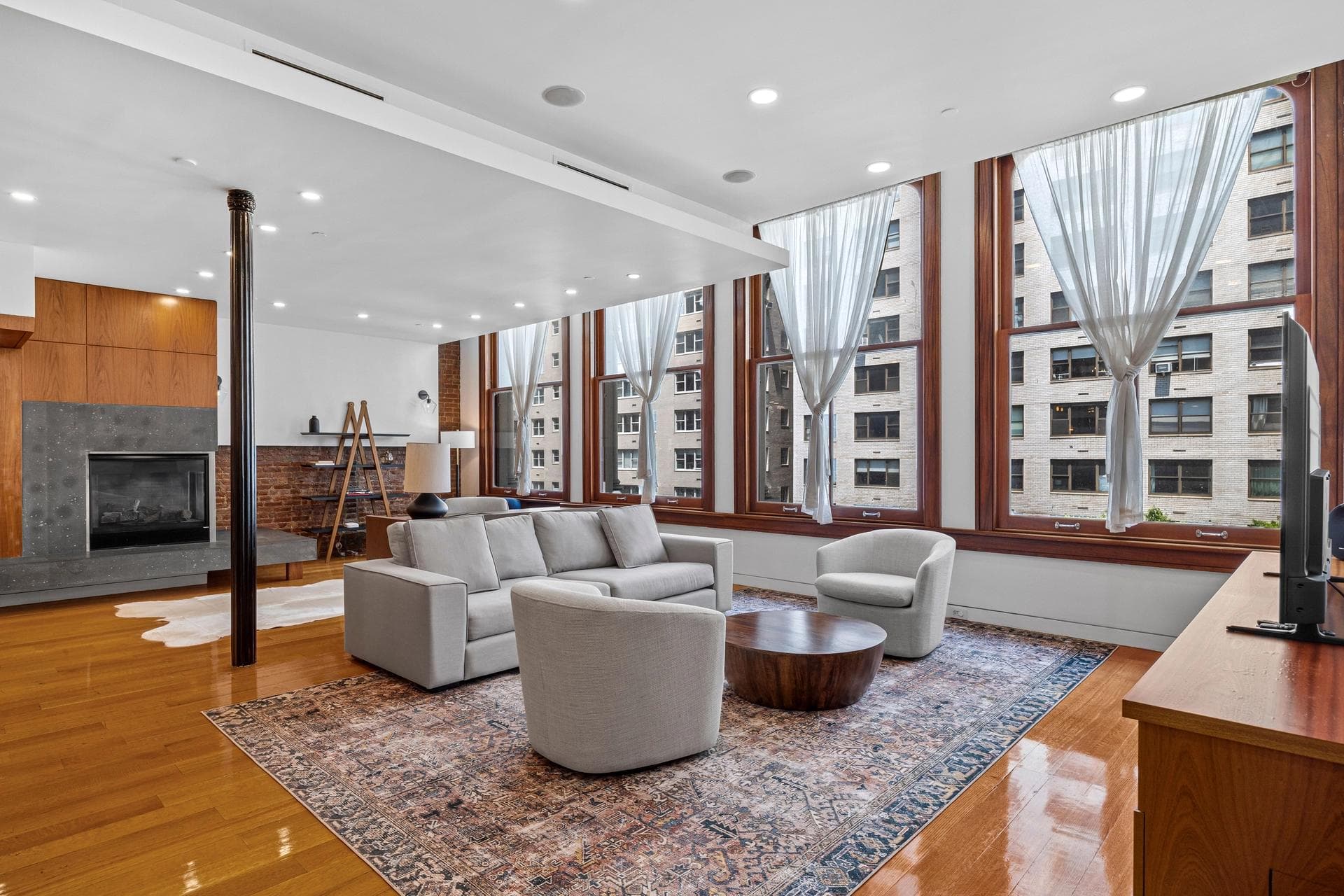
Space Comparison: What 300 Square Feet Actually Means
When a typical Manhattan hotel room runs 300 to 350 square feet, that number shapes every part of your stay. Your suitcase stays half-open on the floor. There's no surface to spread out work. Cooking is off the table entirely.
A furnished rental in the same city averages closer to 800 to 1,200 square feet, depending on the neighborhood. That's enough room for a dedicated workspace, a full kitchen, and a living area that doesn't double as your bedroom.
The gap matters most when you're staying a full month:
- You can set up a real work station with a monitor, documents, and a chair that isn't a hotel desk chair bolted into the corner of a room.
- Grocery runs replace nightly restaurant bills, which for a month in NYC can save several hundred dollars or more.
- Guests can visit without the awkward math of whether two people can stand in the room at the same time.
- Laundry in-unit means you pack for a week, not a month.
The physical space also affects how you decompress. After a full day in one of the densest cities in the world, returning to a room where your bed is three feet from your desk hits differently than returning to an apartment with a couch, a kitchen, and actual walls between rooms.
Why a Full Kitchen Changes Everything for Month-Long Stays
Eating out three times a day in New York adds up faster than most people expect. According to the Bureau of Labor Statistics, the average American household spent $3,945 on food away from home in 2024 - and in NYC, that figure climbs sharply. A single sit-down lunch in Midtown can run $25 to $40 before tip. Do that twice a day for a month and you're looking at $1,500 to $2,400 in restaurant spending alone.
A full kitchen changes that math entirely. Month-long furnished rentals in NYC come with chef-grade appliances, full refrigerator storage, and actual counter space. That means you can grocery shop at Trader Joe's or Whole Foods, cook breakfast before a morning meeting, and come home to a real meal instead of defaulting to delivery every night.
The savings compound:
- Cooking at home for most meals can cut food costs by 50% or more compared to eating out daily in a city like New York, where even casual restaurant meals carry a premium.
- Hosting a working dinner or a weekend gathering becomes possible without booking a restaurant private room or paying for catering minimums.
- Dietary needs, whether that's a specific macro plan, food allergies, or just wanting something light at midnight, are yours to control without consulting a menu.
A hotel room with a microwave and a mini-fridge does not solve this problem. A furnished apartment does.
Other Amenities That Actually Matter: In-Unit Laundry, Workspace, and Storage
In-Unit Laundry
Hotels in NYC bill laundry valet by the item or load, with per-item charges adding up fast over 30 days. A furnished rental with in-unit washer/dryer eliminates that cost entirely and saves you the logistical headache of coordinating pickups.
Workspace
A hotel desk wedged beside the bed is not a productive setup for a month of real work. Quality furnished rentals offer dedicated desk space, reliable high-speed WiFi, and enough separation from the sleeping area to keep a professional routine intact.
Storage
Thirty days of belongings require somewhere to put them. Hotel rooms average 325 square feet in NYC, leaving little room to unpack and settle. A furnished rental gives you closet space, drawers, and room to live like a resident instead of a guest perpetually living out of a suitcase.
The Privacy Factor: Separate Bedrooms, Living Areas, and No Daily Housekeeping Interruptions
After four or more weeks in the same space, privacy stops being a perk and starts being a practical necessity. Hotel rooms compress everything into roughly 300 to 400 square feet: the bed, the desk, the minibar, the luggage rack, all within arm's reach of each other. A furnished rental separates those spaces across multiple rooms.
That separation matters most during work hours. A closed bedroom door means a colleague on a video call sees a proper workspace, not a disheveled bed in the background. A dedicated living area means you can decompress at the end of the day without sitting in the same spot where you worked for eight hours. This is one reason corporate housing has become increasingly popular for extended business stays.
Hotels reset rooms daily, which sounds appealing until you're on a 9 a.m. call and a housekeeper knocks. Furnished rentals typically schedule cleaning weekly or bi-weekly, so the space stays yours. Your papers stay where you left them. Your routine doesn't get interrupted.
For anyone staying a full month, the ability to spread out, store food, and structure the apartment around your own schedule is worth more than a daily towel fold.
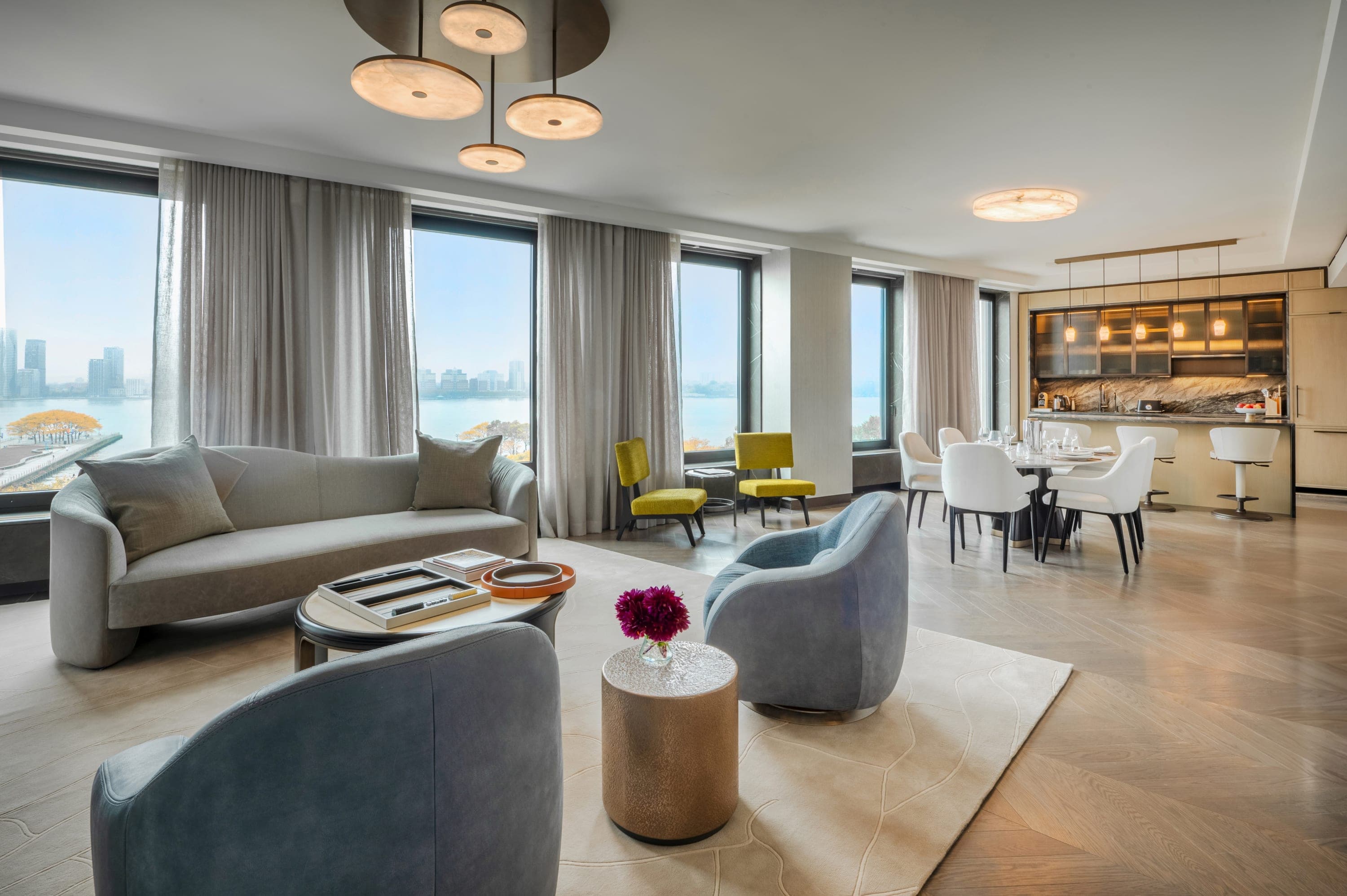
Location and Neighborhood Living: Residential Areas vs. Tourist Districts
Most Manhattan hotels cluster where real estate supports premium nightly rates: Times Square, Midtown, the Theater District. These locations work for a weekend, but spending 30 days surrounded by crowds, souvenir shops, and restaurants priced for one-time visitors is a different calculation entirely.
Furnished rentals spread across residential neighborhoods: the West Village, Brooklyn Heights, Williamsburg, Greenpoint, the Upper West Side. Places where people live, shop at the same grocery store every week, and have a regular coffee order at the corner spot.
The practical difference is real. Neighborhood grocery stores run meaningfully cheaper than hotel-adjacent delis or convenience shops. Parks and running paths are within walking distance instead of a cab ride away. For anyone working remotely or in the middle of a relocation, that daily routine grounds the stay in a way a hotel can't match.
The Booking Process: Traditional Hotel Reservations vs. Furnished Rental Platforms
Booking a hotel takes minutes: pick dates, enter a card, confirm. That speed is hard to beat for a two-night stay. For a month-long stay in NYC, though, the hotel booking process introduces friction at almost every step that a furnished rental sidesteps entirely.
Hotels require you to rebook or call the front desk the moment your plans shift. Cancellation windows are tight, and rate changes during a 30-day period are common. A furnished rental lease, by contrast, locks in a single rate for the full term, so your budget stays predictable from day one.
What the Furnished Rental Booking Process Actually Looks Like
Most furnished rental providers handle the application and lease digitally. You submit proof of income or employment, sign a short-term lease, and receive keys or a door code before arrival. The process typically takes 24 to 72 hours once documents are in order.
That added step is worth understanding clearly:
- Furnished rentals require a short application review, which protects both the guest and the property owner and tends to result in better-maintained homes with vetted co-occupants.
- A signed lease spells out exactly what is included, what utilities are covered, and what the cancellation terms are, so there are no surprise charges at checkout.
- Most quality furnished rental providers assign a point of contact for the duration of your stay, so maintenance requests or questions go to one person instead of a rotating hotel front desk.
For anyone staying 30 or more days in NYC, the upfront documentation is a one-time task. The payoff is a fixed rate, a dedicated space, and none of the daily hotel-checkout pressure that comes with extended hotel stays.
When Hotels Still Make Sense: The Counterargument
Hotels do have a place in the NYC travel picture. If your stay is under a week, a hotel can be the right call: you don't need a full kitchen or a living room for four nights, and the nightly flexibility is genuinely useful for short trips where plans may shift. Business travelers who need same-day booking, guaranteed cancellation windows, or loyalty points that offset corporate travel costs also get real value from hotel infrastructure that furnished rentals don't replicate.
The counterargument has limits, though. Once your stay crosses two weeks, the space and cost math starts working against the hotel model in ways that are hard to ignore.
How Rove Travel Delivers on the Furnished Rental Promise in NYC
Rove Travel operates exclusively in the 30-plus night furnished rental space across NYC, which means every property in the portfolio is already structured to meet the city's Local Law 18 requirements. There's no ambiguity about minimum stays, no last-minute scramble to adjust booking windows.
Every home is vetted for design and quality before it's listed. Chef-grade kitchens, premium linens, dedicated workspaces, and high-speed internet come standard. These aren't optional add-ons billed separately the way hotels handle amenities.
What the Booking Experience Looks Like
Guests book directly, which cuts out OTA middlemen and the fees that come with them. Rove's pricing is transparent upfront: the monthly rate includes utilities, Wi-Fi, and bi-weekly cleaning. No daily housekeeping charges added to a final bill, no resort fees surfacing at checkout.
For stays running four weeks or longer, the cost advantage over a comparable hotel suite in Manhattan can't be ignored. A furnished one-bedroom in a Rove property runs well below the $15,000-plus monthly equivalent you'd accumulate at a luxury hotel, while giving you a full kitchen, in-unit laundry, and a living space that actually functions as a home.
Rove operates in neighborhoods across Manhattan and Brooklyn, so guests can choose proximity to their office, a specific borough's character, or a quieter residential block instead of defaulting to Midtown simply because that's where the hotel inventory is concentrated.
Final Thoughts on Extended Stays in NYC
Once your stay crosses 30 days, the cost and space math tilts hard in favor of furnished rentals. You save on nightly rates and on every meal, every load of laundry, and every day you're not paying separately for internet or parking. For month-long NYC stays, Rove Travel handles the entire booking process with transparent monthly pricing, in-unit laundry, and homes in residential neighborhoods where you can actually settle in instead of cycling through hotel checkout pressure.
FAQ
Living in NYC for a month furnished rental vs hotel: what's the actual price difference?
A furnished one-bedroom rental in Manhattan typically runs $5,000 to $9,000 per month all-in, while a midrange hotel room at $250 to $400 per night totals $7,500 to $12,000 for 30 days before taxes and fees. When you add hotel parking (often $50 or more per day), meals without a kitchen, and laundry charges, the cost advantage of a furnished rental can reach $4,000 to $8,000 over a month-long stay.
Can I actually save money cooking in a furnished rental versus eating out in NYC?
Yes. Cooking even half your meals in a full kitchen saves the average extended-stay visitor $800 to $1,200 over a month compared to hotel dining and takeout at NYC prices. Grocery spending for a month typically runs $400 to $600, compared to $1,500 or more eating out for every meal in Manhattan.
What's the square footage difference between a hotel room and a furnished rental in NYC?
A typical Manhattan hotel room runs about 300 square feet, while a furnished rental in the same city averages closer to 800 to 1,200 square feet. That gap means space for a dedicated workspace, a full kitchen, and a living area that doesn't double as your bedroom, particularly relevant when you're staying a full month.
When does a hotel still make more sense than a furnished rental?
If your stay is under a week, a hotel can be the right call: you don't need a full kitchen for four nights, and the nightly flexibility works better for short trips where plans may shift. Business travelers who need same-day booking, guaranteed cancellation windows, or loyalty points that offset corporate travel costs also get real value from hotel infrastructure that furnished rentals don't replicate.
How does the booking process for a furnished rental differ from reserving a hotel?
Hotels take minutes to book with immediate confirmation. Furnished rentals require a short application review (typically 24 to 72 hours) that includes proof of income or employment and a signed short-term lease. The upfront documentation is a one-time task, and the payoff is a fixed monthly rate, a dedicated space, and none of the daily hotel-checkout pressure that comes with extended hotel stays.