Hell's Kitchen NYC: A Complete Guide | October 2026
The comfort of a second home. The convenience of a hotel. The reliability of Rove.
Hell's Kitchen has a reputation that's decades out of date, and a food and bar scene that most of Manhattan hasn't caught up with yet. Whether you're planning a visit, a month-long stay, or just trying to understand what the neighborhood is actually like in 2026, here's the full picture.
TLDR:
- Hell's Kitchen runs from 34th to 59th Street on Manhattan's West Side, with 9th Avenue as the neighborhood's main commercial strip
- The Gordon Ramsay Hell's Kitchen restaurants are in Las Vegas and Los Angeles, not in the NYC neighborhood
- Most Broadway houses sit within a five-minute walk, making the neighborhood a practical base for theatergoers and industry workers
- Safemap rates the neighborhood moderate for safety overall, with 8th and 9th Avenues well-lit and active around the clock
- Rove operates in the 30+ night space in Hell's Kitchen, with vetted properties that include dedicated workspaces, in-unit laundry, and chef-grade kitchens
Where Hell's Kitchen Actually Is
Hell's Kitchen is a real neighborhood on Manhattan's West Side, running roughly from 34th to 59th Street between 8th Avenue and the Hudson River. According to Wikipedia, it also goes by Clinton and Midtown West, though most New Yorkers still use the original name. The most active stretch sits in the 40s and 50s along 9th and 10th Avenues, a short walk from Times Square but with a distinctly different feel.
Why It's Called Hell's Kitchen
Nobody agrees on the exact origin, but two versions get repeated most often.
The first is a police anecdote. A veteran cop and a rookie were watching a small riot near 39th Street and 10th Avenue. The rookie called the place "hell itself." His partner replied: "Hell is a mild climate. This is Hell's Kitchen." Whether it happened exactly that way is unclear, but it's the version that stuck.
The second theory is less cinematic but more grounded. By the mid-1800s, the area was packed with slaughterhouses, rail yards, and tenements. Gangs controlled the streets, and the industrial west side was one of the roughest parts of Manhattan. "Hell's Kitchen" fit a broader pattern of infernal neighborhood names across the city, including Hell's Hundred Acres in SoHo and Satan's Circus near Chelsea. The name reflected conditions broadly, not a single incident.
A Brief History: From Industrial Grit to Midtown's Most Livable Block
Hell's Kitchen's rough reputation was earned over decades. In the mid-1800s, the Hudson River Railroad built piers and freight yards along the west side of Midtown, pulling in slaughterhouses, tanneries, and tenement housing that drew waves of Irish and later Greek, Latino, and African American residents.
By the early 20th century, gangs like the Westies ran parts of the neighborhood openly. Overcrowding was severe, and city planners largely looked away.
In the 1960s, a city-backed urban renewal effort tried a softer approach: rebranding the area as "Clinton," named after the nearby park honoring DeWitt Clinton. The name never caught on.
Two waves of change eventually did what the rebrand couldn't. The first came in the 1990s, when falling crime rates citywide made the neighborhood more accessible. Theater workers, artists, and service industry employees moved in, drawn by lower rents and proximity to the Theater District. The second wave came in the 2010s and accelerated through the 2020s, as Hudson Yards development pushed westward and rents climbed. Today, the neighborhood runs closer to $116,000 in median household income, per DataUSA's 2024 figures for the Chelsea-Hell's Kitchen community district.
What remains is a neighborhood with real texture, without the museum-piece quality of the West Village or the tourist saturation of Times Square, making it one of the more livable corners of Manhattan.
What Hell's Kitchen Looks Like Block by Block
Each avenue in Hell's Kitchen tells a different story.
8th Avenue runs along the eastern edge, closer in feel to the Theater District than the neighborhood's core. 9th Avenue is where local life actually runs: food markets, restaurants, corner bars, and the density that makes a neighborhood feel lived-in. 10th Avenue has shifted over the past decade, with newer glass residential towers replacing older low-rise blocks. 11th Avenue and the westernmost blocks border Hudson River Park and stay the quietest, with little street-level commercial activity.
The housing stock reflects all of this. Pre-war walk-ups with railroad layouts sit alongside newer high-rises with floor-to-ceiling windows. The Chelsea-Hell's Kitchen area is one of the denser stretches of Manhattan outside the Village, with a wide range of apartment sizes and price points within a few blocks of each other.
Getting Around: Transit and Walkability
The A, C, and E trains run along 8th Avenue, with stops at 42nd Street (Port Authority) and 50th Street covering most of the neighborhood. The 7 train at Hudson Yards reaches the far western blocks. Times Square is a short walk east, the Javits Center sits a few blocks west, and Midtown offices are reachable on foot from most locations in the 40s and 50s. A car isn't necessary for daily life here.
The Food Scene: 9th Avenue and Beyond
9th Avenue is the reason people end up living in Hell's Kitchen when they meant to just visit. Between 40th and 57th Streets, the avenue packs in Thai, Ethiopian, Greek, Mexican, Italian, Japanese, and West African restaurants within a few blocks of each other, at price points that still feel reasonable by Manhattan standards.
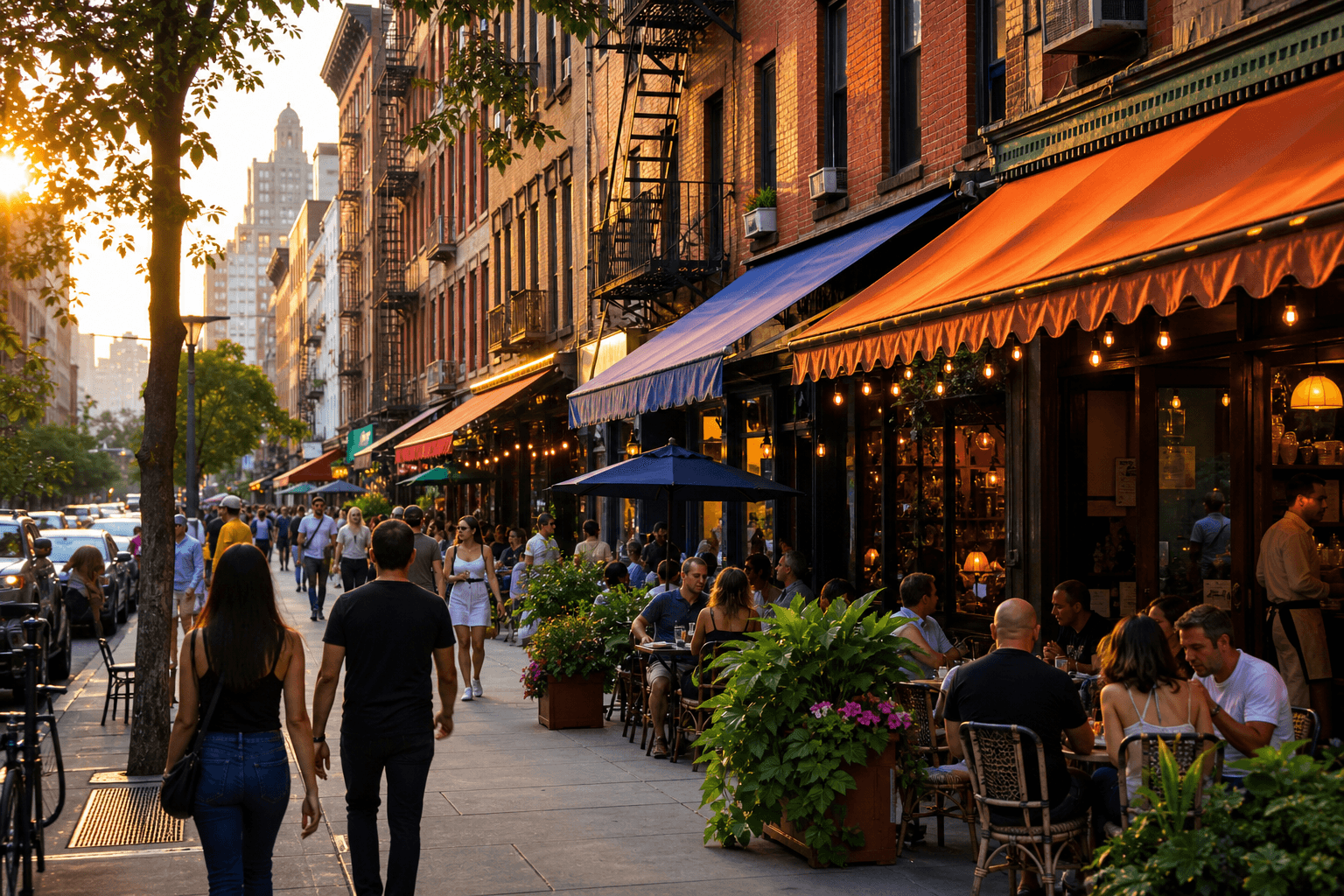
Restaurant Row on West 46th Street serves a different function: pre-theater dinners. The block between 8th and 9th Avenues lines up French bistros, Italian spots, and American brasseries timed to Broadway curtains. It gets busy between 5:30 and 7:30pm on show nights, so earlier reservations or later walk-ins tend to work better.
One clarification worth making: the Gordon Ramsay-branded Hell's Kitchen restaurants are not located in the neighborhood. The Las Vegas location is inside Caesars Palace, and the Los Angeles location sits in Caesars Palace there as well. Both are themed around the TV show, not the New York neighborhood. The actual dining scene here is independent, neighborhood-scaled, and considerably cheaper than any Ramsay property.
Hidden gem hunting tends to mean side streets in the 50s, where smaller spots with fewer reviews often outperform their better-known 9th Avenue neighbors on both price and quality.
Nightlife and Bars
Hell's Kitchen runs later than most of Manhattan, partly because of who lives here: theater workers, bartenders, and hospitality staff whose nights start after curtain call. The result is a neighborhood where bars stay genuinely busy past midnight on weekdays.
The mix is eclectic. Irish pubs anchor the 9th Avenue corridor, LGBTQ-friendly bars and cabarets cluster throughout the neighborhood, and wine bars have filled in over the past decade alongside the newer residential towers on 10th. Cabaret rooms run late-night programming several nights a week.
Don Mama is a cocktail bar that has become a reliable anchor for the neighborhood's late-night crowd, worth a visit even if you're not based in the area.
For visitors sizing up the neighborhood as a home base, the nightlife skews local instead of tourist-heavy, keeping prices lower and the atmosphere less performative than what you'd find around Times Square.
Things to Do: Hudson River Park, the Intrepid, and Beyond
Hudson River Park is the neighborhood's backyard. Pier 84 has a boathouse with free kayaking, a dog run, and food concessions, and the flat waterfront path works equally well for a daily run or a bike commute. Pier 76 opened to the public in 2021, adding open green space to the stretch.
The Intrepid Sea, Air and Space Museum at Pier 86 anchors the waterfront with a decommissioned aircraft carrier, a Concorde, and a space shuttle pavilion. Circle Line sightseeing cruises run from Pier 83 for Manhattan skyline tours if you have visitors in town.
Times Square sits a short walk east, useful for Broadway access. The Javits Convention Center is a few blocks south and west, worth noting if you're in the neighborhood for work.
Hell's Kitchen and Broadway
Broadway's theater houses cluster between 40th and 54th Street along 7th and 8th Avenues, putting most of Hell's Kitchen within a five-minute walk of the stage door. For anyone attending multiple shows, that proximity cuts out subway timing and cab surge pricing after curtain.
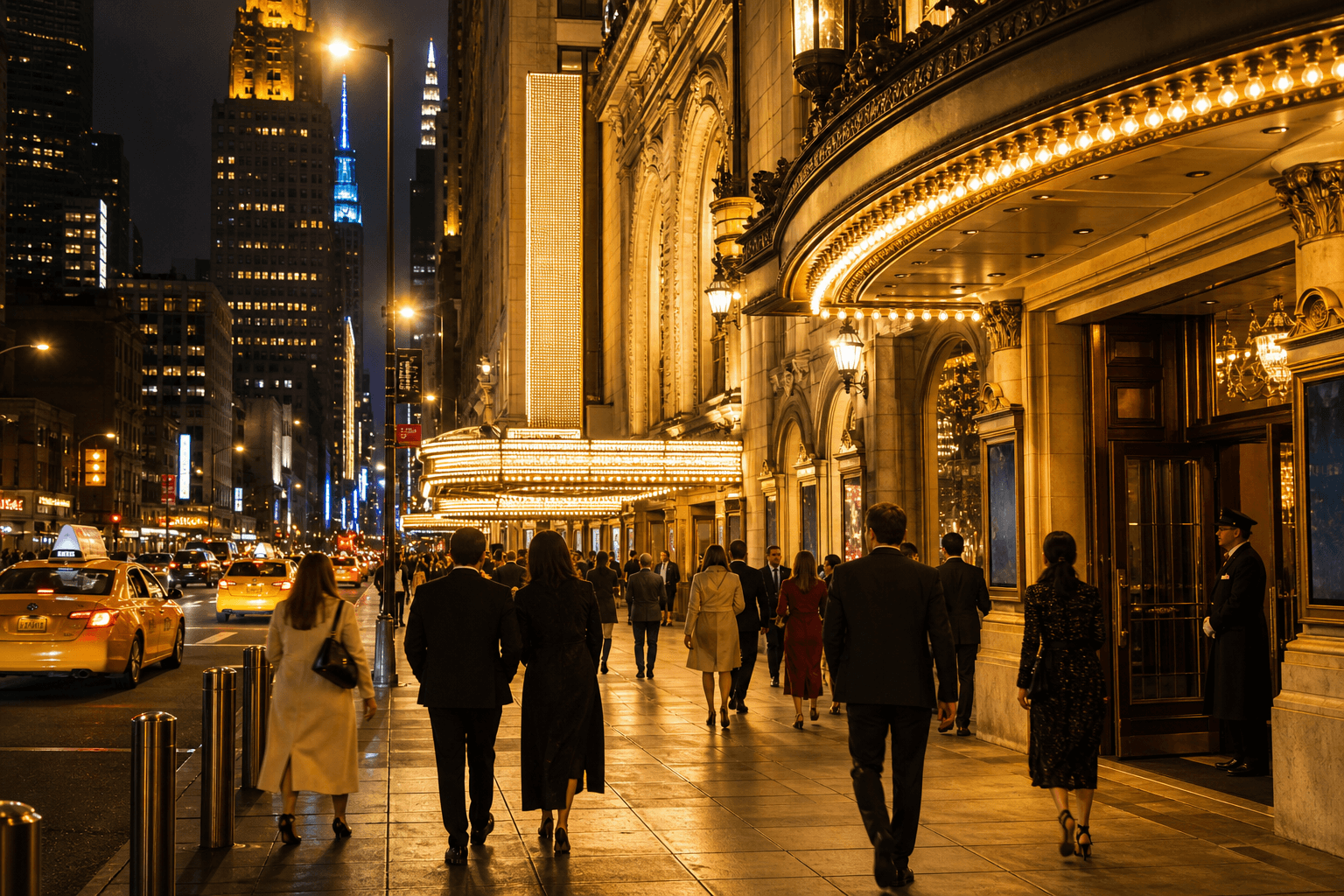
Theater industry workers have lived here for generations because of this geography. Dancers, stagehands, musicians, and production staff have long chosen the neighborhood for its walkability and late-night food and bar options that fit odd schedules.
Restaurant Row, West 46th Street between 8th and 9th Avenues, runs prix-fixe menus timed to 8pm curtains. The block fills predictably between 6 and 7:30pm on show nights. Booking for 5:30pm or after 7:45pm sidesteps the rush.
Hell's Kitchen the Broadway musical, written by Alicia Keys and set in the neighborhood during the 1990s, opened at the Shubert Theatre in 2024. Searches for tickets and tour dates reflect real demand. The show is distinct from the TV program and entirely distinct from the Gordon Ramsay restaurant brand.
Who Hell's Kitchen Is Right For
Hell's Kitchen works well for remote workers and relocating professionals who need corporate housing in NYC with Midtown proximity without Midtown prices. The A/C/E access is fast, food options run around the clock, and daily errands are walkable.
Performing arts professionals and frequent theatergoers get a clear geographic advantage. Most Broadway houses are under ten minutes on foot from the neighborhood's core.
Where it falls short: Hell's Kitchen is not quiet. Street noise runs through the night, density is high, and the residential calm of Brooklyn Heights or the Upper West Side does not exist here. Families with young children wanting parks and slower streets will find better fits elsewhere.
| Profile | What works | What to watch |
|---|---|---|
| Remote workers & relocating professionals | A/C/E transit, Midtown walkability, 24/7 food options, furnished monthly rentals | Street noise; units vary on acoustic insulation, so check before booking |
| Theater industry workers & frequent theatergoers | Most Broadway houses within a 5-minute walk; Restaurant Row on West 46th for pre-show dining | Show-night crowds on 8th Ave between 6 and 7:30pm |
| Business travelers (Javits, Midtown offices) | Walking distance to Javits Center; Times Square and Penn Station reachable on foot | Hotel-style quiet does not exist here; nightly activity runs late |
| Families with young children | Hudson River Park and Pier 84 accessible on foot | High density, night noise, and limited slower residential streets; better fits exist elsewhere |
Is Hell's Kitchen Safe?
Today, Hell's Kitchen sits within NYPD's Midtown North precinct, one of the more heavily patrolled corridors in Manhattan given its density of theaters, transit hubs, and hotel foot traffic.
The numbers are worth stating plainly. Safemap rates Hell's Kitchen moderate, with crime running somewhat higher than similar urban areas. Walking and living safety both score moderate, not low.
For extended-stay guests, 9th and 8th Avenues stay busy and well-lit around the clock, especially on show nights. Blocks closer to 11th Avenue and the waterfront are quieter with fewer eyes on the street late at night. Common sense applies, as it does anywhere in Manhattan.
Furnished Rentals in Hell's Kitchen: What a 30-Night Stay Actually Looks Like
Finding a furnished rental in Hell's Kitchen for 30 nights or longer is a different exercise than booking a hotel room for a long weekend. Under NYC's 30-night rental rule, furnished rentals where the host is not present require a 30-night minimum. That regulatory floor shapes the extended-stay market here, filtering out short-term listings and leaving a cleaner pool of proper monthly rentals.
The housing stock matters when comparing monthly apartments in Manhattan. Pre-war walk-ups on 9th and 10th Avenues tend to have more character, higher ceilings, and thicker walls, but no elevator and often no in-unit laundry. Newer high-rises on 10th and 11th Avenues, often part of the city's broader luxury furnished rentals market, offer doormen, gyms, and updated finishes, but less neighborhood texture.
Before booking a furnished luxury apartment, remote workers and relocating professionals should check: a dedicated workspace with a real monitor setup, in-unit washer and dryer, and acoustic insulation that holds up at week three. A unit that photographs well can still underperform on daily livability if those basics aren't there.
Staying in Hell's Kitchen with Rove
Rove operates exclusively in the 30+ night space, offering temporary housing in Manhattan that puts it directly inside NYC's regulatory framework and well-suited for anyone committing to a month in Hell's Kitchen or the surrounding Midtown neighborhoods.
Every property in Rove's NYC portfolio is vetted before listing: chef-grade kitchens, dedicated workspaces with monitor setups, high-speed Wi-Fi, premium linens, and in-unit laundry are standard. For a remote worker or relocating professional, that means a functional home base from day one. For guests comparing options before committing, finding a furnished rental in NYC is easier once the 30-night minimum is clear. The concierge team is available around the clock.
Browse available NYC listings at rovetravel.com.
Final Thoughts on Hell's Kitchen NYC
Your decision about Hell's Kitchen comes down to one clear question: do you want a neighborhood that runs at full speed all day, or do you want one that quiets down at night? If the answer is the former, the location, food scene, and transit access here are hard to match in Midtown. For anyone committing to a month or longer, browse Rove's furnished rentals in NYC to see what a properly set-up extended stay actually looks like.
FAQ
Why is Hell's Kitchen NYC called that?
The name most likely comes from the neighborhood's 19th-century conditions and not any single incident. Slaughterhouses, rail yards, tenements, and gang activity defined the area for decades, and "Hell's Kitchen" fit a broader pattern of infernal place names across Manhattan, including Hell's Hundred Acres in SoHo and Satan's Circus near Chelsea. The police anecdote about a rookie and a veteran watching a riot on 10th Avenue is the version that gets repeated most, but historians generally point to the industrial west side's overall reputation as the more grounded explanation.
Is Hell's Kitchen still dangerous, and what does the real safety picture look like for someone staying there for a month?
Hell's Kitchen today is a gentrified Midtown neighborhood, not the gang-controlled area it was in the 1970s and 80s. Safemap rates it moderate overall, meaning crime runs somewhat higher than in similar urban areas, though not at an alarming level. For a 30-night stay, 9th and 8th Avenues stay busy and well-lit around the clock; blocks closer to 11th Avenue and the waterfront are quieter and worth more awareness late at night.
Gordon Ramsay Hell's Kitchen restaurant vs. the actual neighborhood: are they related?
No. The Gordon Ramsay Hell's Kitchen restaurants are themed around the TV show and have no geographic connection to the New York neighborhood. The Las Vegas location sits inside Caesars Palace, and the Los Angeles location does as well. The actual dining scene in Hell's Kitchen NYC is independent and neighborhood-scaled, with 9th Avenue running Thai, Ethiopian, Greek, Mexican, and West African spots at price points that still feel reasonable by Manhattan standards. That puts it in a different category entirely from any Ramsay-branded property.
What should a relocating professional actually check before booking a furnished rental in Hell's Kitchen for 30 nights or longer?
Go beyond photos and look at three things that separate livable from just good-looking: a dedicated workspace with a real monitor setup (not a kitchen counter), acoustic insulation that holds up at week three, and an in-unit washer and dryer. Under NYC's Local Law 18, furnished rentals where the host is not present require a 30-night minimum, so the pool of available options skews toward proper monthly rentals instead of repurposed short-term listings, but that doesn't mean every unit performs as a functional home base once you're actually living in it.
Is Hell's Kitchen a good base for Broadway, and how do ticket and show logistics actually work from the neighborhood?
Hell's Kitchen puts most Broadway houses within a five-minute walk, which matters more than it sounds when you're attending multiple shows or working irregular theater-industry hours. Restaurant Row on West 46th Street runs prix-fixe menus timed to 8pm curtains and fills predictably between 6 and 7:30pm on show nights. Booking for 5:30pm or after 7:45pm sidesteps the crowd. Hell's Kitchen the Broadway musical, written by Alicia Keys and set in the neighborhood during the 1990s, opened at the Shubert Theatre in 2024 and is a separate production from the Gordon Ramsay TV show; searches for Hell's Kitchen NYC Broadway tickets, tour dates, and the 2026 touring cast all refer to that Alicia Keys production.